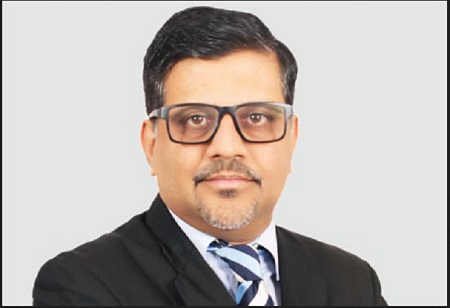
Shasunmed sees the opportunity for fermentation extending well beyond a single pharmaceutical application
Umang Kumar Chordia, CEO


India’s pharmaceutical manufacturing strength has historically been anchored in chemical synthesis, APIs and generic medicines. Yet as drug development increasingly embraces enzymes, biotransformation, fermentation and other biological processes, the ability to scale these technologies from laboratory concepts to reliable manufacturing is becoming strategically important.
This is creating an opportunity for specialised CDMO and CMO players that can bridge the gap between biological innovation and commercial production.
Shasunmed Life Sciences is positioning itself within this emerging opportunity by building capabilities around APIs, speciality enzymes, biotransformation and fermentation technologies. The company, an alliance between Shasun and Medopharm, focuses on APIs, including anti-infectives and immunosuppressants, alongside enzymes used in the synthesis of chiral API intermediates.
Its larger proposition, however, lies in fermentation. Shasunmed was established after identifying a gap in India’s market for fermentation-focused CDMO and CMO services. What began as an R&D centre with 5-litre to 100-litre fermentation capabilities has evolved into a broader platform spanning R&D, pilot and commercial-scale requirements.
This positioning allows the company to work with customers that may possess a strain or biological technology but require the process-development expertise necessary to translate it into a scalable manufacturing process. Rather than operating solely as a conventional manufacturer, Shasunmed aims to become a development and scale-up partner for fermentation-led technologies.
Umang Kumar Chordia, CEO of Shasunmed, has been steering this company-focused growth journey with an emphasis on building specialised capabilities rather than pursuing manufacturing scale in isolation. Under this approach, people, equipment, process knowledge and quality systems are being developed together to create a platform capable of supporting customers through different stages of technology development.
Shasunmed sees the opportunity for fermentation extending well beyond a single pharmaceutical applicationUmang Kumar Chordia, CEO
Bridging the Gap from Strain to Process
The central challenge in fermentation-led manufacturing is often not the availability of a promising biological strain, but the ability to convert that strain into a reproducible, economically viable process. Shasunmed has built its technical proposition around addressing precisely this gap.
Its capabilities span bacterial, yeast and fungal systems, alongside intracellular and extracellular platforms, enzymes and alternate proteins. These are supported by infrastructure covering upstream and downstream processing, analytical testing and molecular biology.
“The company follows an end-to-end project-management approach that begins by assessing a customer's technology readiness level and commercial objectives. Desired yields, output levels and quality requirements are translated into development targets, with technical milestones agreed between Shasunmed and the customer”, says Umang Chordia, CEO.
The development process brings fermentation, downstream processing, analytics, quality and molecular biology into a connected workflow. Molecular biology can support strain improvement before fermentation begins, while downstream development and analytical testing help establish the quality parameters required for the final product. Meanwhile, R&D continues to optimize the process even as manufacturing focuses on delivering consistent and standardized output.
This integration is particularly relevant for customers seeking to move from laboratory research towards commercial viability without losing control over quality or process performance.
Scaling Capability Without Losing Control
Scale-up is another area where Shasunmed is seeking to differentiate itself. Its development pathway extends from laboratory-scale fermentation through pilot operations and into larger commercial capacities, enabling customers to progressively validate their technologies rather than making an abrupt transition from small-scale experiments to commercial production.
The company has been expanding its infrastructure with larger fermentation capabilities, including 3 KL and 15 KL capacities becoming operational in 2026. Its longer-term plans include moving towards 30 KL and 50 KL scales as market requirements develop.
For Shasunmed, capacity expansion is therefore not simply about adding fermenters. It is about giving customers visibility into how their technology performs at each stage of scale. Experienced technical manpower remains equally important, particularly because specialised fermentation expertise is still relatively limited in India.
“Quality sits at the centre of this model. The company works across pharmaceutical as well as broader fermentation applications, making consistency, analytical control and process robustness critical to ensuring that products can progress successfully towards commercial markets”, mentions Umang Chordia.
Expanding India’s Fermentation Opportunity
Shasunmed sees the opportunity for fermentation extending well beyond a single pharmaceutical application. Biotransformation, for instance, can use enzymes as catalysts to simplify manufacturing routes, reduce operational requirements and, in some cases, eliminate multiple conventional processing steps. Such approaches can improve efficiency while supporting more sustainable manufacturing.
The broader growth opportunity, however, is fermentation itself. Pharmaceutical products, alternative proteins, food ingredients, dyes/pigments and newer cosmetic ingredients are increasingly creating demand for fermentation-based manufacturing platforms.
For India, this represents an important capability gap as the country remains particularly strong in chemical synthesis while specialised fermentation infrastructure requires substantial investment and technical expertise.
“Shasunmed intends to build on this opportunity by continuing to expand both its R&D and commercial capabilities. International customers already account for a significant share of its business, and the company expects capacity and manpower expansion to remain key priorities over the coming years”, shares Umang Chordia.
Its roadmap is centered on larger fermentation capacities, deeper technical expertise and continued R&D development, enabling customers to move more efficiently from early-stage technology to commercial manufacturing.
By investing ahead of the curve in a specialised and infrastructure-intensive field, Shasunmed is working to establish fermentation not merely as another manufacturing capability, but as a core platform for the next phase of India’s pharmaceutical and biomanufacturing growth.



, CDSCO.jpg "Fostering a Quality Culture in the Pharmaceutical Industry")