India Pharma Outlook Team | Monday, 02 November 2026
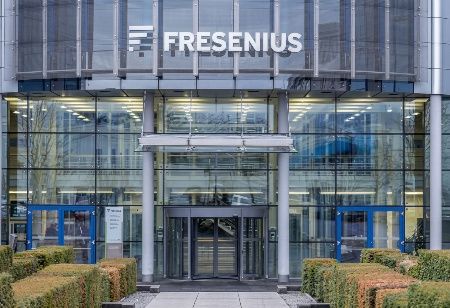
Biosimilar manufacturing is emerging as a strategic priority for Fresenius after the group signed an agreement with China’s WuXi Biologics.
The German healthcare group signed an exclusive development agreement, gaining access to as many as 37 potential biosimilar candidates over the next decade.
The arrangement could expand Fresenius’ marketed and pipeline portfolio from 29 to up to 66 molecules, targeting originator medicines with combined sales exceeding 370 billion euros.
Beyond pipeline expansion, the agreement gives Fresenius authority over each candidate’s long-term manufacturing strategy, including potential transfers to its wholly owned mAbxience network
The move highlights a broader effort to connect development capabilities with commercial production.
The agreement establishes an exclusive development partnership through which WuXi Biologics will provide access to its global research & development and manufacturing capabilities.
Under the arrangement, Fresenius will receive exclusive option rights to up to 37 identified biosimilar candidates.
The company will compensate WuXi Biologics on a fee-for-service basis for each candidate selected for development, with research & development expenditure increasing as programs advance.
The agreement also gives Fresenius exclusive global commercialization rights, including marketing authorizations, and the full economics of products commercialized under the partnership.
Also Read: The Rise of Complex Generics and Biosimilars: 2026 & Beyond
Fresenius can potentially transfer selected products to its wholly owned mAbxience platform as they progress towards commercialization.
This creates an opportunity to connect WuXi Biologics' development infrastructure with Fresenius' existing biologics manufacturing capabilities.
Consequently, the biosimilar manufacturing strategy could allow Fresenius to capture greater value across development, production and commercialization rather than depending entirely on external manufacturing partners.
For the biopharmaceutical industry, this model also highlights the growing importance of contract development and manufacturing organizations (CDMOs) in supporting pharmaceutical companies.
The expanded portfolio is expected to cover 13 therapeutic areas, extending Fresenius' existing presence in oncology, immunology and gastroenterology into neurology, nephrology and cardiopulmonary medicine.
The agreement also covers several biologic technologies, including:
Initial development is expected to focus on polatuzumab vedotin, an antibody-drug conjugate used for diffuse large B-cell lymphoma, and teprotumumab, a monoclonal antibody used for thyroid eye disease.
For Fresenius, the combination of external development capabilities, internal manufacturing infrastructure and exclusive commercialization rights could strengthen its position in the global biosimilar market.
Ultimately, the success of this biosimilar manufacturing strategy will depend on how many candidates Fresenius selects, their development outcomes, regulatory approvals and the company's ability to establish commercially viable production.
The 37-candidate agreement therefore represents a pipeline opportunity rather than 37 guaranteed future product launches.