India Pharma Outlook Team | Tuesday, 16 June 2026
Dr. Ashwani Maichand Is Helping Patients Walk, Sit Cross-Legged, and Reclaim Their Lives, Without a Knee Replacement
Knee arthritis is a disease that plagues millions of Indians, often carrying an unspoken sentence, that of eventual knee replacement. The signs are all too-familiar, inflamed joints, knee locking mid-step, bow-legged deformity, and the shrinking ability to walk briskly or sit cross-legged on the floor, with consequences beyond discomfort and pain. These lead to daily indignities that rob patients of independence and social confidence. But now one of India's most experienced orthopedic surgeons is offering them a different path forward.
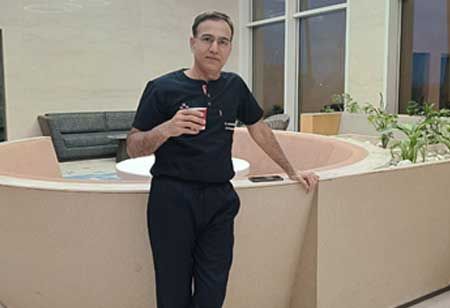
Dr. Ashwani Maichand, Director of Orthopaedics at CK Birla Hospital, Punjabi Bagh, New Delhi, and Senior Consultant and Director at Minomax Orthopaedics, has treated more than 2,000 patients with the Meniscus Replacement Procedure (MRP), helping many of them avoid early knee replacement entirely. With over 30 years of experience and more than 6,000 knee surgeries to his name, Dr. Maichand is redefining what patients with knee arthritis can expect from their treatment.
The Real Problem Most Patients Don't Know About
When patients arrive with knee pain, the symptoms are often varied. For instance, a knee that suddenly locks in place, a joint that grinds with every step, legs that have begun to bow outward, or a persistent inability to straighten the leg fully. They are often the direct consequence of meniscus damage, the degradation of the C-shaped cartilage that cushions, absorbs shock, and stabilizes the knee joint with every movement.
When the meniscus fails, the knee loses its built-in shock absorber. Bone begins to grind against bone. Deformity follows. For far too long, the typical response to this degeneration was to wait until the damage was severe enough to justify replacing the entire joint.
Dr. Maichand believes this approach is outdated, and, for many patients, entirely unnecessary.
Treating the Root Cause, Not Just the Symptoms
In a healthcare landscape where total knee replacement has become the norm for chronic knee pain, Dr. Maichand is challenging this convention with a fundamental shift in approach, one that prioritizes saving the knee through advanced meniscus replacement techniques.
The Meniscus Replacement Procedure (MRP) directly addresses the source of the problem. Rather than removing the entire joint, MRP restores the knee's natural cushioning and biomechanical function, correcting the conditions such as loose bodies causing locking, structural deformity, or restricted range of motion that make everyday life painful. Instead of recommending knee replacement as the first option, Dr. Maichand guides each patient through treatment choices based on their age, activity level, and long-term mobility needs.
"The goal is not just to reduce pain," says Dr. Maichand. "The goal is to give patients back the life they had before the knee became the centre of their world. MRP lets us do that, and to do it without the magnitude of intervention that total knee replacement requires."
Recovery in Weeks, Not Months
One of the most significant advantages of MRP over total knee replacement is the pace of recovery. Patients undergoing MRP typically resume mobility within approximately two weeks, a fraction of the recovery time associated with total knee replacement. Patients who undergo MRP not only recover faster, but they experience more natural knee movement, and feel more confident while walking, climbing stairs, or performing daily activities.
For many patients, especially those in their 40s, 50s, and 60s who are still professionally active or physically engaged, this timeline is transformative. There is no prolonged dependence on walkers or caregivers. There is no months-long rehabilitation before a patient can return to a normal routine. Within weeks, patients are walking briskly, managing stairs independently, and sitting cross-legged on the floor, an activity of profound significance in Indian daily life, from prayer to family gatherings to simply sitting comfortably at home.
This approach is especially helpful for working professionals, active individuals, and athletes who want to maintain an active lifestyle. It is also a critical intervention for patients who are told they are "too young" for a knee replacement but are suffering too severely to wait. MRP bridges the gap, providing real, lasting relief while preserving the natural joint for as long as possible.
MRP helps patients through greater mobility, faster recovery, and preservation of the natural joint structure in the long term.
A New Standard in Knee Arthritis Care
Dr. Maichand's areas of expertise include robotic and minimally invasive hip and knee replacement, MRP, arthroscopic sports injury surgery, endoscopic and minimally invasive spine surgery, paediatric orthopaedics, deformity correction, and complex trauma care. His approach to each case is deeply individual, shaped by the conviction that no two knees, and no two patients, are the same.
For patients who have spent years managing knee arthritis with painkillers, braces, and diminishing hope, MRP represents something they may not have expected to find: a way back to normal life, without the permanence of a replaced joint.
.jpg)