
Fathimanoud, Correspondent, India Pharma Outlook
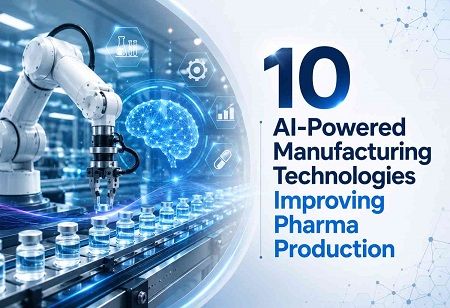
AI-powered manufacturing technology is transforming pharmaceutical production by enabling faster, smarter, and more precise manufacturing systems.
AI-Powered Manufacturing drives efficiency across drug development, production, quality control, and supply chains, making it essential for modern pharma operations.
Companies now use AI to reduce batch failures, improve yield, and accelerate time-to-market.
For example, predictive maintenance systems reduce downtime by up to 30 per cent, while AI-driven quality control improves defect detection accuracy significantly.
Smart manufacturing leaders and research-backed implementations show that AI reduces operational costs, enhances compliance, and improves scalability.
As biologics and complex therapies grow, AI-powered manufacturing technology ensures consistent production outcomes and strengthens global pharma supply chains.
AI-powered manufacturing technology enables advanced process optimization by analyzing real-time and historical production data. AI models adjust parameters such as temperature, pressure, and chemical composition to maintain optimal manufacturing conditions.
This approach improves consistency and reduces variability in pharma production. Companies that deploy AI-driven process optimization report higher yield rates and lower material waste.
AI tools identify inefficiencies instantly and recommend corrective action, which ensures stable operations. In biologics manufacturing, even minor variations can impact outcomes, so AI ensures precise control.
AI-powered manufacturing technology also helps manufacturers meet regulatory standards by maintaining consistent process performance. This technology forms the foundation of smart pharma manufacturing and supports scalable, high-quality production systems.
Phani Mitra B, Global CIO and CDO at Dr Reddy’s Laboratories Ltd said, “Digital is not a tool, it’s a force multiplier for pharma performance. Digital technologies are reinventing how R&D experimentation happens pointing to AI-led modelling, faster simulations and real-time insights that significantly compress development cycles.”
Also Read: AI in Drug Discovery and Development: From Lab to Commercial Market
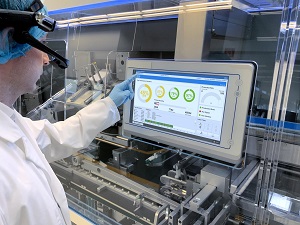 AI-powered manufacturing technology strengthens predictive maintenance by monitoring equipment health through sensors and analytics. AI identifies early signs of machine failure and triggers proactive maintenance actions.
Manufacturers using predictive maintenance reduce downtime by 20–30 per cent and cut maintenance costs significantly. AI systems analyze vibration, temperature, and performance data to forecast failures before they occur.
This ensures uninterrupted production and prevents costly disruptions. AI-powered manufacturing technology improves reliability across manufacturing lines and supports continuous operations.
Pharma companies that adopt predictive maintenance gain higher productivity and improved operational efficiency.
Siemens implemented predictive maintenance for Sachsenmilch Leppersdorf GmbH, a highly automated production facility that operates continuous, large-scale manufacturing processes. The company faced challenges with unexpected equipment failures that disrupted operations and increased maintenance costs.
“Senseye Predictive Maintenance is a valuable addition to our existing processes in terms of preventive maintenance,” said Roland Ziepel, Technical Manager, Sachsenmilch Leppersdorf GmbH
Siemens introduced its AI-powered Senseye Predictive Maintenance solution, which analyzes real-time and historical machine data such as temperature, vibration, and performance patterns. The system detects early signs of wear and predicts potential failures before they occur.
Siemens also supported system integration and helped the workforce adopt data-driven maintenance practices. This approach enabled Sachsenmilch to move away from reactive maintenance and fixed schedules to a predictive, condition-based model.
Key Outcomes & Benefits
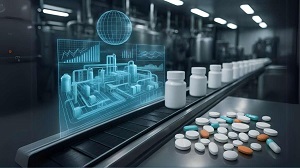 AI-powered manufacturing technology powers digital twin systems that create virtual replicas of physical pharma manufacturing processes.
These replicas simulate real-worldproduction conditions and allow companies to test changes without disrupting operations.
Digital twins use real-time data to monitor performance and predict outcomes. Manufacturers use this technology to identify bottlenecks, optimize workflows, and validate process improvements.
AI-powered manufacturing technology helps reduce risks associated with scaling production and ensures better decision-making.
Digital twin adoption accelerates innovation by enabling rapid experimentation. Pharma companies gain improved efficiency, reduced errors, and enhanced compliance through simulation-driven insights.
Demetrios Georgacopoulos, Global CHRO, Rockwell Automation said, "As we accelerate automation, we are partnering across our ecosystem and investing deeply in upskilling. From digital twins to predictive insights, this transformation demands new capabilities. With structured training pathways across roles, we are preparing our workforce to lead the next phase of growth."
AI-powered manufacturing technology improves quality control by using machine vision and advanced analytics to detect defects instantly. AI systems analyze images and production data to identify inconsistencies with high precision.
Companies using AI-based quality control report up to 90 per cent improvement in defect detection accuracy. AI eliminates manual inspection errors and speeds up quality checks.
This ensures that only compliant products reach the market. AI-powered manufacturing technology enhances product safety and reduces recall risks. Pharma manufacturers achieve faster throughput while maintaining strict quality standards.
Also Read: 10 AI Innovations Transforming Drug Discovery in 2026
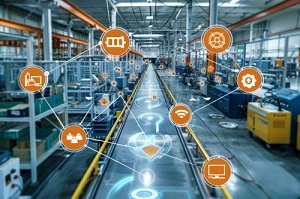 AI-powered manufacturing technology integrates with IoT devices to create smart manufacturing environments.
Sensors collect real-time data from machines, and AI analyzes this data to optimize operations. Smart manufacturing provides full visibility across production lines, enabling better decision-making.
Companies using AI and IoT integration improve productivity and reduce operational costs. AI-powered manufacturing technology enables remote monitoring and control, which enhances flexibility.
Pharma companies respond faster to demand changes and maintain efficient workflows. This technology transforms traditional factories into data-driven smart facilities.
AI-Powered Technology enables continuous manufacturing, where production runs without interruption. AI monitors and controls processes in real time, ensuring consistent quality.
Continuous manufacturing improves efficiency by 15–25 per cent and reduces waste significantly. AI ensures stable operations by detecting deviations instantly and correcting them. Regulatory bodies support this approach due to improved quality consistency.
AI-powered manufacturing technology allows pharma companies to scale production quickly and meet growing demand. This system replaces traditional batch processes with more efficient workflows.
AI-powered manufacturing technology improves pharma supply chains by optimizing forecasting, inventory, and logistics. AI analyzes demand patterns, market trends, and external factors to improve decision-making.
Companies using AI-driven supply chain systems reduce inventory costs and improve delivery timelines. AI ensures optimal stock levels and prevents shortages or overproduction.
AI-powered manufacturing technology enhances traceability and compliance across the supply chain. Pharma companies achieve better coordination between manufacturing and distribution. This leads to faster delivery of medicines and improved operational efficiency.
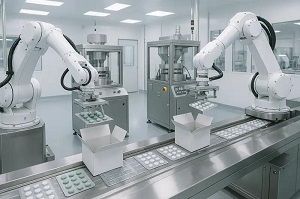
AI-powered manufacturing technology drives robotics and automation in pharma production. AI-powered robots handle repetitive and precision-based tasks with high accuracy.
Companies report productivity gains of up to 20 per cent with robotics integration. AI ensures consistent performance across production lines. Automation reduces dependency on human labor and improves scalability.
“By leveraging the extensive data collected by our autonomous robotics that operate continuously and cutting-edge software for automated orchestration and data management, the laboratory is set to revolutionize our research process as it will not only achieve unprecedented levels of repeatability and productivity,” said Ken Takeshita, MD, global head, R&D, Daiichi Sankyo.
AI-powered manufacturing technology supports contamination-free processes, especially in injectable drug manufacturing. Pharma companies achieve higher efficiency and reliability with robotic systems.
AI-powered manufacturing technology accelerates drug formulation and process design by analyzing large datasets and predicting optimal outcomes. AI reduces trial-and-error experimentation and speeds up development.
“Making biologics oral has been one of the most difficult challenges in drug delivery, Vivtex was founded to systematically solve this problem by integrating high-throughput experimentation with computational and AI-enabled analytics,” said Thomas von Erlach, co-founder, Vivtex.
Pharma companies use AI to identify the best formulations and design scalable manufacturing processes. AI-powered manufacturing technology improves accuracy and reduces development time. This technology enables a faster transition from research to production. Companies achieve better efficiency and reduced costs.
Table: Impact of AI-powered manufacturing technology on Formulation Efficiency
Parameter | Improvement Range |
Reduction in R&D time | 30 per cent – 50 per cent |
Increase in formulation accuracy | 25 per cent – 40 per cent |
Reduction in trial-and-error | 40 per cent – 60 per cent |
Also Read: How AI Can Power Target Identification and Disease Mapping
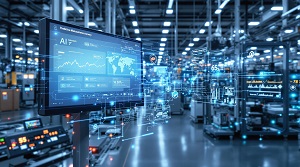 AI-powered manufacturing technology enables continuous improvement by analyzing production data and identifying performance gaps.
AI systems recommend actions that improve efficiency and quality. Companies using AI-driven improvement systems achieve measurable gains in productivity and cost reduction.
This technology also ensures consistent compliance with regulatory standards. It also supports real-time monitoring and optimization. It further enables predictive decision-making by anticipating potential disruptions and optimizing processes before issues arise.
Nicholas Carter-Meadows, Chief Quality Officer, Reem Hospital, UAE, notes that “AI presents a powerful set of tools to revolutionize hospital quality management and continuous improvement, paving the way for a future of safer, more efficient, and higher quality healthcare.”
Table: Operational Gains from AI-Powered Manufacturing Technology
Metric | Improvement Range |
Productivity increase | 15 per cent – 25 per cent |
Cost reduction | 10 per cent – 20 per cent |
Quality consistency improvement | 20 per cent – 35 per cent |
AI fosters a data-driven culture in pharma manufacturing. Companies continuously refine processes and maintain competitive advantage through AI-powered insights.
AI-powered manufacturing technology is redefining pharmaceutical production with smarter, faster, and more reliable systems. Companies that adopt AI achieve higher efficiency, improved quality, and reduced costs across manufacturing operations.
From predictive maintenance to continuous improvement, AI drives measurable results and strengthens supply chains. As pharma demand grows, AI-powered manufacturing technology will remain essential for scalable and compliant production. Companies that invest in AI will lead the future of pharma manufacturing.
AI is transforming the pharmaceutical value chain by connecting early-stage discovery with advanced manufacturing systems. Agentic AI enables autonomous DMTA loops that accelerate experimentation and decision-making.
AI-driven target identification and disease mapping improve precision in drug discovery, while emerging innovations enhance molecular design, predictive analytics, and clinical outcomes.
From lab to commercial markets, AI reduces development timelines, lowers costs, and improves scalability, creating a seamless pathway that strengthens AI-powered manufacturing and end-to-end pharma innovation.
AI-powered manufacturing improves efficiency, reduces batch failures, increases yield, lowers operational costs, and accelerates time-to-market. It also enhances scalability, ensures consistent production outcomes, and strengthens supply chain reliability.
AI improves quality control by using machine vision and analytics to detect defects with high precision, including microscopic issues beyond human capability. It reduces batch rejection rates, eliminates manual inspection errors, ensures regulatory compliance, and improves defect detection accuracy by up to 90 per cent.
Key AI technologies include AI-driven process optimization, predictive maintenance systems, digital twin technology, AI-powered quality control, and smart manufacturing with IoT integration.
.jpg)





, CDSCO.jpg "Fostering a Quality Culture in the Pharmaceutical Industry")