
India Pharma Outlook Team | Friday, 22 May 2026
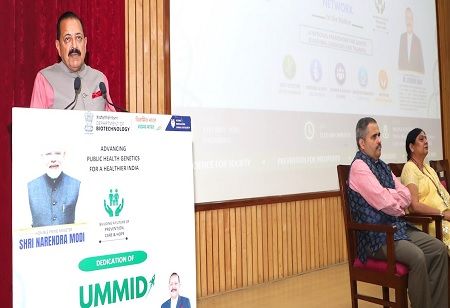
India is taking a major step toward the future of healthcare with the launch of the UMMID programme, a nationwide initiative focused on genomic medicine and precision healthcare.
The UMMID programme aims to strengthen India’s ability to diagnose and manage inherited disorders while building a strong foundation for genome-based healthcare.
With this move, India is betting big on genomic medicine to improve early disease detection, personalized treatment, and rare disease management across the country.
The government’s latest push under the UMMID programme reflects a broader shift toward precision medicine, where treatments are designed based on an individual’s genetic makeup instead of following a one-size-fits-all approach. The initiative was formally dedicated to the nation by Union Minister Dr. Jitendra Singh, who described genomics and AI-driven healthcare as the future of medicine in India.
UMMID, which stands for Unique Methods of Management of Inherited Disorders, was launched by the Department of Biotechnology under the Ministry of Science and Technology. The programme focuses on improving access to genetic testing, counseling, and diagnosis for patients suffering from inherited and rare diseases. It also aims to strengthen India’s genomic research capabilities and reduce the burden of undiagnosed genetic disorders.
Also Read: The Future of MedTech in India: Meeting Tier-2 and Tier-3 Needs
India has one of the world’s largest populations affected by rare and inherited diseases. Many families often struggle for years without receiving a proper diagnosis due to limited genetic testing infrastructure and a shortage of trained specialists. Through the UMMID initiative, the government plans to bridge this gap by expanding diagnostic facilities and improving awareness around genetic disorders.
A major component of the UMMID programme is the establishment of NIDAN Kendras across the country. These centers are designed to provide advanced genetic testing and counseling services for patients and families dealing with inherited disorders. The government also plans to increase the number of trained medical professionals in the field of medical genetics.
The programme supports prenatal and newborn screening as well, which can help detect genetic conditions at an early stage. Early diagnosis plays a crucial role in preventing complications and improving treatment outcomes for patients with rare diseases.
The government has also introduced a nationwide digital dashboard under the UMMID network to streamline diagnostics, patient tracking, and counseling support. Experts believe that such centralized systems can significantly improve healthcare delivery and reduce delays in diagnosis.
India’s growing focus on genomic medicine is also linked to the rapid advancement of artificial intelligence and biotechnology in healthcare. AI-driven tools are increasingly being used to analyze genomic data, identify disease risks, and support doctors in making more accurate treatment decisions.
Healthcare experts believe precision medicine could eventually transform the treatment of diseases such as cancer, cardiovascular disorders, neurological conditions, and rare genetic illnesses. Personalized therapies based on genetic profiles can improve treatment effectiveness while reducing side effects.
India’s investment in genomic medicine comes at a time when countries worldwide are accelerating research in precision healthcare. With its massive population and diverse genetic pool, India has the potential to become one of the world’s leading hubs for genomic research and personalized medicine.
The government’s long-term vision includes creating a large genomic database that can support research, drug discovery, and disease prevention strategies. Such databases could help scientists better understand population-specific disease risks and develop targeted therapies for Indian patients.
Despite the opportunities, experts say several challenges remain. Genomic testing is still expensive for many patients, and healthcare infrastructure in rural areas remains limited. Data privacy and ethical concerns around genomic information are also becoming increasingly important as more patient data is collected digitally.
However, the launch of the UMMID programme signals India’s intent to build a stronger healthcare ecosystem powered by genomics, biotechnology, and AI. Industry experts believe this initiative could help improve access to advanced healthcare while positioning India as a global player in precision medicine and genetic diagnostics.
As genomic technologies continue to evolve, the UMMID programme could play a key role in transforming how diseases are diagnosed, prevented, and treated in India in the coming years.


.jpg)
