
Zeenat Parween, Correspondent, India Pharma Outlook
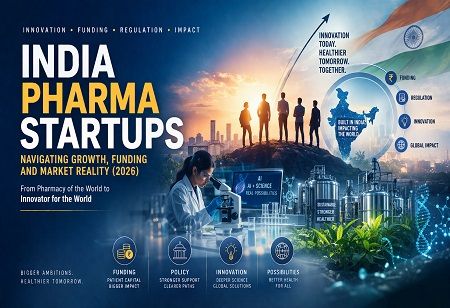
The India pharma startups ecosystem is stepping into a defining decade. For years, it powered global healthcare as the “Pharmacy of the World,” supplying cost-effective generics at unmatched scale. But in 2026, that identity is no longer enough. The ambition has shifted toward becoming the “Innovator for the World.”
This transition is being driven by a new wave of pharma startups. These companies are moving beyond replication and into discovery—building new chemical entities (NCEs), developing biologics, and integrating artificial intelligence into drug pipelines. The focus is no longer just affordability, but originality and global competitiveness.
Yet, the journey is not linear. The ecosystem is facing a simultaneous tightening of funding, rising regulatory expectations, and intense market competition. Startups must operate in an environment where scientific timelines are long, capital is cautious, and execution gaps can quickly derail progress.
As Kiran Mazumdar-Shaw, Executive Chairperson and Founder of Biocon put it, “India’s future in pharma depends on how well we transition from volume-driven growth to innovation-led leadership.”
That transition is already underway—but it is testing every part of the ecosystem.
The current landscape reflects both maturity and pressure. The early excitement around biotech startups has evolved into a more disciplined environment. Investors are asking harder questions. Regulators are tightening frameworks. And markets are becoming less forgiving.
Startups today are expected to think beyond the lab. A promising molecule is not enough—it must be backed by a clear regulatory pathway, intellectual property protection, and a viable commercialization strategy. This shift is forcing founders to integrate science and business much earlier in the lifecycle.
At the same time, India’s structural advantages remain strong. The country has a deep pool of scientific talent, cost-efficient manufacturing, and growing credibility in global markets. Government initiatives are also stepping in to support early-stage research, especially in areas where private capital remains hesitant.
The result is a more grounded ecosystem—less hype-driven, more execution-focused.
Also Read: Advancing Interventional Radiology in India Through Collaboration
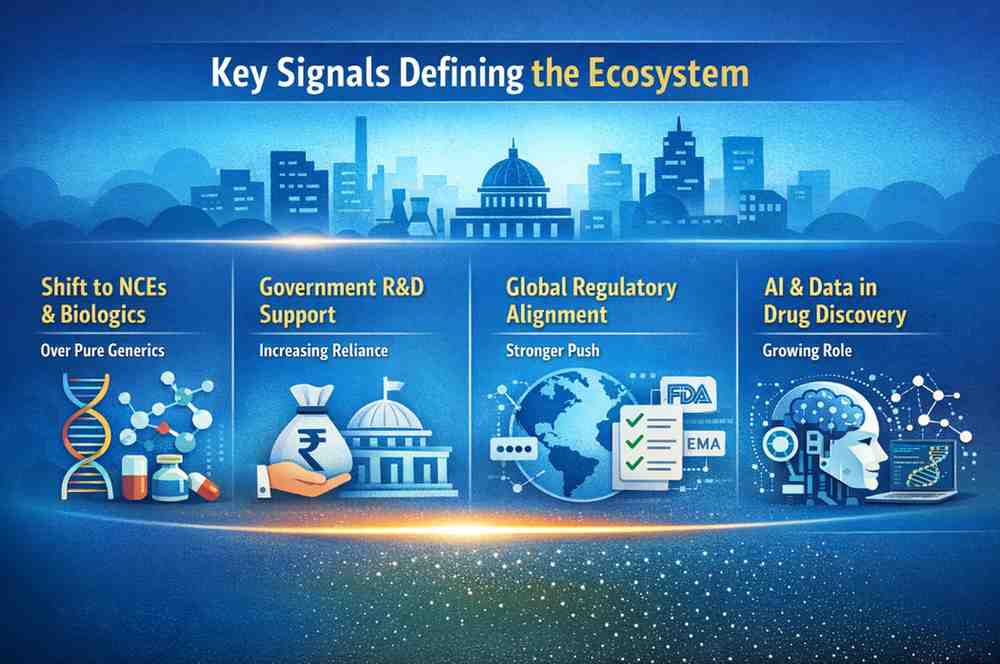
Funding has become one of the most defining forces shaping pharma startups in 2026. The earlier model of venture capital-led growth is no longer dominant. Investors have realized that pharma does not follow the same trajectory as software or consumer startups.
Drug development is slow, expensive, and uncertain. This has led to a clear shift toward strategic corporate capital, where large pharmaceutical companies invest in startups not just for returns, but for long-term pipeline access.
At the same time, the Indian government has stepped in to fill critical gaps. Initiatives like the Biopharma SHAKTI program and the Rs 10,000 crore startup fund are designed to support early-stage research and reduce dependence on imports. These programs are particularly important for startups working on deep science, where private funding is often limited.
However, one challenge continues to dominate the conversation—the lack of patient capital. Pharma startups require sustained funding over long periods, often without immediate returns. This is fundamentally different from most venture-backed sectors.
As Dilip Shanghvi, Managing Director of Sun Pharmaceutical explains, “You cannot rush pharmaceutical innovation. It demands time, discipline, and long-term capital.”
.jpg)
.jpg)
.jpg)


, CDSCO.jpg "Fostering a Quality Culture in the Pharmaceutical Industry")