India Pharma Outlook Team | Wednesday, 23 September 2026
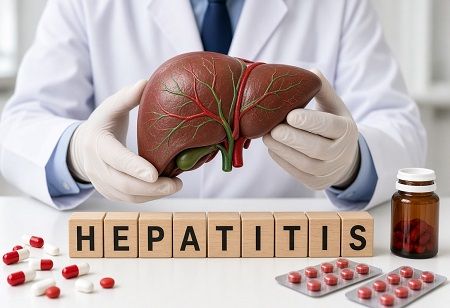
India renews its global pledge on hepatitis elimination as Union Health Secretary Punya Salila Srivastava reaffirms the country’s commitment to end Hepatitis B.
She delivers the message at a United Nations General Assembly side event titled “Advancing Global Action to Eliminate Hepatitis.”
India presents a comprehensive and people-centered strategy that covers prevention, screening, diagnosis, treatment and care.
The Health Secretary stresses antenatal screening, Hepatitis B immunization, free diagnosis and treatment, safe blood services and support for people who inject drugs.
She calls for sustained global cooperation and equitable access so that every country can accelerate progress toward the 2030 targets. The statement places India firmly among nations that treat viral hepatitis as a solvable public health priority.
Srivastava outlines India’s efforts across the full continuum of care. The country strengthens antenatal screening so that pregnant women receive timely testing. It expands Hepatitis B immunization to protect newborns and high-risk groups.
Free diagnosis and treatment programs remove cost barriers for patients. Safe blood transfusion services reduce transmission risks in healthcare settings. Counseling and rehabilitation support reach people who inject drugs and help them stay on treatment pathways.
These measures form a single, integrated public health approach. India links each step from prevention to long-term care, so that patients do not fall through gaps in the system. The Health Secretary presents this model as both a national priority and a contribution to the global elimination agenda.
Key pillars of the Indian strategy:
Also Read: Counterfeit Drugs in India: How Packaging Gaps Hurt Supply Chain
Srivastava reaffirms India’s alignment with the Sustainable Development Goals and the worldwide target of eliminating Hepatitis B and C as public health threats by 2030. She emphasizes that progress depends on sustained international cooperation.
Countries must share knowledge, expand testing capacity and ensure affordable treatment reaches every population that needs it. Stronger health systems remain essential so that national programs can scale without leaving vulnerable groups behind.
The side event, organized by the UN Group of Friends to Eliminate Hepatitis, provides the platform for this renewed pledge. India’s message underscores that elimination is achievable when prevention, early detection, and treatment operate together under a people-centered framework.
India continues to strengthen measures that address the disease burden through public health action. The Health Secretary’s statement at the UNGA side event signals clear political will and operational focus.
Combining immunization, free treatment, safe blood practices, and targeted support for high-risk groups, India positions itself to contribute meaningfully to the 2030 global goal. Sustained cooperation among nations will determine how quickly the remaining gaps close. The renewed pledge keeps the elimination target firmly on the international health agenda.
.jpg)