India Pharma Outlook Team | Wednesday, 25 November 2026
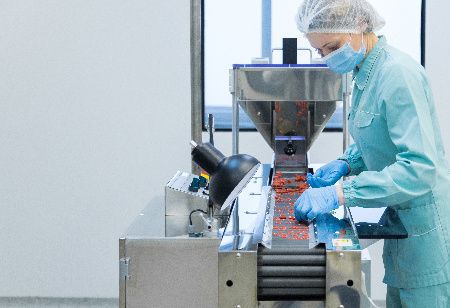
Indigenous pharmaceutical machinery is emerging as an important requirement for India's pharmaceutical industry as the government calls for greater investment in advanced manufacturing technologies.
Speaking at the inauguration of PMEC India 2026, Satyaprakash T L, Joint Secretary, Department of Pharmaceuticals, highlighted the need to strengthen domestic machinery capabilities to sustain India's global position.
He noted that every fifth tablet consumed globally is manufactured in India.
However, maintaining this manufacturing leadership will require a shift towards higher-value medicines, stronger research capabilities and advanced production infrastructure.
Also Read: 5 Women Leaders Driving India's Pharma and Healthcare Innovation
India has an established pharmaceutical manufacturing base, but sustaining its global competitiveness requires stronger domestic equipment capabilities.
Advanced filling systems, inspection machinery, automated production lines and analytical laboratory equipment are essential for modern pharmaceutical operations.
The Department of Pharmaceuticals' 2024 guidelines identified more than 80 pharmaceutical clusters and over 10,500 manufacturing facilities across the country.
This manufacturing base creates opportunities for domestic equipment manufacturers to develop specialized solutions for the industry.
Strengthening indigenous pharmaceutical machinery could also improve access to specialized production technologies and support manufacturing self-reliance.
The Department of Pharmaceuticals implements the Strengthening of Pharmaceuticals Industry scheme, which includes the Revamped Pharmaceutical Technology Upgradation Assistance Scheme.
It supports eligible existing pharmaceutical units in upgrading facilities to Revised Schedule M and WHO-GMP standards.
Such initiatives can support modernization, while domestic equipment manufacturers have an opportunity to develop machinery suited to evolving industry requirements.
India's transition towards biologics, complex formulations and high-value medicines will require specialized manufacturing and testing infrastructure.
Developing indigenous pharmaceutical machinery could help domestic manufacturers meet these requirements while strengthening the local equipment ecosystem.
Continued investment in research, engineering and advanced production technologies will be important to sustaining India's pharmaceutical leadership.
Ultimately, indigenous pharmaceutical machinery will be an important part of building a more technologically capable pharmaceutical manufacturing industry.