India Pharma Outlook Team | Monday, 10 August 2026
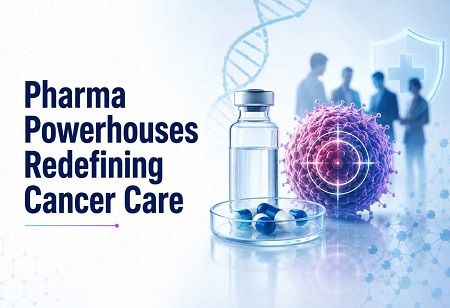
Cancer care continues to evolve rapidly as global and Indian pharmaceutical companies intensify efforts across drug development, partnerships, and access programs.
Cancer care innovation now spans immunotherapy launches, precision medicine collaborations, late-stage clinical successes, and large-scale screening initiatives.
Companies are actively expanding oncology pipelines, improving early detection, and strengthening treatment accessibility.
These developments highlight a strong shift toward integrated cancer care models that combine advanced therapeutics with public health outreach.
Cancer rates continue to rise globally, creating urgent pressure on healthcare systems and accelerating the need for innovation in cancer care and therapy. According to WHO, cancer accounts for nearly 10 million deaths annually, making it one of the leading causes of mortality worldwide, with about one in six deaths linked to cancer.
The global burden includes the most common cancers such as lung, breast, and colorectal cancers. Nearly one-fourth of cancer deaths result from preventable risk factors like tobacco use, alcohol consumption, obesity, poor diet, and physical inactivity, while air pollution also contributes significantly.
Additionally, global cases are projected to rise by over 75 per cent by 2050, driven by ageing populations and lifestyle changes. These trends highlight an urgent need for advanced therapies, early detection, and scalable treatment models to manage the growing cancer burden.
Company | Contribution to Cancer Care |
Bristol Myers Squibb | Introduced Relopduo immunotherapy for advanced melanoma |
AstraZeneca | Partnered with Andhra Pradesh for data-driven cancer care |
GSK & Hansoh | Achieved late-stage clinical success in bone cancer drug |
BDR Pharmaceuticals | Expanding oncology capacity via acquisition |
Glenmark Pharmaceuticals | Advancing global oncology drug pipeline |
Eli Lilly (Olomorasib) | Developing therapy for rare cancers |
Pfizer & Tata Cancer Care Foundation | Expanded screening access to 1 million people |
Pfizer & GSK | Accelerated oncology drug approvals |
Precigenetics | Advancing live cell imaging for drug discovery |
Dr. Reddy’s Laboratories | Received USFDA approval for rituximab biosimilar |
Merck & Co. | Strong growth driven by Keytruda demand |
HCG & Elekta | Introduced MR-Linac for precision radiation therapy |
Also Read: Building Resilient QMS in Global Pharma Manufacturing
Companies like Bristol Myers Squibb, Eli Lilly, GSK, Hansoh, and Dr. Reddy’s Laboratories are driving breakthroughs in immunotherapy and targeted treatments, offering new hope for patients with limited options.
From Relopduo’s dual immunotherapy approach to emerging drugs like Olomorasib and biosimilars like rituximab, these innovations are expanding treatment choices while improving outcomes in complex cancers.
The growing adoption of combination immunotherapies is particularly significant in treating advanced-stage cancers, where conventional therapies often fall short. These approaches enhance the body’s immune response against tumors, improving survival rates and long-term disease management.
"The introduction of Relopduo brings a scientifically differentiated dual immunotherapy to eligible patients, offering new hope to those living with unresectable or metastatic melanoma and reflects our continued commitment to advance differentiated treatment options to India," said Dr. Ankita Jain, Country Medical Director, Bristol Myers Squibb India.
In parallel, targeted therapies are addressing specific genetic mutations, enabling more personalized treatment strategies. This is especially critical in cancers with limited therapeutic options, where precision medicine can significantly improve patient outcomes.
"Pancreatic cancer has historically been one of the most difficult-to-treat cancers and people whose tumors harbor a KRAS G12C mutation face limited options once their disease progresses," said Jacob Van Naarden, Executive Vice President of Lilly Oncology.
Additionally, the rise of biosimilars is improving affordability and access to life-saving biologic treatments, particularly in emerging markets. By offering cost-effective alternatives without compromising efficacy, biosimilars are playing a key role in expanding global cancer care access.
"The approval of the rituximab biosimilar on the FDA's goal date reflects our capabilities in developing and manufacturing complex biologic medicines for global markets," said Sridevi Khambhampaty, Global Head, Biologics, Dr. Reddy's Laboratories.
Collaborations led by AstraZeneca, Pfizer, and Tata Cancer Care Foundation highlight the growing importance of data-driven healthcare and large-scale screening initiatives. These efforts improve early diagnosis, reduce late-stage cancer detection, and strengthen healthcare infrastructure in underserved regions.
"Over these years, our partnership with Pfizer has strengthened community awareness, expanded screening and built local healthcare capacity across multiple states. Together, we have demonstrated how community-led, collaborative models can improve access to cancer care and create lasting public health impact," said Dr Kailash Sharma, Chief Advisor, Tata Cancer Care Foundation and Director, Assam Cancer Care Foundation.
Organizations such as Merck & Co., Glenmark, BDR Pharmaceuticals, Precigenetics, and HCG (with Elekta) are advancing the future of oncology through manufacturing scale, research innovation, and precision technologies. From Keytruda’s global success to MR-Linac’s real-time tumor tracking and live cell imaging breakthroughs, these developments are improving treatment accuracy, scalability, and drug discovery speed.
“Biology is constantly moving, yet for decades we have largely studied it through static snapshots. If we want to understand why cancer cells change, adapt or resist therapy, we need technologies that allow us to observe living biology continuously rather than after the fact. Our mission is to give researchers that capability,” said Parmita Mishra, Founder and CEO, Precigenetics.
Across drug innovation, partnerships, and technology adoption, major pharmaceutical and healthcare players are collectively reshaping cancer care. These developments are not only expanding treatment options but also improving access, enabling early detection, and strengthening global oncology ecosystems paving the way for more precise, scalable, and patient-centric cancer care solutions.
.jpg)