India Pharma Outlook Team | Monday, 10 August 2026
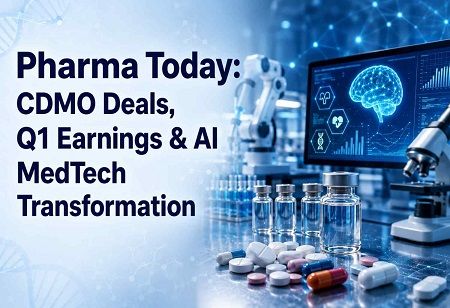
The latest developments highlight CDMO deals, Q1 earnings, and AI medtech transformation as key drivers shaping the pharmaceutical sector.
India’s pharma industry continues to expand through strategic partnerships, strong financial performance, regulatory progress, and technology-led healthcare transformation.
Companies are strengthening global CDMO capabilities, improving profitability, securing regulatory clearances, and adopting artificial intelligence in medical devices.
These developments reflect a shift toward innovation-driven growth and global competitiveness. From Gland Pharma’s major CDMO agreement to Akums’ financial gains and AI-led medtech advancements, the sector shows clear momentum across manufacturing, compliance, and digital healthcare integration.
Gland Pharma signed a strategic CDMO agreement with a global pharmaceutical company to boost its contract development and manufacturing business. The company expects to generate USD 90–100 million in annual revenue from this partnership. The deal focuses on complex injectable and strengthens Gland Pharma’s position in the global CDMO market. The company continues to expand its footprint in regulated markets while leveraging its manufacturing capabilities.
Also Read: The Strategic Role of Regional Corridors in Future-Ready MedTech
Indian pharma companies reported Q1 earnings with strong gains from Akums Drugs, Sun Pharma, and Aurobindo Pharma, while Dr. Reddy’s Laboratories recorded a decline. Akums Drugs posted a net profit of Rs 100 crore in Q1 FY27, driven by strong sales and improved margins. Sun Pharma and Aurobindo Pharma reported gains supported by demand in key global markets. Dr. Reddy’s performance declined due to pricing pressure and market challenges. These results highlight varied growth trajectories and competitive dynamics across the Indian pharmaceutical sector.
AI in Medtech continues to transform healthcare delivery with a report outlining five key priorities for adoption. The report emphasizes data integration, regulatory clarity, infrastructure development, talent building, and ethical AI deployment.
Union Health Minister J P Nadda released a knowledge paper highlighting the growing role of AI in reshaping the medical devices sector and overall healthcare ecosystem. The report emphasizes data integration, regulatory clarity, infrastructure development, talent building, and ethical AI deployment. AI technologies improve diagnostics, treatment planning, and patient outcomes.
AI technologies improve diagnostics, treatment planning, and patient outcomes. The healthcare ecosystem is actively adopting AI to enhance efficiency and precision across medical devices and digital health platforms.
Emcure Pharma received the Establishment Inspection Report (EIR) from the USFDA for its Sanand facility. The inspection outcome confirms compliance with global regulatory standards. This development strengthens Emcure’s credibility in regulated markets and supports its export growth strategy. The company continues to focus on quality manufacturing and regulatory excellence.
The latest developments clearly show that India’s pharmaceutical sector is entering a phase where scale, specialization, and technology define growth. CDMO deals like Gland Pharma’s highlight a shift toward high-value global manufacturing partnerships, while Q1 earnings reflect uneven but resilient financial performance across companies.
At the same time, regulatory milestones such as USFDA EIR approvals reinforce India’s credibility in regulated markets. The rise of AI in medtech signals a structural transformation in healthcare delivery, moving beyond traditional pharma into integrated digital ecosystems. Together, these trends indicate that the sector is not just expanding but evolving toward innovation-led, globally competitive growth.
.jpg)