
Fathimanoud, Correspondent, India Pharma Outlook
India’s sterile injectable CDMOs have built strong technical capabilities that cover the full range of aseptic processing, lyophilization, barrier technologies, and multiple container formats. These capabilities support both clinical and commercial production of small-molecule and complex injectables under cGMP conditions.

Aseptic fill-finish is the core process for sterile products that cannot undergo terminal sterilization.
In this method, the drug product and its container are sterilized separately and then assembled under Grade A/B cleanroom conditions to prevent microbial recontamination.
Indian CDMOs operate multi-format aseptic lines that handle:
The process sequence generally includes sterile filtration of the bulk solution, precise filling through sterile needles, immediate stoppering or sealing, capping where required, and 100 percent visual inspection.
Filling occurs in controlled environments supported by isolators or Restricted Access Barrier Systems (RABS). Environmental monitoring, personnel gowning controls and cleanroom classification (Grades A–D) form essential elements of the contamination control strategy.
Formulation stability under process stresses, compatibility with container-closure systems, and material compatibility during filtration and filling are evaluated early. Automated filling equipment reduces human intervention and thereby lowers microbial risk inside the Grade A zone.
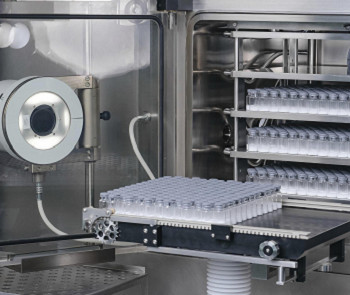
Lyophilization (freeze-drying) is required for formulations that are unstable in liquid form.
Many biologics, complex molecules, and certain small-molecule injectables degrade rapidly in aqueous solution.
Freeze-drying converts the product into a dry cake that maintains potency and extends shelf life, often allowing storage at ambient or refrigerated temperatures rather than deep cold-chain conditions.
The process follows defined stages:
Indian CDMOs treat lyophilization capacity as a key selection parameter because it directly determines the ability to handle moisture-sensitive products at both clinical and commercial scale. The resulting lyophilized injectables offer improved stability, simplified logistics, and rapid reconstitution at the point of use.
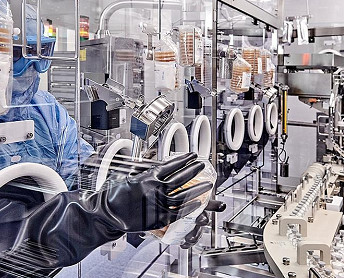
Modern sterile manufacturing increasingly relies on barrier technologies that reduce human intervention in the Grade A zone.
Restricted Access Barrier Systems (RABS) and isolators are the two principal approaches. RABS create a physical and aerodynamic barrier around the filling line.
Open RABS allow filtered air to exhaust into the surrounding cleanroom, while Closed RABS recirculate air within a sealed system. Both typically operate with a Grade A work zone inside a Grade B background.
Isolators provide continuous, fully sealed isolation of the Grade A environment from the external cleanroom. They incorporate reproducible bio-decontamination cycles and permit lower background cleanroom classifications when justified by risk assessment.
Operators interact only through glove ports or half-suits. Indian CDMOs are adopting isolators and advanced RABS because these systems improve sterility assurance, support higher automation, and align with evolving global regulatory expectations for contamination control.
Container selection depends on product characteristics, dose volume, administration route, and stability needs.
CDMOs match format selection to product requirements rather than offering a one-size-fits-all approach.
Parenteral products are classified by volume:
Indian CDMOs support both SVP and LVP production. Facilities are concentrated in states such as Gujarat, Maharashtra, Uttarakhand, and Madhya Pradesh.
Capacity for high-grade LVPs remains specialized because these products demand large-scale water systems, validated cleaning and sterilization cycles, and strict control of bioburden, endotoxin, and particulate matter.
Also Read: How Biologics and Complex Therapies Are Reshaping CDMO Strategy
.jpg)





, CDSCO.jpg "Fostering a Quality Culture in the Pharmaceutical Industry")