
Fathimanoud, Correspondent, India Pharma Outlook
India is emerging as a preferred hub for sterile injectable CDMO. Global pharmaceutical companies are redirecting complex injectable and biologics work to Indian partners to diversify supply chains, access scientific talent, and secure reliable capacity.
As per the data from Mordor Intelligence, the India contract manufacturing organization market was valued at USD 25.81 billion in 2025 and is estimated to grow from USD 29.53 billion in 2026 to reach USD 57.94 billion by 2031, at a CAGR of 14.43% during the forecast period (2026-2031). This expansion rests on cost-efficient production, a skilled workforce, and policy support that accelerate capacity additions.
Global sponsors continue to pursue China+1 strategy that reduces concentration risk while preserving scale. They seek second or third manufacturing sources that understand Western regulatory standards and can handle high-value molecules.
Indian CDMOs respond by expanding capacity and strengthening compliance systems. Facilities that already meet cGMP expectations and demonstrate strong data integrity practices gain preference.
The emphasis remains on supply-chain resilience, capacity readiness, and alignment with FDA and EU-GMP requirements rather than short-term cost savings alone. Multinational investments in new greenfield facilities, particularly around Hyderabad and Gujarat, reinforce India’s position as a credible alternative manufacturing base.
Demand is shifting toward more sophisticated products. Global pipelines increasingly include oncology injectables, biologics, biosimilars, peptides, long-acting formulations and high-potency compounds.
Indian CDMOs are expanding aseptic processing suites and building capabilities across these categories. The ability to manage both clinical and commercial volumes for complex sterile products strengthens their value proposition to international sponsors seeking partners that can support advanced therapies rather than only high-volume generics.
India’s opportunity is no longer defined mainly by lower manufacturing cost. The emerging model is end-to-end: R&D support, formulation development, technology transfer, aseptic fill-finish, analytical development, scale-up, commercial supply and global regulatory support.
Recent CDMO agreements involving Indian companies already reflect this integrated approach, covering process development, validation and commercial manufacturing. Tier-1 Indian CDMOs operate with embedded quality systems and clean regulatory track records that global clients recognize during audits. Companies that invest in scientific insight, process understanding, and shared risk with clients convert short-term diversification wins into longer-term strategic partnerships.
Digitization and AI deployments are shrinking development timelines and improving quality consistency. Leading facilities adopt automated filling lines, electronic batch records, digital environmental monitoring, and data-integrity controls aligned with regulatory expectations.
Predictive maintenance and real-time analytics further reduce variability and downtime. Automated Clean-in-Place and Steam-in-Place systems deliver reproducible cycles, electronic records, and reduced human intervention in sterile zones. These investments move Indian sterile operations beyond basic compliance toward higher assurance and operational efficiency that global sponsors require.
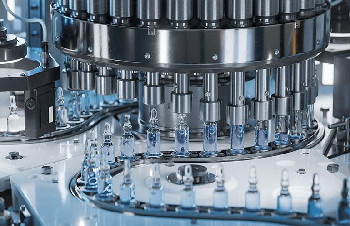
The next phase of growth centers on complex sterile products rather than simple volume manufacturing.
Indian CDMOs that combine advanced aseptic technology, lyophilization capacity, multi-format filling, analytical depth, and regulatory experience across major markets are positioned to capture a larger share of redirected biologics and complex injectable work.
Facilities that prepare manufacturing readiness early, maintain transparent quality systems and offer genuine end-to-end support stand to benefit most from the ongoing shift in global supply chains.
As per the data from Mordor Intelligence, the rapid expansion of the Indian CMO market reflects this transition toward higher-value, technology-intensive sterile manufacturing.
Also Read: Why India's Pharma Manufacturing Boom Needs More Women in Core Plant Operations
.jpg)





, CDSCO.jpg "Fostering a Quality Culture in the Pharmaceutical Industry")