
Dr. Anudeep Sandhu, Director - Medical Affairs & Clinical Affairs, Terumo India
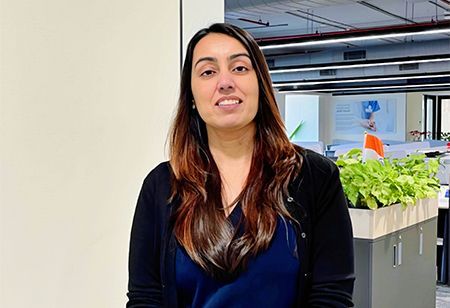
In an interaction with Thiruamuthan, Assistant Editor at India Pharma Outlook magazine, Dr. Anudeep Sandhu, Director, Medical and Clinical Affairs, Terumo India, discusses the growing need to connect MedTech innovation with real clinical needs. She explores how stronger clinical evidence and medical strategy can support adoption while highlighting the role of healthcare professional training and digital tools. She also shares her perspective on building stronger scientific collaboration and improving patient outcomes through clinically relevant solutions.
Read the complete conversation below for deeper insights.
How do you see the role of MedTech companies changing today, particularly beyond the development of medical devices?
The role of MedTech companies today has evolved significantly beyond simply developing a device and handing it over to a hospital. Innovation in healthcare becomes meaningful when healthcare professionals critically evaluate new advancements and confidently integrate them into their clinical practice and decision-making.
One of the most important responsibilities of MedTech companies is to support continuous learning and capability building. Medical technology is advancing rapidly, and procedures are becoming sophisticated. This means that clinicians need opportunities not just to understand a product, but also to develop procedural familiarity, hands-on skills, and the confidence to make informed decisions during complex clinical situations.
This is where I believe industry has an important role to play. We need to work closely with clinicians, hospitals, and academic institutions to create clinically relevant learning ecosystems that go beyond conventional product training. Simulation-based learning, skill labs, peer-to-peer learning, and structured clinical education can help bridge the gap between theoretical knowledge and practical application.
Innovation in healthcare becomes meaningful when healthcare professionals critically evaluate new advancements and confidently integrate them into clinical practice and decision-making.
As new technologies enter clinical practice, what makes clinician training and simulation-based learning so important for their safe and effective adoption?
When new technologies enter clinical practice, clinical training and simulation-based learning become extremely valuable to ensure that clinicians are not only aware of the technology but are adequately prepared before using it in a real patient setting.
Simulation-based learning (SBL) provides clinicians with a safe and controlled environment where they can become familiar with new technologies, understand their application, and practice different clinical scenarios without putting a patient at risk. It allows them to learn from mistakes, receive feedback, and refine their approach before they encounter similar situations in real-world practice.
The benefits extend beyond individual skills. Healthcare delivery is collaborative, and simulation-based learning can allow multidisciplinary teams to practice communication, coordination and decision-making around a new technology before integrating it into routine clinical workflows.
This preparedness can contribute significantly to safer adoption of innovation and support better clinical outcomes.
How can closer and more sustained engagement between MedTech companies and healthcare professionals translate into better clinical outcomes for patients?
The real value of sustained engagement between MedTech companies and healthcare professionals is when they come together to advance healthcare. It should not be limited to a company sharing information about technology with clinicians; it should also be about listening to what healthcare professionals are experiencing on the ground and building relevant solutions.
Clinicians are closest to the realities of patient care. They are best placed to highlight gaps in existing care pathways, practical challenges in adopting new technologies and areas where innovation can create greater value for patients. When MedTech companies actively listen to these insights and bring them back into the process, it creates a much stronger connection between innovation and clinical need.
MedTech companies use these insights to improve technology, education, solutions, and support. When innovation is shaped by a genuine understanding of clinical needs, its impact can move beyond the technology itself and contribute to more relevant, efficient and patient-centered care.
What does effective collaboration between MedTech companies, clinicians, and hospitals look like in practice?
Effective collaboration between MedTech companies, clinicians and hospitals should be built around a shared objective: addressing real clinical needs and improving the overall quality of patient care. In practice, this means moving beyond a traditional buyer-and-supplier relationship towards a more collaborative partnership.
Clinicians and hospitals can provide valuable insights into the practical challenges they encounter across different stages of patient care. When these perspectives are considered early, they can help MedTech companies develop solutions that are more relevant to real-world clinical settings.
Collaboration can also take place through multidisciplinary discussions, scientific meetings, professional conferences and knowledge-sharing forums, where clinicians, healthcare institutions and industry can exchange perspectives on emerging technologies and evolving clinical needs.
Does India need to rethink public procurement and reimbursement models to better recognize the clinical and economic value of innovative MedTech solutions?
As healthcare technologies are becoming advanced, it is important for procurement and reimbursement models to evolve alongside them. While affordability will always remain a critical consideration, the conversation should look beyond the upfront cost of medical technology and consider the broader value it can bring to patients and the healthcare system.
For example, when evaluating innovative technology, it may be relevant to consider factors such as its clinical utility, potential impact on patient outcomes, safety, efficiency and the overall resources required across the patient care pathway. In some cases, a solution that appears more expensive at the point of purchase may create value over the longer term by improving procedural efficiency, supporting better clinical outcomes or reducing the need for additional interventions.
Reimbursement frameworks need to keep pace with the evolution of medical technology and the needs of the patients. Innovation can only create meaningful impact when appropriate technologies are accessible to patients who may benefit from them, and the clinicians understand how to best use that technology for patient care. This requires a robust and evidence-based approach to evaluating new technologies and understanding their clinical value.
I see this as an opportunity to move towards a more holistic approach rather than viewing affordability and innovation as competing priorities. The objective should be to create frameworks that balance cost considerations with quality and clinical need, supporting improved patient outcomes and long-term value.
What will it take for India to move from being a cost-effective manufacturing base to becoming a meaningful global center for MedTech innovation and product development?
India has already demonstrated that it can be a highly capable and cost-effective manufacturing base. The next phase of growth, however, will require us to move towards designing, developing and validating medical technologies that can address both Indian and global healthcare needs.
This transition starts with a stronger innovation ecosystem. It requires closer collaboration among engineers, researchers, clinicians, hospitals, academia, and industry, so that innovation is driven by a genuine understanding of unmet clinical needs. We also need stronger capabilities across the entire development pathway - from early-stage research and prototyping to clinical validation, raw materials, regulatory expertise, quality systems, and commercialization.
India can draw valuable lessons from countries with mature MedTech and R&D ecosystems, such as Japan, where technological expertise, long-term research investment and a strong commitment to quality have helped advance healthcare innovation. Through knowledge exchange, collaborative research and the adoption of global quality standards, India can strengthen its own capabilities while building on its diverse patient needs and strong scientific and engineering talent to develop solutions that address local challenges and can scale globally.
Realizing India’s potential as a global center for MedTech innovation will require sustained investment in R&D, stronger clinical-academic-industry partnerships, predictable regulatory pathways and the ability to take ideas from concept to globally competitive products. India has many of the foundations in place; the next step is to connect them into a stronger, more integrated innovation ecosystem.
How have PLI, Medical Device Parks, NMDP 2023, SMDI and PRIP strengthened MedTech and what further government support is needed?
The various government initiatives have played an important role in giving India’s MedTech sector a stronger foundation. PLI has encouraged investment in domestic manufacturing, while Medical Device Parks are helping create common infrastructure and testing capabilities. Initiatives such as Promotion of Research and Innovation in Pharma MedTech sector (PRIP) and Scheme for Strengthening of Medical Device Industry (SMDI) are particularly important because they intend to address the ecosystem beyond manufacturing, including research, clinical studies, common facilities and capability building.
The next phase should focus on connecting these initiatives more closely. Manufacturing capability is important, but it needs to be supported by strong R&D, clinical research, testing infrastructure, skilled talent, and predictable regulatory and quality pathways. We also need stronger collaboration between industry, academia and healthcare institutions so that innovations are developed around genuine clinical needs.
Going forward, government support could focus on strengthening the entire innovation pipeline from research and clinical validation to manufacturing, adoption and exports. With India’s strong engineering, IT and scientific talent, diverse clinical environment and growing healthcare needs, these capabilities can help build not just a stronger manufacturing base but a globally competitive MedTech ecosystem.
How can MedTech companies balance the need to introduce advanced technologies with India’s strong demand for affordable and accessible healthcare?
India is a cost-sensitive healthcare market, and affordability is an important consideration when introducing any new medical technology. Affordability cannot come at the expense of quality, safety or clinical effectiveness.
The conversation about making newer technologies accessible and affordable should be based on understanding the value that technology brings to the overall care pathway and ensuring that innovation is relevant to the needs of the healthcare system. A technology that improves clinical outcomes, supports greater procedural efficiency or reduces the need for repeat interventions can create value beyond its initial cost.
From an industry perspective, this requires a strong understanding of the Indian healthcare environment. Companies need to look at how technologies can be introduced responsibly, supported by evidence, and integrated into existing clinical workflows and enable efficient care delivery.
Ultimately, I don't think India has to choose between advanced technology and affordable healthcare. The objective should be to make innovation meaningful and accessible where the technology is clinically relevant, the value is demonstrable, and the solution can be scaled sustainably.
Looking ahead, how can MedTech companies contribute to building a more future-ready healthcare ecosystem through education, capability building, and knowledge-sharing?
Looking ahead, I believe MedTech companies will continue to play an important role in making continuous learning a more integral part of the healthcare ecosystem. The pace at which medical science and technology are evolving means that the clinician has to continuously seek opportunities to stay updated with new evidence and innovations in technology and treatment practices. The ability to continuously learn, unlearn, and relearn has become immensely important.
The challenge, however, is not simply about creating more educational programs. We need to rethink how knowledge and skill development are delivered. Healthcare professionals have demanding schedules, and access to advanced learning opportunities is not always equal across geographies. This is where MedTech companies can contribute by supporting more flexible, scalable and accessible models of education.
A future-ready health care ecosystem will require multiple channels of accessible learning opportunities with hands-on learning, simulation, digital platforms, peer-to-peer exchange and other technology-enabled formats. Different learning methods can complement each other and help bring knowledge closer to healthcare professionals, rather than expecting everyone to access learning in the same way.
What is your personal leadership mantra?
Be curious and be intentional. I believe leadership is both a privilege and a responsibility to serve others. Every question we ask, every conversation we have, and every decision we make creates an impact that touches many lives.
In healthcare, this responsibility is even more profound because the impact of our work can be direct, personal and far-reaching. Being curious helps us keep learning, challenge our own thinking and understand different perspectives. Being intentional reminds us to think carefully about the choices we make and the people they affect.
For me, leadership is not about having all the answers. It is about asking the right questions, listening with an open mind and making thoughtful decisions with purpose.
I believe the four key pieces of advice I would share with emerging leaders would be:
Be curious - Seek to understand and continue to learn, so much around us is changing and we are all learning. Whether it is adoption of artificial intelligence in our work or personal lives, or the evolving needs of the healthcare system or the importance of human factors, we must stay curious and keep learning to inform our decisions and actions.
Be authentic – With so much going on in our lives, don’t lose yourself. Being authentic reduces the cognitive load.
Trust is your currency and needs to be earned- Keeping your commitments, listening to others, respecting differences of opinion, transparency and consistency in thought and action help gain and keep trust.
Success has many dimensions - As a leader, it is imperative to define what success means for you and the impact you intend to create for the larger community you serve.
Dr. Anudeep Sandhu brings over 17 years of experience across medical affairs and clinical development, with expertise in medical strategy, clinical evidence, scientific engagement, and launch excellence. She has held leadership roles at Terumo India, Takeda, Shire, Baxalta, Biogen, and Ranbaxy Pharmaceuticals. As Director of Medical and Clinical Affairs at Terumo India, he leads medical strategy, real-world evidence, HCP education, stakeholder engagement, and digital initiatives.
.jpg)



, CDSCO.jpg "Fostering a Quality Culture in the Pharmaceutical Industry")