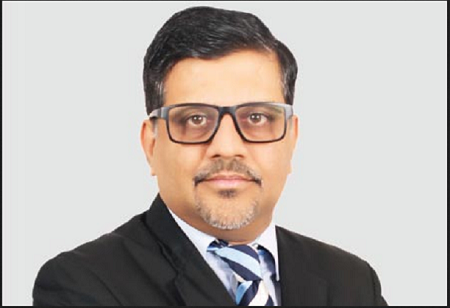
Aurelien Breton, Managing Director, Servier India

In an interaction with Thiruamuthan, Assistant Editor at India Pharma Outlook, Aurelien Breton, Managing Director, Servier India, discusses what it will take for India to move beyond making innovative therapies available to making them meaningfully accessible to patients. He reflects on the disconnect between regulatory approval and real-world access, while highlighting affordability, diagnostics, reimbursement, and HTA as critical levers in closing this gap.
Aurelien Breton’s professional journey reflects more than 20 years of navigating pharmaceutical businesses across varied markets and operating environments. Through leadership roles at Servier and Sanofi, he has built expertise across oncology, market access, business expansion, P&L management, and leading diverse teams across geographies.
Having led pharmaceutical businesses across Europe, Africa, and now India, what differences have you observed in the way healthcare systems translate innovation into timely patient access?
Across every market I have worked in, one lesson has remained constant: innovation only benefits patients when the healthcare system is prepared to integrate it.
The difference between regions is often not the science itself, but the maturity of the healthcare ecosystem around it. In many European countries, there are established pathways that connect innovation, regulation, reimbursement, diagnostics, and clinical practice. Once a therapy demonstrates value, there are often dedicated healthcare funding mechanisms, reimbursement systems, and access policies in place that help patients receive innovative treatments in a structured and timely manner.
In many emerging markets, including parts of Africa and Asia, the challenge is different. Innovation may be available, but access is often influenced by broader factors such as healthcare infrastructure, specialist capacity, diagnostic availability, and affordability. As a result, the gap between regulatory approval and real patient access can be much wider.
What makes India particularly interesting is that it combines elements of both worlds. The country has a sophisticated pharmaceutical industry, world-class scientific talent, rapidly evolving regulatory capabilities, and one of the largest patient populations globally. At the same time, healthcare access remains highly heterogeneous, with significant differences across regions and care settings.
India's opportunity is to build a healthcare model that works for its own needs and scale. The focus should be on ensuring that innovation does not stop at approval, but reaches the patients who need it.
We are seeing positive developments in areas such as health coverage, digital health, and regulation. The key challenge now is connecting these efforts so that innovations can move more efficiently for patient benefit.
With India's pharmaceutical innovation gaining momentum, where do you believe the healthcare ecosystem still breaks down in ensuring patients receive timely access to advanced therapies?
The real challenge is not as much bringing innovation to India but ensuring that innovation reaches patients in a timely manner.
In my view, there is still a bit of a vicious circle. While India's innovation ecosystem is growing, companies also look at how quickly innovation can be registered, adopted, and made accessible to patients. If pathways remain complex or uncertain, it can influence how quickly some innovations are introduced into the market.
Secondly, financial access remains a significant challenge in the private sector, where insurance coverage is still limited and many patients rely heavily on out-of-pocket spending. Innovation is often concentrated in areas such as oncology and rare diseases, which affect smaller patient populations than more prevalent conditions like cardiovascular disease or diabetes, but typically involve higher treatment costs per patient. For those living with these conditions, the overall cost of diagnostics, hospital care, specialist consultations, and medicines can quickly become unaffordable without structured support mechanisms.
Access can be equally complex within reimbursed healthcare systems. Coverage and access pathways often differ based on socio-economic segments, employer-sponsored schemes, government programs, and even geographical location. These pathways are not always aligned, and navigating multiple layers of review can take considerable time. As a result, the period between a therapy becoming available and a patient actually receiving it can sometimes extend from months to years.
Ultimately, this is not only a question of healthcare readiness. It is also a question of how willing the ecosystem is to welcome innovation and create pathways that allow patients to benefit from it.
India’s opportunity is to build a healthcare model where innovation does not stop at regulatory approval, but reaches the patients who need it.
As CDSCO continues strengthening India's regulatory framework, what additional reforms could accelerate access to innovative medicines without compromising patient safety and quality?
India has made significant progress in strengthening its regulatory ecosystem and aligning with global standards. The evolution of CDSCO over recent years has created a strong foundation for innovation, patient safety, and public health.
Going forward, the continued focus should be on ensuring that patients can benefit from new medicines as early as possible, while maintaining robust standards for safety and quality.
At the same time, greater alignment with international standards can make it easier for companies to include India in global research and development programs. For example, if a medicine is being studied across multiple countries, similar regulatory requirements can reduce duplication of work and simplify the submission process. This can encourage more clinical research in India and may help innovative therapies become available to Indian patients earlier.
One of the points I would like to emphasize is boosting a stronger innovation ecosystem through measures such as Regulatory Data Protection (RDP). Developing a new medicine requires many years of research and substantial investment in generating the clinical and safety data that underpin regulatory approvals. A solid RDP framework would recognize and protect this scientific investment for a defined period, creating a more encouraging environment for innovation, research, and future therapies. Industry bodies such as OPPI have also been highlighting RDP as an important component of a modern, innovation-driven healthcare ecosystem.
Ultimately, the objective is to build a regulatory environment that combines scientific excellence, innovation, and patient-centricity, enabling Indian patients to benefit from new medical advances as early as possible while maintaining the highest standards of safety and quality.
Despite growing discussions around value-based healthcare, why has Health Technology Assessment (HTA) yet to become a mainstream tool for improving reimbursement and patient access in India?
Health Technology Assessment (HTA) has not yet become a mainstream tool in India because healthcare decision-making has historically been focused on addressing the largest and most immediate health needs within available resources.
For many years, the priority was rightly centered on expanding access to healthcare, strengthening infrastructure, and ensuring treatment for common diseases that affect large segments of the population. In such an environment, decisions have often been driven by budget impact and affordability, particularly the immediate cost of treatment.
HTA takes a broader view. It looks not only at what a treatment costs today, but also at the value it delivers over time. For example, a therapy may have a higher upfront cost but could reduce hospitalizations, prevent complications, or improve patients' quality of life. HTA helps assess these broader benefits alongside costs.
Another challenge is the fragmented nature of healthcare funding and access in India. Different institutions and healthcare systems often follow different decision-making processes, making it difficult to apply a consistent HTA framework across the country.
As healthcare needs evolve, particularly with the growing burden of chronic and complex diseases, there is increasing recognition that decisions cannot be based on cost alone. HTA can help stakeholders make more informed and transparent choices about how limited healthcare resources can deliver the greatest benefit for patients.
With precision medicine and targeted therapies reshaping treatment pathways, how should India's healthcare ecosystem strengthen diagnostics, infrastructure, and clinical readiness to support wider adoption?
Precision medicine is changing the healthcare conversation from treating a disease to treating the right patient based on the unique characteristics of their disease. As targeted therapies become more advanced, diagnostics and treatment can no longer be viewed separately.
To support wider adoption, I believe India should focus on three priorities.
First, expanding access to quality diagnostics. Molecular testing and biomarker-driven diagnosis need to become a routine and systemic part of care, particularly in complex diseases such as cancer. Their use is not yet consistent across the healthcare ecosystem (institutions in particular). The right treatment decision starts with the right diagnosis.
Second, strengthening healthcare networks, not just individual centers of excellence. India has outstanding clinical expertise, but access to advanced diagnostics and specialized care can vary significantly across regions. Connecting expertise, testing capabilities, and treatment pathways more effectively can help more patients benefit from innovation, regardless of where they live.
Third, strengthening clinical readiness through multidisciplinary care. Scientific advances are moving rapidly, making collaboration across specialties more important than ever.
Approaches such as tumor boards and multidisciplinary case reviews bring together different experts to evaluate individual patient cases and determine the most appropriate treatment approach. It helps ensure that treatment decisions are informed by diverse clinical expertise and the latest scientific evidence.
This is particularly relevant as India enters a new phase of oncology care. At Servier, our expansion in oncology is accompanied by a strong focus on scientific partnerships and engagement with the medical community, helping support knowledge exchange around emerging science, precision diagnostics, and evolving treatment approaches.
When diagnostics, clinical expertise, and treatment pathways work together, patients can be identified earlier, treated more effectively, and achieve better outcomes.
While India has established itself as a global pharmaceutical manufacturing hub, what ecosystem changes are still needed to position the country as a leader in research-driven innovation?
To me, the key requirement for being a manufacturing hub to an innovation hub is the level of investment in research and development.
Research-driven innovation requires substantial and sustained funding over many years. Countries that have become innovation leaders have invested heavily in R&D, and that investment has translated into stronger research ecosystems and more scientific breakthroughs.
India's investment in R&D has grown steadily, but as a share of GDP (0.9%), it remains lower than some of the world's leading innovation economies. For example, R&D GDP share of China (2%). That gap matters because sustained investment is what builds research infrastructure, supports scientific discovery, and ultimately produces breakthrough innovation.
Alongside funding, India also needs to continue supporting the environment that encourages research, supports innovation, and brings together industry, academia, healthcare institutions, and researchers. The opportunity for the country now is to scale investment and ambition so that more innovations are discovered, developed, and brought to patients from India.
Given the rising burden of cancer and other non-communicable diseases, how can industry, policymakers, healthcare providers, and payers work together to make innovative treatments more accessible and sustainable?
Cancer and other non-communicable diseases (NCDs) present a unique challenge because outcomes depend heavily on early detection and timely intervention. As mentioned in earlier responses, In India, many patients still enter the healthcare system at a later stage of disease, whether it is cancer, cardiovascular disease, or diabetes-related complications. By then, treatment becomes more complex, outcomes may be poorer, and the burden on families and the healthcare system increases.
Addressing this requires action across the entire care pathway.
Policymakers can strengthen screening, early detection, and preventive health programs. Healthcare providers can help build stronger referral networks so that patients move more quickly from suspicion to diagnosis and treatment. Payers can play an important role in expanding reimbursement mechanisms so that access is not determined solely by a patient's ability to pay.
Industry can contribute through innovation, scientific exchange, physician education, and patient support initiatives that help patients navigate increasingly complex treatment journeys. At Servier, for example, our access program, Servier Care, helps support eligible patients throughout their treatment journey, while our disease awareness initiatives reflect the importance of improving awareness and earlier engagement with care pathways.
The greatest opportunity for India is to shift the conversation from treating advanced disease to detecting and treating disease earlier. When early diagnosis, timely referral, access to innovation, and sustainable financing come together, we can significantly improve outcomes for patients while making healthcare systems more sustainable in the long term.
Your personal mantra that consistently shaped your leadership approach?
My guiding principle is simple: focus on what you can positively impact.
Whether it is improving outcomes for patients through the therapies we bring to them or contributing to the healthcare ecosystem when there is an opportunity to advance access, knowledge, or collaboration.
Equally important is the impact we have on our people. As leaders, we have a responsibility to create an environment where colleagues can grow, develop their careers, and find professional fulfillment.
I think leadership is ultimately about leaving people, organizations, and systems stronger than you found them.
What are your top five pieces of advice for future healthcare leaders committed to advancing both pharmaceutical innovation and equitable patient access?
My advice would be to look at patient access holistically, especially in a country like India. Bringing a medicine to market is only one part of the journey.
We also need to consider affordability – a significant challenge in India, diagnosis, and the practical barriers that patients face in accessing treatment. It is equally important to involve India earlier in the innovation process, for leveraging the country’s talent pool and for earlier access to innovation.
Finally, healthcare leaders should help global stakeholders understand India's unique realities, as growth and adoption patterns here can differ significantly from other markets. Progress may sometimes take longer, but when innovation reaches scale in India, the impact can be significant.

.jpg)


, CDSCO.jpg "Fostering a Quality Culture in the Pharmaceutical Industry")