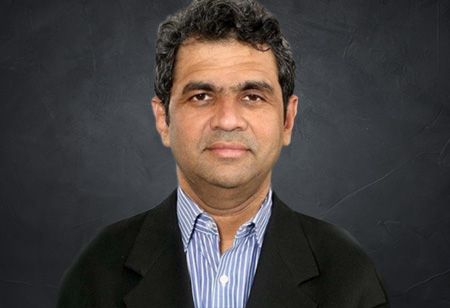
Suresh Pattathil, Managing Director & General Manager, AbbVie India

India has established itself as a major pharmaceutical manufacturing hub, earning recognition as the pharmacy of the world. However, its next phase of growth will depend on its ability to move beyond manufacturing scale and strengthen its position in innovation, research, and high-value pharmaceutical development. This transition will require stronger industry-academia collaborations, greater investment in research and development, predictable regulatory policies and resilient supply chains.
Drawing on more than three decades of experience in the pharmaceutical industry, Suresh Pattathil, Managing Director & General Manager, AbbVie India, shares his perspectives on India's evolving pharmaceutical landscape, the importance of innovation-led growth, strategic partnerships, regulatory data protection and the role of technology in strengthening supply chain operations.
Looking back at your three-decade career in the pharmaceutical industry, what experiences and leadership principles have shaped your professional journey?
My career began at the ground level as a marketing executive in sales. Two people influenced me early in my career: my uncle, who served as a marketing mentor, and my first country manager, who introduced me to three principles that have continued to shape my professional philosophy: ethics and integrity, creating value, and continuous learning.
There is no right way to do the wrong thing. Maintaining integrity and transparency is fundamental, irrespective of the circumstances. Equally important is creating value, not simply in terms of financial rewards, but through the ability to make a meaningful impact on people and patients. The third principle is that learning never stops; it must remain a lifelong commitment.
Throughout my career, I have been driven by the opportunity to build businesses. I have experienced six or seven mergers and acquisitions, and each transition presented a choice between moving on and staying through the integration process. I chose to stay through those periods because I believed the teams depended on leadership and needed a reliable source of direction during uncertain times.
I started in sales, moved into marketing, and subsequently took on P&L responsibilities. My experience spans therapeutic areas such as oncology, endocrinology, and ophthalmology, as well as primary care and dermatology. Each transition brought new learning opportunities. In fact, some of the most significant lessons in my career came during periods of organizational disruption.
Building strong teams, launching new brands, introducing innovative products, and developing leadership capabilities have remained some of the most rewarding aspects of my journey. What continues to motivate me is the opportunity to bring global products and capabilities to India and make a meaningful difference to patients.
India is recognized as the pharmacy of the world, particularly for its manufacturing capabilities. What must the industry do to strengthen its position in the global pharmaceutical value chain?
India should be proud of its position as the pharmacy of the world. We have demonstrated considerable manufacturing capabilities, supplying approximately 45% of US generics and 65% of global vaccines. These figures reflect the strength of our manufacturing and development ecosystem.
However, while India ranks among the leading countries in terms of pharmaceutical supply volumes, we remain much lower in the value chain. The global pharmaceutical market is estimated at around USD 1.4 trillion, while the generics segment represents a considerably smaller portion of this opportunity. India has established leadership in generics, but the larger opportunity lies in moving into higher-value segments.
I believe this is the right time for India to leverage its existing strengths in manufacturing, chemistry and process engineering to develop cutting-edge molecules and strengthen its innovation capabilities. We need to move towards an innovation-led approach, where research and development happen in India, products are developed for global markets, and manufacturing capabilities are complemented by scientific innovation.
The collaboration between AbbVie and Glenmark for a trispecific antibody is an important example of this direction. This USD 2 billion agreement has completed Phase I trials, although a substantial clinical development journey remains. Such collaborations can encourage Indian companies to explore advanced technologies, new molecules and targeted therapies.
India has tremendous opportunities across therapeutic areas. Underdiagnosis, limited awareness, and suboptimal treatment remain significant challenges. For instance, India has an ageing population, with more than 100 million people above the age of 65. Glaucoma affects approximately 12 million people, but only around two million are receiving treatment. Addressing such gaps will remain an important responsibility for the pharmaceutical and healthcare ecosystem.
Also Read: AI in Pharma Quality: Opportunities and Compliance Challenges
How can strategic partnerships between pharmaceutical companies, research institutions and investors accelerate India's innovation journey?
Partnerships and collaboration are essential because no organization can develop every capability independently. Different institutions bring different technologies, expertise, and strengths, and combining all these capabilities would accelerate innovation.
The AbbVie-Glenmark collaboration illustrates this approach. Glenmark developed the technology and platform for the product, while AbbVie brings capabilities in global development, clinical research, and taking the molecule from the laboratory to the market. Therefore, each organization contributes its strengths to advance a shared objective.
Beyond industry-to-industry collaborations, we need stronger partnerships between pharmaceutical companies, academic institutions, research organizations, and healthcare professionals. Institutions such as NIPERs and IIITs can play an important role in strengthening research capabilities. They should also collaborate with global research centers to develop cutting-edge scientific capabilities in India.
Healthcare professionals are equally important partners because they understand patient and physician journeys. Their insights help identify unmet medical needs and ensure that research addresses actual treatment gaps.
However, innovation also requires financial support. Private equity firms, venture capitalists, and other investors must be willing to provide risk capital. Pharmaceutical research and development involves significant uncertainty. A molecule may undergo years of development and clinical trials without ultimately demonstrating the desired benefit for patients.
India needs successful innovation stories that demonstrate the potential of investing in research. Such successes can encourage greater investor confidence, strengthen partnerships, and create an ecosystem that is more willing to support long-term innovation.
What role do policy predictability and regulatory stability play in building investor confidence and encouraging pharmaceutical innovation in India?
Policy predictability is particularly important for attracting investment. One of the challenges associated with India has been the perception that its regulatory and policy environment is complex and subject to frequent changes.
For multinational pharmaceutical companies, this uncertainty can make long-term investment decisions difficult. When planning an investment or introducing a new initiative in India, companies often find themselves preparing multiple alternatives because the eventual regulatory outcome may not always be clear.
The industry needs an environment in which companies can understand the applicable requirements and anticipate the likely outcomes of their decisions. While business will always involve some degree of risk, excessive regulatory uncertainty makes it difficult to plan and commit resources over the long term.
I have observed a greater degree of stability across government departments and regulatory institutions over the past year and a half. This is encouraging. Similar continued engagement between the government and industry associations can further strengthen this relationship.
Our advocacy efforts should focus on creating policies that support better patient outcomes while providing the pharmaceutical industry with a predictable operating environment. Therefore, stability and transparency will be important in encouraging companies to invest in India and participate more actively in its innovation journey.
As the Chair of the OPPI Technical Supply Chain Work Group, how do you see India strengthening pharmaceutical supply chain resilience, particularly in distribution quality and anti-counterfeiting?
The most important consideration in the pharmaceutical supply chain is ensuring that patients receive products of the required quality and integrity. Quality is not limited to manufacturing a product correctly. It is equally important to ensure that the product reaches the patient without compromising its quality, potency, or integrity.
While stronger Good Manufacturing Practices (GMP) requirements and Schedule M provisions support manufacturing quality, greater attention must also be given to Good Distribution Practices (GDP). Every stage of the distribution chain, including carrying and forwarding agents, stockists, wholesalers and retailers, must maintain the necessary conditions to preserve product quality.
OPPI has submitted a white paper to the government on Good Distribution Practices, highlighting the importance of maintaining product integrity throughout the supply chain. India's geographically diverse and widely distributed pharmaceutical market makes this particularly important. We need stronger practices across the entire distribution network to ensure that medicines reach patients on time and retain the same potency as when they left the manufacturing facility.
Another major challenge is counterfeiting. Having a QR code on a pharmaceutical product is not sufficient because conventional QR codes can be replicated. We need to explore stronger anti-counterfeiting mechanisms, including dynamic QR codes and unique identification codes for individual product units.
India's global pharmaceutical reputation depends on the quality of its medicines and their consistent performance. Strengthening manufacturing standards, implementing effective distribution practices and preventing counterfeit products must therefore remain interconnected priorities.
Also Read: India's 30% Anti-Cancer Drug Margin Cap: What It Means for Pharma
How can artificial intelligence and digitization improve demand forecasting, supply planning and operational efficiency across pharmaceutical supply chains?
Artificial intelligence is becoming an integral part of business operations, much like computers and mobile phones have become essential to everyday work. Its applications across pharmaceutical supply chains are significant.
AI can strengthen demand planning by helping organizations forecast market requirements more accurately and efficiently. It can also improve supply planning and support the identification of optimized distribution routes. Similarly, demand forecasting is particularly important in chronic therapies.
If a company fails to anticipate demand correctly, it may experience stockouts, leaving patients without access to medicines they depend on regularly. AI-enabled forecasting can help organizations make better decisions regarding production quantities, inventory, and supply requirements.
Digitization also has an important role in technical operations and manufacturing. Remote monitoring capabilities, for instance, allow companies to identify potential equipment issues without always requiring physical inspections. Such applications can support manufacturing quality and operational efficiency.
Enterprise resource planning systems are already widely used across the industry. The next opportunity lies in integrating AI capabilities into these systems to provide better insights into manufacturing requirements, demand patterns, and supply planning.
However, technology should enable people rather than replace the human element in decision-making. Its real value lies in helping organizations respond faster, make informed decisions, and improve the movement of products from manufacturing facilities to patients.
Why is regulatory data protection important for encouraging pharmaceutical innovation and supporting India's transition towards high-value drug development?
Regulatory data protection is an important consideration in creating an environment that encourages innovation. Developing a new pharmaceutical molecule involves a considerably longer journey compared to introducing products in other industries.
After discovering a molecule, companies may spend eight to ten years conducting clinical development to establish its efficacy, safety, and appropriate dosage. This involves multiple stages of clinical trials, including Phase I, Phase II, and Phase III, before regulatory approval can be obtained.
A significant portion of the investment in innovative medicines goes into these clinical studies. By the time a product receives its first regulatory approval, a substantial part of its 20-year patent period may already have elapsed.
Regulatory data protection recognizes the value of the data generated by the innovator during this development process. Different countries have adopted different periods of protection, generally ranging around five to six years, although the applicable provisions vary by jurisdiction.
The fundamental principle is to protect the regulatory data submitted by the originator company for a specified period. This provides innovators with an incentive to continue investing in research and development. Without adequate protection for the data generated through years of research and substantial financial investment, it becomes difficult to encourage further innovation.
We often bring innovation and access into the same discussion, but they are distinct considerations. If India wants to encourage the development of innovative medicines domestically, regulatory data protection must be recognized as an important part of that ecosystem.
As more Indian companies begin developing advanced therapies and innovative molecules, the importance of regulatory data protection will extend beyond multinational companies to domestic innovators as well.
What advice would you offer to young professionals entering the pharmaceutical industry and aspiring to build long-term careers?
Every generation has its own aspirations and approaches to professional life. Young professionals today may choose different career paths, including entrepreneurship, rather than following a conventional corporate journey. Our experiences can offer lessons, but their journeys do not necessarily have to be the same as ours.
However, certain principles remain relevant across generations and industries. Ethics and integrity must form the foundation of professional life. Continuous learning is equally important because learning should never stop, irrespective of how much experience one gains.
Young professionals should also focus on creating value rather than pursuing rewards alone. When individuals work towards a larger purpose and concentrate on making a meaningful contribution, the rewards will follow. Having that larger purpose is what sustains passion and keeps people motivated throughout their careers.
I would also encourage young professionals to be creative, think beyond conventional approaches, and build diverse teams. Throughout my leadership journey, I have preferred teams with different perspectives and capabilities rather than people who simply think like me. Diversity of thought brings dynamism, encourages innovation, and helps organizations succeed.
Ultimately, having the right values, remaining committed to lifelong learning, and working towards a larger purpose are principles that can guide professionals, irrespective of the industry or career path they choose.




, CDSCO.jpg "Fostering a Quality Culture in the Pharmaceutical Industry")