Fathimanoud, Correspondent, India Pharma Outlook
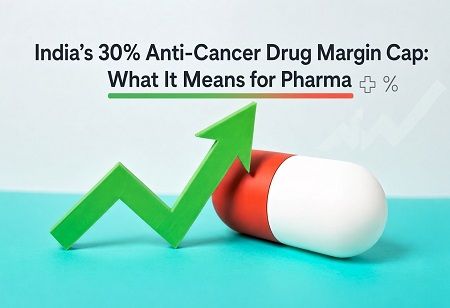
India’s 30% anti-cancer drug margin cap could reduce cancer treatment costs while reshaping pricing and profitability across the pharmaceutical industry.
The National Pharmaceutical Pricing Authority (NPPA) issued the order on October 17, 2026, covering 137 non-scheduled anti-cancer medicines, with revised maximum retail prices (MRPs) taking effect from November 9.
The government expects the measure to lower prices by up to 70% and generate annual savings of around Rs 2,500 crore for patients.
However, the impact of India’s 30% anti-cancer drug margin cap will depend on how manufacturers, hospitals and pharmacies adjust to the new pricing rules and whether lower medicine prices translate into reduced patient bills. This move also places new pricing and supply obligations on manufacturers while potentially affecting hospital earnings from oncology medicines.
The new framework extends trade margin regulation to a wider group of non-scheduled anti-cancer medicines, which do not fall under the same scheduled-drug ceiling price framework. Instead of setting a uniform ceiling price across the entire category, the intervention limits the margin added along the supply chain.
This approach brings patient affordability into focus while raising questions about distribution economics, hospital revenue and medicine availability. The key test is whether the revised prices reach patients without disrupting access to essential oncology treatments.
Also Read: India's Drug Pricing Architecture: Why the Rules Keep Expanding
 The new order targets 137 non-scheduled anti-cancer medicines, including immunotherapy drugs and treatments such as pembrolizumab, bevacizumab and osimertinib.
The covered medicines serve patients across several cancer types, making the intervention relevant to a broad segment of oncology care.
According to the Press Information Bureau (PIB), the government expects the measure to reduce prices by up to 70% and help patients save approximately Rs 2,500 crore annually.
These figures represent projected outcomes, not guaranteed reductions for every medicine or patient. The actual change will depend on each drug’s existing price structure and the revised MRP calculated under the order.
The distinction matters because medicine costs form only one part of a cancer patient’s overall expenditure. Treatment may also involve consultations, diagnostic tests, hospital stays, procedures and supportive care.
Lower prices for covered medicines could ease the financial burden, but they will not automatically reduce every component of a treatment bill. The government is building on its 2019 intervention, when the NPPA capped trade margins on 42 selected non-scheduled anti-cancer medicines.
The PIB reported that the earlier measure reduced the MRPs of 526 brands by up to 91%, with estimated annual savings of Rs 984 crore. The expanded list now brings more medicines under the same broad policy approach.
The latest measure also covers medicines across branded and generic, domestic, imported, patented and non-patented categories, according to the government announcement.
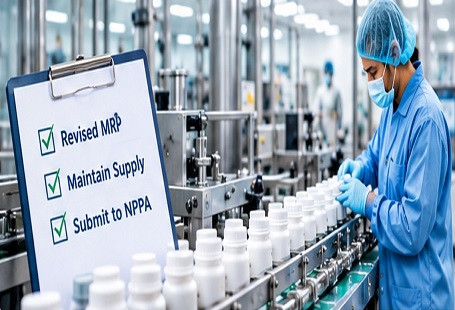 For pharmaceutical manufacturers, the order creates a short timeline to recalculate prices and report the revised MRPs.
Companies must submit the required pricing information to the NPPA within seven days of the notification.
The revised prices will apply from November 9, giving manufacturers and downstream sellers a defined deadline to prepare for the change.
The order also places supply continuity at the center of implementation. The government has directed manufacturers to maintain production levels for the covered medicines.
This provision aims to prevent price regulation from affecting the availability of treatments that patients may need throughout an ongoing course of cancer care.
The obligations require companies to coordinate pricing, production and distribution. Manufacturers must communicate revised prices to their sales networks and ensure that distributors, retailers and institutional buyers receive accurate information.
Delays or inconsistencies could create confusion over the prices that sellers should charge once the new rates take effect. The pricing framework also makes the calculation of the revised MRP important.
Companies must apply the formula and reference-price provisions specified in the NPPA order rather than simply reducing every medicine’s current MRP by a uniform percentage. As a result, the final reduction may vary across products.
Manufacturers must also review the order’s provisions on production changes and discontinuation before making operational decisions. Any requirement for prior approval to reduce production or advance notice before discontinuing a formulation should be interpreted in line with the applicable notification.
These conditions create a balance between price intervention and supply security. A lower MRP can improve affordability, but patients will not benefit if a covered medicine becomes difficult to obtain. The effectiveness of the policy will therefore depend on whether companies meet both their pricing and availability obligations.
Also Read: Why India's Pharma Manufacturing Boom Needs More Women in Core Plant Operations
 Hospitals and pharmacies could face changes in the economics of oncology medicine sales as the revised prices take effect.
Hospitals that procure and dispense high-value cancer medicines may need to reassess procurement arrangements, billing systems, inventory valuations and revenue expectations.
A Financial Express report citing JM Financial estimates that the measure could lead to a 1.5–3% decline in earnings before interest, taxes, depreciation and amortization (EBITDA) for hospitals, particularly multispecialty providers with significant oncology exposure.
The estimate signals potential pressure on hospital earnings, but it should not be read as a uniform impact across the sector.
The effect will depend on how much revenue a hospital derives from the covered medicines, its procurement costs, its oncology business mix and its ability to adjust other operating expenses.
The estimate also needs to be distinguished from a 1.5–3 percentage-point decline in EBITDA margin; the reported figure should not be interpreted as a margin change unless the underlying analysis explicitly defines it that way.
The cap may also change the role of medicine margins in hospital business models. Providers that rely partly on the difference between procurement prices and patient billing may need to adjust their internal pricing and purchasing practices.
Hospitals with lower exposure to the covered medicines may experience a different impact from those with larger oncology departments. Pharmacies and distributors will also need to update their systems and ensure that invoices reflect the applicable MRPs.
They must communicate revised prices across the supply chain and avoid charging patients above the permitted rates. Accurate stock and billing records will help businesses manage the transition and reduce the risk of compliance errors.
For patients, the crucial issue is whether the lower medicine prices appear clearly in final bills. Hospitals and pharmacies must apply the revised prices to covered medicines, while keeping other charges transparent. The trade-margin cap directly addresses medicine pricing; it does not automatically regulate every service or charge associated with cancer treatment.
Metric / Parameter | Before the Margin Cap | After the 30% Margin Cap (Effective Nov 9, 2026) |
Trade Margins (Markups) | Averaged 170%, with extreme markups running as high as 700% to over 1,800% across supply chains. | Capped strictly at a maximum of 30% between the price to stockist/hospital and the final MRP (excluding GST). |
Maximum Retail Prices (MRPs) | Inflated significantly due to multi-layer distributor, chemist, and hospital markups. | Expected to drop by up to 70% depending on the specific formulation and existing price structure. |
Manufacturer Selling Price | Left untouched (manufacturers' factory gates/revenues remain unaffected). | Unchanged; regulation targets only the middle-chain trade/retail margins. |
Scope of Covered Drugs | 137 non-scheduled anti-cancer drugs (including immunotherapies, targeted therapies, and high-cost injectables). | Applies across all trade channels, including retail chemists, stockists, and in-house hospital pharmacies. |
Estimated Annual Patient Savings | High out-of-pocket expenditure straining patient finances. | Projected to save patients approximately ?2,500 crore annually nationwide. |
The NPPA’s pricing order will need effective enforcement to translate the notified rates into savings at the point of sale. State drug controllers have an important role in monitoring compliance, while hospitals, pharmacies and other sellers must follow the revised prices applicable to the medicines they supply.
Implementation will require more than issuing revised price lists. Sellers must update billing systems, display the applicable prices and ensure that staffs use the correct rates. Manufacturers must provide timely and accurate pricing information so that downstream businesses can implement the changes without confusion.
Monitoring also needs to distinguish between a formal price reduction and the amount a patient ultimately pays. If a medicine’s MRP falls but billing systems continue to apply an outdated rate, the patient may not receive the intended benefit.
Clear price communication, accessible information and a process for addressing overcharging can help close this gap. The government’s earlier experience with the 2019 intervention provides a reference point for the expanded framework.
However, the wider list of 137 medicines increases the importance of consistent implementation across manufacturers, distributors, pharmacies and hospitals. Regulatory oversight must also consider availability.
A pricing intervention will deliver lasting value only if patients can obtain the covered medicines at the revised prices. Monitoring prices alongside production and supply conditions can help authorities identify implementation problems without treating every supply disruption as evidence of non-compliance.
Also Read: 15 Pharma Marketing KPIs Indian Companies Should Track in 2026
The 30% trade-margin cap marks a significant expansion of India’s efforts to improve access to cancer medicines. Its immediate objective is clear: limit excessive margins on 137 non-scheduled anti-cancer drugs and bring down the prices patients pay for covered treatments.
The results will depend on how consistently manufacturers revise MRPs, maintain supplies and communicate the new rates, and how effectively hospitals, pharmacies and regulators implement the order. The projected savings provide a measure of the policy’s ambition, but actual patient relief will need to be assessed after the revised prices take effect.
For the industry, the challenge is to adapt pricing and distribution practices while maintaining access to medicines. For patients, the measure will matter most when lower notified prices translate into lower bills and reliable availability. November 9 will mark the start of implementation; sustained compliance will determine whether the intended affordability gains reach patients.
 The impact of India’s 30% anti-cancer drug margin cap will depend on whether lower prices reach patients without disrupting medicine supplies.
The government’s projected annual savings of around Rs 2,500 crore provide a benchmark, but actual outcomes will need assessment after the revised MRPs take effect on November 9, 2026.
Patient savings will be a key measure of progress. Comparing medicine prices before and after implementation, alongside patient bills, can help establish whether the revised MRPs reduce out-of-pocket expenses.
The assessment must distinguish medicine savings from other cancer-care costs, including consultations, tests and hospital stays. Compliance will determine whether patients receive the intended benefits.
Authorities should monitor whether manufacturers submit revised pricing information on time and whether hospitals and pharmacies charge the applicable MRPs.
Billing records, displayed price lists and overcharging complaints can help identify gaps in implementation. Medicine availability will be equally important. Monitoring stock levels, supply interruptions, and reports of difficulty obtaining covered formulations can help authorities identify potential disruptions.
Manufacturers must maintain supplies in line with the government’s directions. Tracking these three indicators will help determine whether the policy delivers sustained affordability gains while preserving access to essential oncology medicines. The findings can also guide regulators in addressing implementation gaps and strengthening enforcement.
1. What is India’s 30% trade-margin cap on anti-cancer medicines?
The NPPA has capped trade margins at 30% for 137 non-scheduled anti-cancer medicines to improve affordability.
2. When will the revised prices take effect?
The revised maximum retail prices (MRPs) will take effect on November 9, 2026. Manufacturers must submit revised pricing information within seven days of the notification.
3. How much could patients save under the new policy?
The government estimates annual savings of around Rs 2,500 crore, with medicine prices falling by up to 70%.
4. How will the cap affect pharmaceutical companies and hospitals?
Manufacturers must revise prices and maintain supplies, while hospitals could face pressure on oncology revenues and earnings.
5. Will the cap reduce the overall cost of cancer treatment?
It could lower medicine costs, but expenses for consultations, tests, hospital stays and other services may remain unchanged.
Fathimanoud is a Correspondent with experience covering the manufacturing and pharmaceutical sectors. She has written several articles on the pharma and manufacturing industries, with a particular focus on pharmaceutical developments and industry updates.
Published on: 22-10-2026





, CDSCO.jpg "Fostering a Quality Culture in the Pharmaceutical Industry")