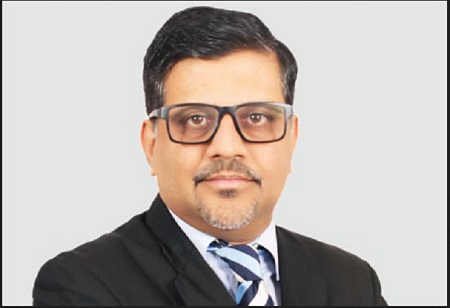
Mr. Amit Chopra, CEO – South Asia & Middle East, Cotecna Group

1. Why is this the right time to strengthen analytical testing capabilities in India, and what role will Hyderabad play?
India’s pharmaceutical industry is moving into a new phase of growth, where the differentiator will be not just manufacturing scale, but the ability to demonstrate consistent quality, scientific rigour and regulatory readiness across markets. As products become more complex and global quality expectations rise, advanced analytical capabilities are becoming a strategic necessity.
Hyderabad is particularly well positioned for this next phase. Its concentration of pharmaceutical manufacturers, research organisations, talent and life sciences infrastructure creates a strong ecosystem for deeper scientific collaboration. For Cotecna, strengthening capabilities in India is about being closer to that innovation and manufacturing base while connecting it to international expertise and quality expectations. Our ambition is to help make quality a competitive advantage for Indian pharmaceutical companies, one that strengthens confidence in their products and supports their aspirations in global markets.
2. How does internationally recognised analytical testing infrastructure strengthen global competitiveness and market access?
In regulated pharmaceutical markets, quality must be demonstrated through reliable data, validated methods and defensible results. Advanced analytical infrastructure enables manufacturers to identify impurities, assess product stability, verify raw materials and establish product consistency with greater scientific confidence. It also helps detect issues earlier, reducing the risk of costly delays, rejected batches and regulatory setbacks.
However, sophisticated equipment alone does not create market access. The real value lies in combining technical capability with qualified people, robust quality systems, appropriate accreditations and a clear understanding of international regulatory expectations.
For Indian companies competing globally, independent analytical testing provides an additional layer of assurance and helps strengthen the evidence supporting product quality. The competitive advantage is not simply producing to specification; it is being able to demonstrate, consistently and credibly, that the specification is met. That distinction matters to regulators, customers and patients alike.
3. Are pharmaceutical companies integrating independent testing earlier in the product lifecycle, and how will this change third-party laboratories?
Yes, the direction of travel is towards earlier and more integrated quality assurance. As pharmaceutical products, supply chains and analytical requirements become more complex, companies increasingly recognise that quality cannot be established at the point of finished-product release alone. It must be built into development, supplier qualification, raw-material assessment, process validation, stability studies and packaging selection.
This creates an opportunity for independent laboratories to evolve beyond the traditional role of testing samples against predefined specifications. They can become scientific partners that help manufacturers investigate anomalies, understand impurities, assess risks and generate reliable evidence at critical decision points.
The distinction is important: the future laboratory will not simply tell a manufacturer whether a product passes or fails; it will help the manufacturer understand why, anticipate what could go wrong and make better-informed decisions earlier. That evolution does not diminish the importance of independent testing. It makes independence more valuable, provided objectivity, clear accountability and scientific integrity remain central to the relationship.
4. How can laboratories adopt AI while preserving data integrity, reproducibility and regulatory confidence?
AI has meaningful potential in analytical science, from identifying patterns in complex datasets and supporting impurity investigations to improving operational efficiency and accelerating data review. But in a regulated laboratory, innovation cannot come at the expense of scientific validity or traceability.
The right approach is to deploy AI within a controlled quality framework. This means validating intended use, maintaining complete and auditable data trails, controlling access and model changes, documenting human oversight, and periodically assessing performance against predefined acceptance criteria. Results must remain reproducible, deviations must be investigated, and decisions affecting product quality must be supported by evidence. It is equally important to distinguish between AI as a decision-support tool and AI as an autonomous decision-maker. In high-stakes analytical workflows, human expertise and established quality systems remain essential.
The objective is not to automate judgement indiscriminately, but to make scientific judgement better informed, more consistent and more efficient. Regulatory confidence will depend on demonstrating that AI-enabled processes are fit for purpose, appropriately governed and capable of producing reliable outcomes.
5. How does the Hyderabad acquisition strengthen Cotecna’s international life sciences and analytical capabilities?
The strategic value of our Energon acquisition lies in combining local scientific expertise with Cotecna’s international reach and quality assurance experience. India is a critical market for pharmaceutical manufacturing and research. Strengthening our presence here enhances our proximity to customers while creating opportunities to connect regional capabilities with international client requirements and expertise.
The broader opportunity is to build a more integrated analytical services offering that supports pharmaceutical companies across development, testing and quality assurance.
Our focus is on building scientific depth and customer value, not simply expanding laboratory capacity. This positions Cotecna to support clients operating across increasingly complex and interconnected pharmaceutical markets.
6. How can India capture opportunities beyond pharmaceutical manufacturing and become a global hub for analytical sciences, research support and quality assurance?
India can move beyond manufacturing medicines to become a global centre for the scientific capabilities that enable their development, validation, and delivery.
Analytical method development, impurity characterisation, stability studies, research support and independent quality assurance represent significant opportunities to create higher-value services for domestic manufacturers and global innovators alike. Capturing this opportunity will require sustained investment in talent, advanced infrastructure, research collaboration and internationally credible quality systems. The ambition must shift from competing primarily on cost and scale to competing on scientific expertise, reliability and complexity.
India should aspire to be not only the pharmacy of the world, but also a global partner in the science that underpins pharmaceutical quality. That would deepen its role in global healthcare while creating a more sophisticated, innovation-led services economy.


, CDSCO.jpg "Fostering a Quality Culture in the Pharmaceutical Industry")