
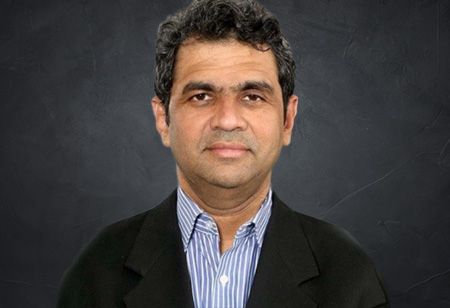
Dr. Rajan Sriraman, Head R&D - Vaccines, Reliance Life Sciences

Dr. Rajan Sriraman is an accomplished leader with extensive experience across biotechnology, immunology, and vaccine research, having held R&D roles at the Technical University of Aachen Germany, Indian Immunologicals Limited, Fraunhofer Institute, Germany and Biological E. Limited before joining Reliance Life Sciences. With strong expertise in immunology, antibodies, cancer biology, molecular biology, and biotechnology, he has built a research career spanning vaccines development, recombinant proteins, recombinant antibody research, and immunological studies.
As Head of R&D – Vaccines at Reliance Life Sciences, Dr. Sriraman focuses on vaccine target development and validation, Conjugate vaccines, and mucosal immunization. His experience across vaccine research and biotechnology, supported by his work in recombinant protein and plant-based heterologous expression systems, has contributed to his multidisciplinary approach to vaccine development and scientific innovation.
In an exclusive interview with Thiruamuthan, Assistant Editor at India Pharma Outlook, Dr. Rajan Sriraman, Research Director and Vaccines R&D Head at Reliance Life Sciences, discusses the evolution of vaccines R&D, the role of recombinant technologies and advanced expression systems, regulatory readiness for emerging vaccine platforms, market-driven innovation, mucosal immunization, personalized vaccines, and the capabilities required to lead the next generation of vaccine development.
Below are his key excerpts from the interview.
Your career has spanned vaccine research, antibody engineering, recombinant proteins, and plant-based expression systems. Which experiences have had the greatest influence on your approach to innovation in vaccine development?
I would attribute this primarily to my experience with recombinant proteins and my research training in Germany. However, it would be difficult to pinpoint a single experience because my approach to scientific innovation has been shaped progressively throughout my academic and professional journey.
The foundation was established during my master's education at Baroda, where research was integrated into the curriculum from the very beginning. Students were assigned projects immediately upon joining, allowing us to combine academic learning with nearly two years of hands-on research. This developed a methodical and inquiry-driven approach to science.
My subsequent internship at the Tata Institute of Fundamental Research (TIFR) further strengthened this foundation. Working at Prof PK Maitra’s lab at TIFR, I isolated two mutants within a short period of time. This was possible because of long hours of working in the lab. These experiences collectively taught me how to approach scientific problems systematically, evaluate evidence, and develop hypotheses based on research.
Therefore, whether I am working on vaccines or any other biotechnology challenge, the fundamental approach remains the same. It is essentially a method of scientific inquiry that was imparted to me through early research training.
My entry into vaccine research was largely accidental. While I was working on a plant-based expression systems in Germany, one of my publications in the field attracted the attention of a Research Director at Indian Immunologicals Ltd in India, who subsequently approached me and brought me into vaccine research.
So, in many ways, my transition into vaccines was driven by an unexpected opportunity rather than a predetermined career plan. However, that experience eventually became an important part of my professional journey and enabled me to apply my expertise in recombinant protein technologies to vaccine development.
The next generation of vaccine leaders must bridge fundamental biology with cutting-edge technology instead of allowing technology to overshadow science.
Vaccine science has advanced considerably over the years. What do you see as the most significant changes driving the industry beyond conventional vaccine development approaches?
In India, the adoption of innovative vaccine technologies is still constrained to some extent by the regulatory environment. The regulatory framework has not yet fully evolved in line with the pace of technological innovation, which can result in a relatively low appetite for adopting newer platforms.
The COVID-19 pandemic demonstrated this clearly. Technologies such as DNA vaccines and viral-vector vaccines received significant attention during the pandemic, whereas they had not previously been part of mainstream vaccine development discussions in India to the same extent. Similarly, although mRNA technology gained considerable global momentum, its adoption and commercialization in India have remained limited.
Therefore, one of the critical changes required is greater regulatory receptiveness and familiarity with emerging technology platforms. At the same time, epidemiological data will play an increasingly important role in determining where vaccine development should be directed. Data generated through hospitals, universities, and government surveillance systems can help identify emerging infectious disease trends and define future vaccine requirements.
From a manufacturing perspective, there have also been significant advances. Automation and the adoption of single-use technologies are improving process efficiency while substantially reducing manufacturing footprints and cost. Processes that previously required large manufacturing areas can now be performed in significantly smaller spaces. These developments are improving operational efficiency and creating greater flexibility for vaccine manufacturing.
Your experience spans recombinant proteins and vaccine R&D. How has this multidisciplinary exposure influenced your approach to solving complex scientific challenges?
Regardless of the nature of the scientific challenge, the process begins by going back to the drawing board. This requires a fundamental understanding of biology and the disease being addressed.
A scientist must have the willingness to examine and assimilate the available scientific literature and develop a comprehensive understanding of the problem before deciding on an approach. Equally important is interaction with professionals from other disciplines.
For example, when addressing a particular disease, engaging with physicians who are directly involved in patient care can provide insights that may not emerge from laboratory research alone. Understanding the practical challenges faced by clinicians can help scientists identify more relevant problems and develop solutions that are better aligned with real-world healthcare requirements. This cross-pollination between scientific expertise and clinical experience can generate stronger ideas and more effective approaches to innovation.
However, it is also important to recognize that a significant proportion of industrial R&D in India follows established scientific pathways. Technologies such as HPV and pneumococcal vaccines have already been developed and validated elsewhere, and companies in India subsequently invest in adapting, optimizing, or commercializing these technologies.
In such cases, the scientific concepts are already established elsewhere. The focus then shifts toward improving yields, enhancing process efficiency, optimizing manufacturing, and achieving commercial scalability.
Consequently, genuine novel products originating from India and reaching the market through indigenous R&D remain relatively limited. This is an area where the ecosystem needs further strengthening.
Also Read: Driving Vaccine Adoption Beyond Pediatric Immunization in India
Emerging infectious diseases and evolving pathogens continue to reshape global healthcare priorities. How should vaccine developers rethink innovation to stay ahead of future public health trends?
Government agencies and academic institutions need to maintain detailed surveillance systems to monitor how pathogens evolve and where new infectious disease threats are emerging.
For instance, West Nile virus was historically associated more strongly with outbreaks in regions such as the US and Europe, but its emergence in India demonstrates why continuous surveillance is important. Government surveillance programs can identify infectious disease outbreaks and maintain datasets that help determine where future intervention may be required.
This information can ultimately guide vaccine development strategies. However, unlike the exceptional circumstances of the COVID-19 pandemic, most vaccine candidates must follow the conventional regulatory pathway. In India, vaccines typically undergo the Investigational New Drug (IND) approval pathway, which includes comprehensive preclinical and clinical development.
From a technology perspective, there may be a considerable interest in having ready-to-deploy platforms such as the mRNA technology. However, technological readiness must be accompanied by manufacturing scalability. India has yet to see widespread industrial-scale capabilities for producing millions or potentially billions of doses of mRNA vaccine platforms.
Companies such as Pfizer and Moderna have made substantial investments in automation and manufacturing infrastructure, which enables large-scale production. In India, companies are averse to investing heavily in high-end automation, making the scale-up of certain advanced technologies becomes challenging.
Therefore, innovation cannot be considered independently of manufacturing capability. Technology, regulatory preparedness, and scalability must evolve together.
Traditional vaccine platforms have delivered significant public health benefits, while newer technologies are emerging rapidly. What factors should guide researchers and companies when deciding where to invest the next wave of vaccine innovation?
There are two important aspects here, scientific feasibility and market demand. Ultimately, a vaccine has to be commercially viable. If the market price of an established vaccine is extremely low, there may be limited commercial incentive to invest heavily in an entirely new technology that substantially increases the cost of the final product.
For example, vaccines such as tetanus are available at very low prices. Developing an advanced platform for such a product could increase manufacturing and development costs without providing a corresponding market incentive.
This is particularly relevant in India because a large proportion of vaccines are administered through public health programs and are therefore available at relatively low prices. A smaller number of vaccines, including certain pediatric and adult vaccines, have a stronger presence in the private market.
There is also a significant difference between the Indian vaccine market and markets in Europe and the US. In developed markets, vaccination is increasingly viewed as a lifelong healthcare intervention covering both pediatric and adult populations. In India, adult vaccination remains comparatively underdeveloped.
Apart from influenza vaccination, uptake of several adult vaccines remains limited, even though vaccines for diseases such as hepatitis A, hepatitis B, and rabies can have significant preventive value in appropriate populations.
When there is insufficient market demand, innovation naturally becomes difficult to sustain. The scientific capability to develop these technologies may exist, but companies require an economic incentive to invest in development, manufacturing, and commercialization.
Therefore, creating market pull is an important component of sustaining vaccine innovation.
From mucosal immunization to plant-based expression systems, several advanced technologies are gaining momentum. Which innovations do you believe could have the greatest potential to transform vaccination in the coming decades?
Mucosal immunization has significant potential, although our experience with the technology so far has not delivered the expected level of success. If a more effective mucosal immunization platform can be developed, it could fundamentally change how vaccines are administered.
The ability to provide effective immunization without conventional injections could significantly improve accessibility and acceptance. A future in which certain vaccines could be administered orally, for example, would eliminate several logistical and behavioral barriers associated with injectable vaccination.
Personalized cancer vaccines are another area with considerable transformative potential. Conditions such as prostate cancer require appropriate screening, which remains a significant challenge, partly because awareness of personal health monitoring is still inadequate.
However, mucosal vaccination in particular remains a technology that is still some distance away from achieving its full potential.
Also Read: Needle-Free Injection System: A Game Changer in Less Pain Vaccination
Next-generation vaccine development requires collaboration among researchers, manufacturers, regulators, clinicians, and other stakeholders. How can scientific leaders build partnerships that accelerate innovation without compromising safety or quality?
Once the appropriate collaborating partners have been identified, the collaboration needs to be structured clearly from the outset.
A Quality Technical Agreement (QTA) is an important mechanism for establishing this structure. Such an agreement defines the scope of work, roles, responsibilities, and expectations of each participating organization.
Much collaboration fails because there is insufficient clarity regarding who is responsible for what and what each partner expects from the relationship. When responsibilities and deliverables are clearly defined, multidisciplinary collaboration becomes significantly more effective.
This principle applies irrespective of whether the collaboration involves an emerging technology or an established platform. A mutual agreement defining the scope and responsibilities of each participating party provides the necessary foundation.
However, advanced technologies introduce additional considerations, including intellectual property and patent barriers. Therefore, innovation decisions cannot be based solely on scientific feasibility or regulatory requirements. They must also make commercial sense.
For instance, companies may be more inclined to explore an mRNA-based influenza vaccine because influenza has a relatively strong private-market opportunity. The same level of investment may not necessarily be commercially attractive for a vaccine such as hepatitis B, where the market price is significantly lower.
Ultimately, there is a complex interplay between science, regulation, intellectual property, manufacturing capability, and market economics. Many things may be scientifically possible, but the decision to pursue them depends on whether the broader ecosystem can support their development and commercialization.
As vaccine development becomes increasingly driven by biotechnology, precision medicine, AI, and global collaboration, what capabilities will define the next generation of vaccine R&D leaders?
Future R&D leaders will need to understand emerging technologies, including artificial intelligence, digital twins, quality by design approaches, and advanced process analytics. At the same time, they must retain a strong understanding of fundamental biology.
There is a tendency to focus heavily on the latest technologies while overlooking the scientific fundamentals that underpin the development process. The next generation of leaders will need to bridge both worlds.
They should understand structural biology, disease epidemiology, AI-enabled tools, upstream and downstream processing, and formulation science. More importantly, they should understand how these capabilities can be integrated into a coherent development strategy.
Technology is ultimately a tool, and its impact depends on how effectively it is applied. Considering the multiple facets, the leader must have an overall understanding of how to bridge both traditional and fundamental knowledge to use cutting-edge tools.?
On a personal note, what is your leadership mantra in the evolving vaccine and biotechnology landscape?
Read as much as possible and never stop asking questions. The most important answers often emerge from asking the right questions.
Curiosity is fundamental to scientific progress. Every child is naturally curious and constantly wants to understand how and why things work. However, as people grow older, they often become less willing to question what they encounter and begin accepting things as they are.
As professionals and scientists, we should retain that curiosity. The objective is not to ask questions merely for the sake of questioning, but to develop a genuine desire to understand something deeply.
The question is what drives the search for knowledge. As long as that curiosity remains alive, there is always an opportunity to discover a better answer, develop a better solution, and push innovation forward.
.jpg)




, CDSCO.jpg "Fostering a Quality Culture in the Pharmaceutical Industry")