
Nilesh Pendse, Director Vaccines, Pfizer India
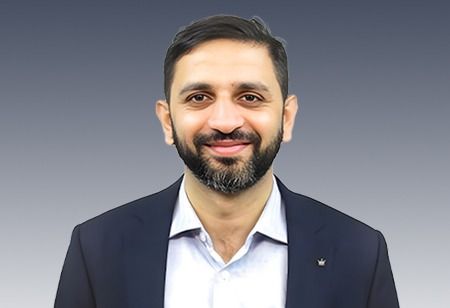
Nilesh Pendse is an accomplished leader with extensive experience across consulting and healthcare, having spent seven to eight years with firms such as Ernst & Young, Accenture, and BCG before transitioning into the pharmaceutical industry. With a background in electronics engineering and an MBA in Marketing, he has built strong expertise across sales, marketing, and P&L leadership, working across diverse therapy areas including diabetes, neurology, oncology, and vaccines.
As Director – Vaccines at Pfizer India, Nilesh is recognized for his focus on preventive healthcare, commercial strategy, and improving vaccine access. His journey from treatment-focused areas like oncology, where extending and improving patient lives is critical, to vaccines has shaped his perspective on shifting healthcare toward prevention, positioning immunization as a cornerstone of long-term public health outcomes.
In an exclusive interview with Thiruamuthan, Assistant Editor at India Pharma Outlook, Nilesh Pendse, Director – Vaccines, Pfizer India, discusses the evolving narrative around adult immunization in India. He highlights the importance of awareness, policy support, and healthcare provider advocacy in driving vaccine adoption, while emphasizing the role of purpose-led leadership in aligning teams to deliver meaningful, patient-centric impact.
Read the full article below to explore how purpose-led leadership and preventive healthcare strategies are reshaping the future of patient care and public health in India.
Given India’s strong foundation in pediatric immunization programs, how can the country accelerate vaccine adoption across adolescent and adult populations?
It's important to begin by acknowledging India's tremendous journey in pediatric immunization. For a country of this size, scale, and complexity, India has done a phenomenal job over the last several years in scaling up pediatric immunization. Today, more than 95 percent of babies receive their primary immunization schedule.
The immunization program has been implemented in a very structured manner across states, and that's a tremendous achievement for the country. In the future, its impact will be reflected in important indicators such as infant mortality rates and overall child health outcomes.
Additionally, I think this success offers an important learning opportunity. We've done such a great job with pediatric immunization—what if we could replicate some of those learnings in the adult population?
The reason immunization is critical in early childhood is that a newborn's immune system is still developing. Vaccination provides the necessary support to protect against infectious diseases during the vulnerable period.
Interestingly, something similar happens as we age. There is substantial published data showing that after the age of 50, immunity gradually declines. In that sense, the body's vulnerability begins to resemble some of the challenges seen earlier in life. India has done exceptionally well in pediatric immunization. The next step is to explore how we can apply those learnings to adult immunization.
However, it's not only about administration or government initiatives. It's also about increasing awareness among the general public regarding the importance of vaccination in adulthood. For children, parents are well aware of the need for vaccination and actively seek it out. As adults, however, we are often less aware of the role immunization can play in protecting our health.
If awareness improves, and if it is supported by the right ecosystem—including product availability, healthcare infrastructure, and healthcare professionals—I believe we can make meaningful progress. Healthcare professionals play a particularly important role because adults are often managing multiple comorbidities. In that context, vaccination can become an important part of overall health management. If healthcare professionals become advocates for adult vaccination, it can help drive meaningful change.
India’s success in pediatric immunization provides a powerful blueprint that replicating its structured approach can significantly accelerate vaccine adoption across adult populations.
Vaccine adoption beyond childhood immunization is still uneven in India. Given this, what are the most persistent behavioral and awareness barriers limiting wider uptake?
One of the biggest challenges is that adults have generally gone through much of their lives without thinking about vaccines. As a result, many people naturally ask, "Why do I need a vaccination now?"
What we need to recognize is that the risk and impact of certain infectious diseases increase as people age and develop comorbidities. A lack of awareness around this reality is one of the key barriers. This awareness gap exists not only among patients but, to some extent, among healthcare professionals as well.
Many healthcare professionals are understandably focused on managing the immediate disease condition in front of them. Vaccination may not always be considered a central part of patient counseling. However, even a small nudge from healthcare providers—highlighting how vaccination can help prevent future complications—can make a significant difference.
I often think about vaccination as an insurance policy. We're seeing strong growth in insurance adoption across India because people recognize the value of being prepared for future uncertainties. Vaccination can be viewed in a similar way.
Getting vaccinated doesn't mean an infection will definitely occur. But if you're at risk and are vaccinated, the probability of severe disease can be reduced. The likelihood of hospitalization can also be reduced.
That preventive mindset—the insurance policy approach—is something that can significantly strengthen adult vaccination uptake.
Ultimately, bridging the gap will require collaboration among all stakeholders: healthcare professionals, pharmaceutical companies, patients, and government bodies. Together, they can help create greater awareness around the importance of adult vaccination.
We're already seeing encouraging examples. Many corporate hospitals are introducing dedicated vaccination rooms and adult vaccination programs. Corporates are organizing vaccination drives for their employees. These initiatives help build awareness and normalize adult vaccination.
We're also seeing state governments take proactive steps. There have been media reports about some states exploring pneumococcal vaccination programs for elderly populations. Developments like these are extremely encouraging because they demonstrate a growing recognition of the importance of keeping populations protected rather than waiting to fight infections after they occur.
Once an infection sets in, the burden becomes much greater. It impacts healthcare systems, government resources, families, and individuals. Hospitalization can result in lost income, increased expenses, and emotional stress for families.
So yes, progress is happening. The challenge now is to move from isolated pockets of adoption to broader, nationwide implementation.
Also Read: Needle-Free Injection System: A Game Changer in Less Pain Vaccination
Amid rising focus on preventive healthcare, how is the narrative around adult immunization gradually shifting among providers and patients?
The momentum around adult immunization is undoubtedly growing. We are seeing increased awareness among healthcare professionals regarding its importance, and patients are gradually embracing vaccination as an integral part of preventive health management.
One of the encouraging developments we are seeing today is the growing alignment across the healthcare ecosystem around the importance of preventive care. Pharmaceutical companies, healthcare professionals, policymakers, and patients all have a role to play in expanding access to adult immunization, and meaningful progress happens when these stakeholders move in the same direction.
From an industry perspective, there has been a conscious effort to simplify the vaccination journey for patients. Innovation today is not just about developing effective vaccines; it is also about improving convenience, accessibility, and ease of adoption. When preventive healthcare solutions are easier to understand and integrate into everyday life, acceptance naturally increases.
We have observed this firsthand in the pneumococcal vaccination space. Solutions that simplify immunization schedules and reduce complexity for patients have been met with strong interest and adoption. This highlights an important principle: when healthcare interventions are both clinically relevant and patient-centric, they are more likely to be embraced.
At the same time, healthcare professionals are increasingly recognizing the value of adult immunization as an integral component of preventive healthcare. As awareness grows, more providers are proactively discussing vaccination with eligible patients and incorporating it into broader health management conversations.
What is particularly encouraging is the response from patients. As awareness improves and recommendations become more consistent, individuals are becoming more willing to consider vaccination as a proactive investment in their long-term health. This suggests that the conversation around adult immunization is gradually evolving from one of treatment to one of prevention.
Overall, we are witnessing a meaningful shift in awareness, understanding, and adoption. While there is still considerable ground to cover, the momentum is clearly building, driven by greater collaboration across stakeholders and a growing appreciation of the role that prevention can play in improving health outcomes.
Also Read: Anti-Infectives: How New Research is Shaping Infection Control
In light of growing urban-rural healthcare disparities, what structural challenges still limit access to vaccines beyond routine childhood schedules?
At the moment, much of adult vaccination remains urban-centric. The challenge begins with awareness—both among healthcare providers and patients. The understanding of why adult vaccination is important has not yet fully percolated beyond urban centers.
If we compare it to pediatric immunization, one of the key success factors was the role played by government and administrative systems in ensuring last-mile access and awareness. That infrastructure and outreach helped drive adoption across the country.
A similar approach may be required in the adult vaccination space. We are already seeing some encouraging initiatives. Certain state governments are exploring adult vaccination programs not only in urban areas but also in rural districts through pilot projects. These efforts are aimed at understanding how broader implementation can be achieved.
It will happen, but it is a long journey. If pediatric immunization has reached around 96 percent coverage, adult immunization today is still at roughly 3 percent among eligible populations. Given the size and scale of our country, we may not be able to close that gap overnight.
However, if we can move steadily from 3 to 5 percent, then 15 to 20 percent over the coming years, that would represent significant progress for a country of India's scale.
As lifestyle diseases and infectious risks become more interconnected, how important is it to reposition vaccines as part of lifelong preventive care?
For individuals living with lifestyle diseases—whether it's COPD, chronic kidney disease (CKD), diabetes, heart failure, or other conditions—the risk of infectious diseases is generally higher than it is for healthy individuals.
That's why we're increasingly seeing discussions around risk factors such as obesity being linked to infectious diseases as well.
As these lifestyle diseases become more prevalent, vaccination will play an increasingly important role. While patients and healthcare providers work together to manage chronic conditions, the last thing anyone wants is for an infection to disrupt that journey.
As healthcare increasingly moves toward a preventive and patient-centric model, vaccination needs to be viewed as an integral component of long-term disease management rather than a standalone intervention. For individuals living with chronic conditions, preventing infections can be just as important as managing the underlying disease itself. When immunization is incorporated into routine health monitoring and care pathways, it has the potential to improve outcomes and reduce avoidable complications.
What has been particularly encouraging is the growing consensus within the medical community on this issue. Recently, 18 leading medical associations across specialties—including pulmonology, diabetology, cardiology, nephrology, and others—came together to release unified consensus guidelines on adult immunization in India. Such collaboration reflects a broader recognition that vaccination is no longer confined to a single specialty or area of practice; it is increasingly being acknowledged as a critical pillar of comprehensive patient care.
To me, this represents an important shift in thinking. Adult immunization should not be seen as an adjunct or optional component of healthcare. Rather, it should be embedded within the overall framework of disease prevention and management. Regardless of specialty, healthcare professionals have an opportunity to incorporate vaccination into their patient care strategies, particularly for individuals living with chronic diseases and other comorbidities.
Ultimately, the goal is to move from a reactive healthcare model to a more proactive one—where preventing complications becomes just as important as treating them. Adult immunization has an important role to play in that transformation.
Also Read: Addressing Antimicrobial Resistance (AMR) Through Collaborative Efforts
Digital health platforms are increasingly shaping patient awareness. How effectively are they influencing vaccine uptake beyond pediatric groups today?
If you look at digital platforms in general—not just healthcare platforms—India has emerged as a very strong adopter of digital technologies.
As a result, digital health platforms are becoming an increasingly important part of how people engage with healthcare and make decisions about their well-being.
That said, India is also an incredibly diverse country. We will continue to see a combination of physical and digital channels, online and offline engagement, across every aspect of healthcare—whether it's consultations, medicine delivery, lifestyle management, or preventive care.
This heterogeneity is one of India's defining characteristics.
Because of that, I believe we'll continue to see strong cross-pollination across channels. Digital platforms will undoubtedly become more important, but the future is likely to be a balanced mix of both digital and physical engagement.
LOOKING AHEAD: What will be the key driver in normalizing adult immunization in India—policy intervention, physician advocacy, or public awareness?
The answer lies in a balanced combination of all three. Sustainable progress in adult immunization will require policy support, healthcare provider engagement, and greater public awareness working together. However, if one were to identify the strongest catalyst for change, policy interventions can be particularly powerful because of their ability to drive adoption at scale.
We saw that during COVID-19. Almost everyone we know received the COVID vaccine, and that was largely enabled by strong policy support and implementation. In the adult immunization space, we haven't yet seen anything remotely close to that scale.
So policy interventions have the potential to create the biggest shift. Of course, they're not easy. They require resources, funding, and prioritization among multiple competing healthcare needs.
Where we can make meaningful progress is by identifying the right high-risk groups and prioritizing policy interventions for them. This may not initially mean vaccinating everyone, but focusing on vulnerable populations such as the elderly and individuals with specific risk factors.
Targeted policy interventions can create a significant impact. These efforts then need to be supported by large-scale awareness campaigns to address hesitancy and improve understanding.
For example, I recently read about the strong adoption of cervical cancer vaccination following government-led awareness initiatives. While that falls under adolescent immunization rather than adult immunization, it demonstrates how effective the combination of policy support, awareness building, and healthcare provider engagement can be.
Ultimately, all three elements need to work together.
Until broader policy changes occur, however, I believe healthcare professionals can drive the biggest immediate impact. Millions of patients trust their doctors when making health decisions. If healthcare providers spend even one additional minute counseling eligible patients about adult vaccination and its relevance to their risk profile, it can go a very long way.
What guiding principles or personal mantra have shaped your approach to leading teams and navigating complex decision-making in your career?
I consider myself fortunate to have worked with some fantastic people, teams, and organizations throughout my career. Over time, a great deal of learning comes from the people you work with, the organizations you're part of, and the principles you observe in action.
One of the earliest lessons that shaped my thinking came from my consulting years: first-principles thinking. While data and analytics are critical, it's equally important to question assumptions, examine issues from the ground up, and understand the fundamental logic behind why something happens. Don't take things for granted. Always seek to understand the underlying "why."
That's a principle I continue to apply very diligently. As I moved into strategic leadership roles in pharma, another important lens emerged—the impact on patients. Every data-backed decision ultimately needs to be viewed through the lens of patient impact. Is it good for the patient? Is it the right thing for the patient? That question should remain central to decision-making.
More recently, as I've had the opportunity to lead larger and more diverse teams across different therapy areas, I've come to appreciate the importance of purpose. Whether it's the purpose of being in pharma, the purpose of working in vaccines, or the role we play in society, it's important to clearly articulate that purpose so that everyone on the team is aligned around a common objective.
Diverse teams naturally bring diverse viewpoints, and that's important because it creates healthy and constructive debate. But when everyone is united by a shared purpose, those differences become a strength.
I see that every day among my colleagues at Pfizer. Whether they're working in oncology, vaccines, rare diseases, immunology, or any of the other therapy areas we serve, they're all driven by a desire to make a meaningful difference for patients.
So if I were to summarize, the three principles that have guided me are:
Those three principles have helped me navigate decisions and lead teams throughout my career.
.jpg)




, CDSCO.jpg "Fostering a Quality Culture in the Pharmaceutical Industry")