India Pharma Outlook Team | Friday, 30 October 2026
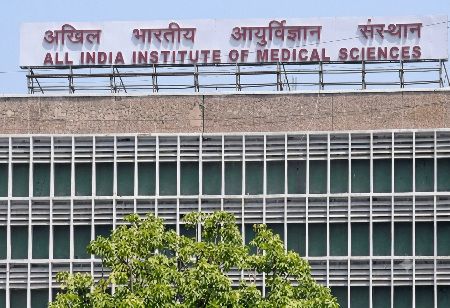
Patient accommodation infrastructure is becoming an important consideration in India's public healthcare system.
On October 29, 2026, Union Health Minister J.P. Nadda inspected a newly constructed patient waiting lounge at the All India Institute of Medical Sciences (AIIMS), New Delhi.
The facility was developed by Bharat Electronics Limited (BEL) under its Corporate Social Responsibility (CSR) initiative.
The facility has a designed seating capacity of 897 people and is proposed to operate as an Aashray shelter.
Its development brings attention to a wider challenge: improving access to essential support facilities for patients travelling long distances for specialized medical care.
The development of the new facility comes against the backdrop of substantial patient traffic at AIIMS Delhi.
According to a Ministry of Health and Family Welfare response in Parliament, the institute recorded 48.43 lakh outpatient department (OPD) visits during 2024-25, compared with 42.55 lakh in 2022-23.
Such patient volumes highlight the importance of public hospital infrastructure that extends beyond clinical facilities and available beds. Patients travelling from different states often require accommodation while waiting for consultations, diagnostic procedures, follow-up appointments and treatment.
The new AIIMS patient waiting lounge has a built-up area of 2,970 square meters, with primary and secondary waiting areas, entry and exit points, ramps, toilets and other supporting facilities.
Its proposed use as an Aashray shelter is intended to provide economically disadvantaged patients and their attendants with weather-protected accommodation instead of relying on temporary tent-based arrangements.
Also Read: Making Healthcare Affordable: GST Reforms Explained
AIIMS already operates an Aashray initiative to support patients and attendants who travel to Delhi for medical treatment.
The initiative, which began in late December 2024, was initially designed for 80 patients and subsequently expanded to serve approximately 225 patients daily, with around 500 individuals receiving access to sheltered waiting areas, food distribution and washroom facilities.
Patient accommodation infrastructure is particularly relevant for people travelling from outside Delhi, who may need to remain near the hospital for extended periods.
Access to sheltered waiting spaces, sanitation facilities and affordable food can reduce some of the non-medical difficulties associated with accessing specialized treatment.
AIIMS also operates Vishram Sadan facilities across its campuses, with more than 1,150 beds reported in a Parliamentary Committee document, including the Jhajjar campus.
The new waiting lounge also highlights the role of corporate participation in strengthening public hospital infrastructure.
Such partnerships can help government medical institutions address infrastructure requirements beyond conventional hospital construction, including patient waiting areas, accommodation facilities and other support services.
For AIIMS, the proposed utilization of the new building as an Aashray shelter represents another step towards improving the support ecosystem for patients and attendants.
However, expanding patient accommodation infrastructure requires more than constructing additional buildings. Long-term planning must also consider maintenance, sanitation, staffing, accessibility and food services.