
India Pharma Outlook Team | Wednesday, 05 August 2026
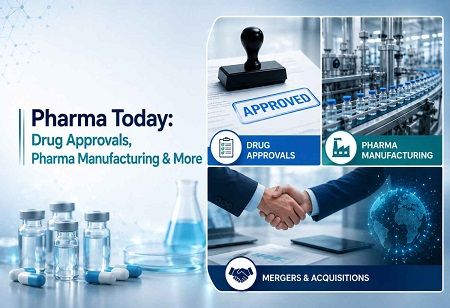
Drug approvals and pharma manufacturing continue to shape the pharmaceutical landscape as new research, regulatory developments, and financial results drive industry momentum.
Recent updates highlight breakthroughs in drug repurposing, vaccine strategies, infrastructure investments, and strong global pharma performance.
Drug approvals accelerate innovation pipelines, while pharma manufacturing expands capacity and efficiency across markets.
From AIIMS research findings to USFDA approvals and strategic investments in India, these developments reflect rapid transformation.
The combined impact of drug approvals and pharma manufacturing strengthens both domestic growth and global competitiveness in the pharmaceutical sector.
Drug approvals gain new direction as AIIMS researchers reveal that commonly prescribed blood pressure medications may significantly improve antidepressant response in patients. The study highlights how drug repurposing can create faster and cost-effective treatment solutions without the need for new drug development cycles.
Researchers observed that patients receiving these medications alongside antidepressants showed improved clinical outcomes. This suggests a strong interaction between cardiovascular drugs and mental health treatments. This finding strengthens the role of pharma manufacturing in supporting diversified production needs and encourages further clinical trials to validate large-scale use and regulatory approvals globally.
Also Read: The Strategic Role of Regional Corridors in Future-Ready MedTech
Pharma manufacturing expands as Takeda sharpens its focus on India by advancing its dengue vaccine strategy to tap into the country’s growing healthcare demand. The company aims to position its dengue vaccine as a key offering in a market where dengue cases continue to rise annually, creating urgent public health needs.
Takeda plans to leverage local partnerships, regulatory pathways, and supply chain efficiencies to scale production and distribution effectively. This move reflects the importance of pharma manufacturing capabilities in meeting vaccine demand while also strengthening drug approvals pipelines to ensure faster availability of life-saving vaccines in emerging markets like India.
Drug approvals face a critical transition as the Indian Pharmaceutical Alliance urges authorities to regularize legacy drugs that have remained in use without updated regulatory approvals. The industry emphasizes that these drugs continue to serve millions of patients. Therefore, it requires a structured framework to align with modern compliance standards without disrupting supply chains.
"Many such products have remained in circulation for well over a decade, but documentation confirming their original regulatory approval is often incomplete confirming their original regulatory approval is often incomplete or missing from the regulator's records," said Indian Pharmaceutical Alliance, secretary general, Sudarshan Jain.
The proposal highlights the need for a balanced regulatory approach that ensures safety while maintaining availability. Pharma manufacturing depends heavily on such policy clarity, as uncertainty can impact production planning, distribution, and market stability across the Indian pharmaceutical ecosystem.
Pharma manufacturing receives a major boost as the central government sanctions over Rs 84 crore to strengthen pharmaceutical infrastructure in Himachal Pradesh, one of India’s key manufacturing hubs. The investment focuses on upgrading facilities, improving logistics, and enhancing production capabilities to support growing domestic and export demand.
This development reinforces the government’s commitment to expanding pharma manufacturing capacity while also enabling faster drug approvals through improved compliance and quality standards. The infrastructure upgrade is expected to attract further investments, generate employment, and position the region as a critical contributor to India’s pharmaceutical growth story.
Drug approvals accelerate as Zydus secures USFDA approval for its generic Indocyanine Green Injection, supported by Competitive Generic Therapy (CGT) status that offers market exclusivity benefits. This approval allows Zydus to strengthen its presence in the US market while addressing limited competition in this segment.
Dr. Sharvil Patel, Managing Director, Zydus Lifesciences Limited, said, “Indocyanine green sits at the intersection of medicine and imaging science, requiring precise control of chromophore purity, photostability and lyophilisation. Developing and securing approval for such a complex product with our partner reflects the capabilities we have built and our shared commitment to high standards. It also advances our goal of making essential medicines and diagnostics more accessible, while strengthening our presence in the functional dye and imaging agent segment, where we continue to invest.”
The injectable is commonly used in diagnostic procedures, making it an essential product in healthcare settings. Pharma manufacturing plays a crucial role in ensuring consistent quality and supply for such specialized drugs. The approval highlights Zydus’ growing capabilities in navigating complex regulatory pathways and expanding its global footprint.
Pharma manufacturing and innovation drive Merck’s strong second-quarter performance, with results exceeding expectations due to robust demand for its blockbuster cancer drug Keytruda. The company reported higher revenues supported by continued growth in its oncology portfolio, which remains a key contributor to overall performance.
Increased demand reflects the effectiveness and widespread adoption of advanced cancer therapies. Strong financial performance enables Merck to invest further in research, development, and drug approvals, ensuring a steady pipeline of innovative treatments. Pharma manufacturing capabilities also support large-scale production to meet global demand efficiently.
Drug approvals and sustained market demand strengthen Pfizer’s financial performance as the company surpasses quarterly profit estimates, driven by strong sales of its blood thinner Eliquis. The drug continues to perform well in the cardiovascular segment, reflecting consistent demand from global markets.
Pfizer’s results demonstrate how established therapies continue to generate revenue while supporting future innovation and expansion. Pharma manufacturing remains critical in maintaining uninterrupted supply and meeting regulatory standards across regions. The company’s performance highlights the balance between commercial success and ongoing investment in drug approvals and research pipelines.
.jpg)