India Pharma Outlook Team | Thursday, 20 August 2026
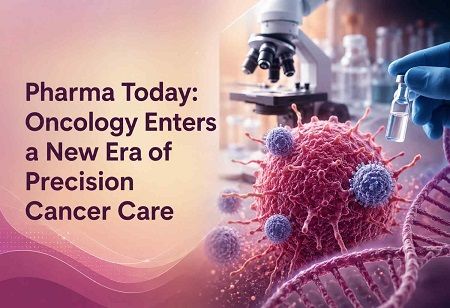
Oncology is entering a new phase as drugmakers and research institutions push beyond conventional cancer treatment.
Recent developments from Moderna, Merck, Mayo Clinic and Bengaluru-based Sravathi AI show how cancer research is expanding across different treatment approaches.
Moderna and Merck have reported encouraging Phase 3 results for a personalized mRNA vaccine in melanoma.
Whereas Mayo Clinic and Sravathi AI have used artificial intelligence to identify a potential treatment for a previously “undruggable” cancer target.
Together, these developments highlight how oncology research increasingly combines immunotherapy, molecular targeting and advanced computational tools to address difficult cancers.
Moderna and Merck have reached a major milestone in oncology research with their personalized cancer vaccine, intismeran, developed for high-risk melanoma. In a Phase 3 trial involving 1,137 patients with surgically removed stage IIB-IV melanoma, the vaccine combined with Merck’s Keytruda reduced the risk of cancer recurrence and delayed the spread of the disease compared with Keytruda alone.
The companies said the trial met both its primary endpoint for recurrence-free survival and its secondary endpoint for distant metastasis-free survival. Researchers reported no new safety signals. The treatment uses genetic information from an individual patient’s tumor to create a personalized mRNA vaccine, which then works alongside Keytruda to stimulate an immune response against cancer cells.
The results could strengthen the role of cancer vaccines in oncology. Moderna and Merck now plan to present detailed findings at a medical conference and continue discussions with regulators. The companies also continue to study the approach in other tumor types, creating a potential pathway for personalised mRNA therapies beyond melanoma.
Also Read: Why Vaccine Innovation Must Go Beyond Traditional Platforms
The Moderna-Merck results point to a broader shift in cancer treatment. Instead of relying on a single therapy, researchers increasingly combine immune checkpoint inhibitors with personalized approaches designed around the biology of an individual tumor.
The development also strengthens the case for mRNA technology in oncology. Moderna’s vaccine does not require patients’ own cells, which could offer manufacturing advantages compared with some personalized cell therapies. The companies have not yet determined pricing, while regulatory review remains ahead.
This progress could encourage more pharmaceutical companies to pursue cancer vaccines and combination therapies, particularly for cancers where recurrence remains a major challenge after surgery.
Moderna CEO Stephane Bancel described the findings as a “pivotal moment” for cancer research, noting that the companies are helping turn the long-standing vision of an mRNA treatment tailored to an individual patient’s cancer into reality.
Meanwhile, another development shows how AI in oncology can expand the search for new drug targets. Mayo Clinic researchers, working with Bengaluru-based Sravathi AI Technology, used AI to screen nearly 40,000 potential compounds against the PDZ domain of the GIPC1 protein. Researchers have historically considered this target difficult to address with conventional drugs.
“The Mayo Clinic study provides compelling validation of how AI can fundamentally accelerate the drug-discovery process, compressing timelines that have traditionally taken years,” said Parag Tipnis, CEO, Sravathi AI.
The team identified an experimental small-molecule inhibitor that blocked GIPC1. In laboratory studies, the compound slowed tumor growth, improved survival and enhanced the effects of the chemotherapy drug gemcitabine. The researchers also observed changes in the tumor environment that could support future combination treatments.
The findings remain preclinical, and researchers still need to establish the compound’s safety, dosing and effectiveness before they can consider human trials. However, the study demonstrates how AI-led screening can help researchers explore targets that traditional drug discovery approaches have struggled to address.
Together, these developments show the expanding direction of oncology research. Moderna and Merck are advancing personalized immunotherapy, while Mayo Clinic and Sravathi AI are using computational tools to identify new molecular targets.
Cancer treatment increasingly focuses on tumor-specific mutations, immune responses and molecular pathways rather than applying one approach across large patient groups. Pharmaceutical companies, biotech firms and research institutions are therefore continuing to invest in technologies that can improve treatment selection, accelerate drug discovery and tackle cancers with high unmet medical needs.
For the oncology sector, the latest developments signal a wider treatment landscape where personalized vaccines, immunotherapy, AI-driven drug discovery and targeted combinations could increasingly work together to shape the next generation of cancer care.
.jpg)