
Fathimanoud, Correspondent, India Pharma Outlook
India’s drug pricing architecture has evolved into a complex system designed to keep essential medicines affordable while supporting the country’s role as a major global supplier.
As the “Pharmacy of the World,” India produces nearly 20% of global generic medicines and more than 60% of vaccines.
Yet, affordability remains a persistent domestic concern because around 80% of healthcare expenses in India are borne privately, with most of the spending coming directly from patients.
This makes drug price control an important part of India’s healthcare policy, particularly for essential and life-saving medicines.
The country’s pricing framework operates through the Drugs (Prices Control) Order, or DPCO, alongside the National List of Essential Medicines (NLEM) and the National Pharmaceutical Pricing Authority (NPPA).
Under the system, essential medicines can face ceiling prices that manufacturers cannot exceed. However, recent scrutiny over drug price gaps, including Karnataka’s move to seek central intervention over excessive mark-ups and wider price controls, shows that affordability challenges extend beyond simply setting price ceilings.
This article examines why drug price control matters, how India’s pricing architecture operates, the reforms and regulatory interventions shaping it, the scrutiny faced by pharmaceutical companies, and the gaps that continue to challenge affordable access.
 For Indian patients, the price of a medicine can directly affect whether treatment is affordable or delayed. Around 80% of healthcare expenses in India are born privately, with the majority paid out-of-pocket.
This makes affordability of essential medicines a central reason for government price regulation. Medicines are closely linked to public health, particularly when they involve essential treatments.
Weak drug regulation can contribute to irrational drug use, antibiotic misuse, treatment failure and loss of trust in healthcare.
Price control therefore has to work alongside quality and safety regulation rather than operate as a standalone measure.
The stakes are also global. India supplies nearly 20% of generic medicines and more than 60% of vaccines worldwide, with its medicines reaching more than 200 countries.
Strong regulation helps protect public health while sustaining confidence in Indian pharmaceutical exports. This pressure is particularly relevant in a system without universal health insurance.
While government schemes provide free or subsidized care to some beneficiaries, India’s largely out-of-pocket healthcare spending makes medicine affordability a wider concern.
The policy challenge is therefore to keep essential drugs accessible without undermining quality, supply and the pharmaceutical sector’s ability to serve domestic and global markets.
There is a constant need for dialogue and a collaborative approach — be it to further an enabling environment for innovation or drug pricing, especially affordable innovation, noted Dr Kiran Mazumdar Shaw, Executive Chairperson of Biocon.
Also Read: Counterfeit Drugs in India: How Packaging Gaps Hurt Supply Chain
India’s drug-control system rests on two foundational laws: the Drugs and Cosmetics Act, 1940 and the Drugs Rules, 1945. The Act provides the legal foundation, while the Rules operationalize it through requirements covering drug import, manufacture, sale, distribution, labeling, storage, testing, and quality. They also define licensing requirements and classify medicines into different regulatory schedules.
The schedules determine how specific medicines can be manufactured, sold, stored and used.
The framework divides responsibility across central and state authorities. CDSCO, headed by the Drugs Controller General of India (DCGI), serves as the national regulatory authority, while State Drug Control Departments handle licensing, inspections and enforcement at the local level.
Drug Inspectors inspect premises, examine records and collect samples. Government Analysts test those samples against prescribed quality standards. Pricing operates through a parallel institutional layer.
The National Pharmaceutical Pricing Authority (NPPA) implements the Drugs (Prices Control) Orders and fixes or revises prices for essential medicines. The DPCO provides the mechanism for identifying price-controlled drugs and setting ceiling prices, while the National List of Essential Medicines (NLEM) forms the foundation for determining which medicines require price control.
Together, these laws, schedules and institutions create a framework designed to balance affordability, quality, safety and regulatory oversight across India’s pharmaceutical market.
A medicine’s price in India is not determined by the market alone. For essential and price-controlled medicines, the government sets a regulatory ceiling and gives the National Pharmaceutical Pricing Authority (NPPA) the responsibility to implement it.
The system has now evolved from the Drugs Prices Control Order (DPCO), 1995, issued under Section 3 of the Essential Commodities Act, 1955, to the DPCO 2013 framework and subsequent amendments.
Also Read: Pharma CDMOs in India & CDMO 2.0 Model: Detailed Review 2026
The National List of Essential Medicines (NLEM) provides the foundation for identifying medicines considered essential for healthcare needs. These medicines form the core of the price-control framework.
Under DPCO, a ceiling price is established for controlled essential medicines, and the price cannot exceed the stipulated limit. For scheduled formulations, the system therefore works through a ceiling-price mechanism rather than leaving the final price entirely to market forces.
Price control does not end with notification of a ceiling. The NPPA fixes and revises prices for essential medicines under the DPCO and is responsible for implementing the government’s pricing decisions.
The DPCO framework also provides for monitoring compliance, penalties for violations and recovery mechanisms where companies contravene pricing provisions. This creates an important distinction between scheduled and non-scheduled medicines. Scheduled medicines covered by the price-control framework face notified price limits.
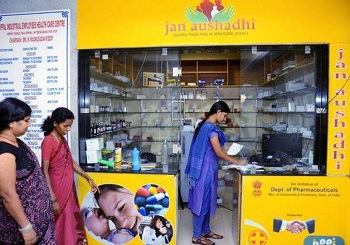 Price control is not the only affordability tool. Jan Aushadhi provides generic medicines through dedicated Kendras.
As of April 2026, the source records 19,000 operational Kendras across 29 therapeutic categories, with medicines priced up to 80% lower than branded medicines.
Together, DPCO price controls and Jan Aushadhi address affordability from two different directions: one regulates prices for essential medicines, while the other expands access to low-cost generics.
The government has invested a lot in policies enabling pharmaceutical companies to manufacture locally. This has benefited Indian generic companies greatly because many complex products that were earlier only manufactured in other countries and had to be imported are now being manufactured locally. As a result, companies can now work with regional CDMOs to get full access to those products, control the supply chain, cut operational costs, and then pass on this cost benefit to patients, said Akhil Ravi, CEO of Aurigene Pharmaceutical Services Limited.
The government is actively updating the Drugs Prices Control Order (DPCO) framework to balance patient affordability with operational ease for manufacturers. These reforms aim to reduce procedural delays while preserving essential price controls under the National Pharmaceutical Pricing Authority (NPPA).
In July 2026, the government notified important changes to the DPCO that simplify drug launches:
Also Read: Pharma Pricing Under Siege: Key Interventions of the Month
These steps show a pricing regime that continues to protect affordability while responding to real cost pressures and easing launch barriers.
 Karnataka recently flagged drug price gaps at 254 companies. The state action stands as the clearest current example of local price monitoring and the pressure firms face over overcharging or non-compliance with DPCO ceiling prices.
Dr Gopal Dabade, a Karnataka-based doctor associated with the patient-rights group All India Drug Action Network (AIDAN), said the principle of keeping margins reasonable was justified.
Pharmaceutical companies and others in the supply chain can be allowed reasonable profits, not huge ones, he argued. AIDAN has been involved in litigation seeking rationalization of medicine prices since 2003, making the present proceedings part of a much longer dispute over affordability and regulation.
This state-level move fits a broader pattern of NPPA enforcement. The regulator regularly issues overcharging notices and pursues recoveries when companies sell essential medicines above notified ceilings. Such actions keep constant pressure on pricing compliance across the industry.
Pharma analyst Salil Kallianpur underlined that the supply chain can involve manufacturers, carrying and forwarding agents, distributors, stockists and retailers, with costs related to transportation, storage, credit, inventory, expiry and, for some products, specialised handling.
He stressed that the debate therefore needs to examine the entire pricing chain rather than assuming that the PTR-MRP difference represents one company’s earnings. The real issue is the architecture of the medicine pricing chain, Kallianpur said. The more consequential debate, therefore, is about who captures the economic surplus between the factory gate and the patient.
On the global front, Sun Pharma’s U.S. subsidiaries—SPII, Taro Ltd. and Taro USA—settled the multi-year Generic Pharmaceuticals Pricing Antitrust Litigation in Pennsylvania. The companies paid a confidential amount and made no admission of wrongdoing. The settlement closed a major legal overhang that had hung over the firm for years.
Sun Pharma responded to international pricing pressure by joining the U.S. Most Favored Nation (MFN) framework. The company ranks among nine manufacturers that signed MFN agreements. It also committed to supply specific volumes of APIs to the U.S. Strategic Active Pharmaceutical Ingredients Reserve:
These steps show how a leading Indian player navigates both domestic scrutiny and global pricing demands by engaging proactively with international frameworks. Industry responses typically follow a measured pattern.
Companies file compliance reports, settle cases without admitting liability, make voluntary price adjustments, or submit data seeking cost-linked revisions, as seen in recent cancer drug discussions.
The combination of state inspections, NPPA recoveries and overseas legal settlements keeps pricing discipline high while giving firms room to manage risks through structured engagement.
Despite successive reforms, India’s drug-control and pricing system continues to face structural weaknesses that limit its effectiveness on the ground. Enforcement remains uneven across states. While some state drug control departments act decisively, others struggle with capacity and consistency.
A persistent shortage of drug inspectors and limited testing infrastructure further weakens day-to-day monitoring of manufacturing units, retail pharmacies and supply chains. Illegal sale of prescription medicines and widespread antibiotic misuse continue to pose public health risks.
Substandard and spurious drugs still appear in the market, while pharmacovigilance remains weak as adverse drug reactions are significantly under-reported. Online pharmacies and increasingly complex supply chains have added new layers of difficulty for regulators who still rely heavily on traditional inspection models.
India also remains dependent on imported active pharmaceutical ingredients (APIs) and key starting materials (KSMs) despite Production Linked Incentive schemes and bulk-drug park initiatives aimed at reducing this reliance.
Finally, older rules have struggled to keep pace with modern realities such as biologics, biosimilars, e-pharmacies and digital prescriptions. Updating the regulatory framework for these new categories has been slower than the pace of market change.
These gaps collectively undermine the system’s ability to deliver consistent quality, full price compliance and reliable access, even as ceiling prices and new compliance rules expand.
Also Read: Why Global Pharma is Moving to India: The 2026 India CDMO Boom and Market Outlook
India’s drug-price architecture rests on a dual objective: keep essential medicines affordable for patients who largely pay out of pocket, while safeguarding quality standards that underpin both domestic trust and the country’s global reputation as a major supplier of generics and vaccines.
Practical priorities for the next phase of reform are clear. Stronger and more uniform state-level enforcement, expanded digital tracking of medicines across the supply chain, upgraded testing laboratories, faster recovery of overcharged amounts, and tighter coordination between CDSCO, NPPA and state regulators will determine whether the expanded rules deliver real results.
Recent DPCO amendments, routine price revisions and heightened scrutiny of overcharging show that the framework is evolving. Yet the ultimate impact on patients will depend on sustained implementation rather than the volume of new notifications.
Only consistent ground-level execution can close the remaining gaps between policy intent and everyday access to affordable, quality medicines.
Fathimanoud is a Correspondent with experience covering the manufacturing and pharmaceutical sectors. She has written several articles on the pharma and manufacturing industries, with a particular focus on pharmaceutical developments and industry updates.
.jpg)




, CDSCO.jpg "Fostering a Quality Culture in the Pharmaceutical Industry")