
India Pharma Outlook Team | Thursday, 08 October 2026
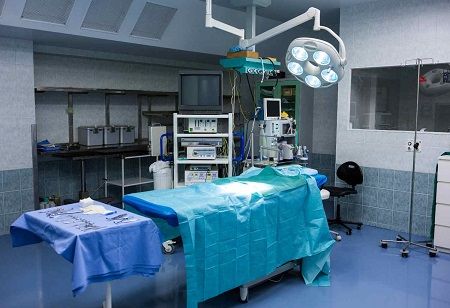
AIIMS Bathinda is adding specialized treatment capacity for patients with peritoneal and certain advanced abdominal cancers, as the institute has established a dedicated Peritoneal Cancer Unit with a Hyperthermic Intraperitoneal Chemotherapy (HIPEC) facility.
The Rs 12 crore system is the first of its kind in the region and will support cytoreductive surgery combined with HIPEC for appropriately selected patients.
The development is significant beyond the installation of a new cancer-treatment system. It reflects a broader expansion of specialized cancer infrastructure outside established metropolitan centers, potentially improving access for patients across Punjab and neighbouring states.
AIIMS Bathinda had already expanded its cancer capabilities with a PET-CT facility and a second High Energy Linear Accelerator earlier this year.
The new unit is designed to treat selected peritoneal surface malignancies, including certain colorectal, appendiceal and ovarian cancers that have spread to the peritoneum.
The treatment combines cytoreductive surgery, which removes visible tumour deposits, with HIPEC, in which heated chemotherapy is delivered into the abdominal cavity.
AIIMS Bathinda's system is being operated by a team that includes doctors who have received specialized training in Germany, according to the reported details.
The institute has also said that eligible treatment will be covered under the Ayushman Bharat health insurance scheme.
This matters because HIPEC requires more than the machine itself. It depends on specialized surgical expertise, anaesthesia, intensive-care support and coordinated oncology services.
Also Read: Building Scalable MedTech Ecosystem for India's Healthcare Future
AIIMS Bathinda Executive Director Dr Ratan Gupta said the institute's expansion of advanced cancer treatment has reduced the need for patients from the Malwa region to travel to other cities, while patients from other states are now also coming to Bathinda for specialized care.
The HIPEC unit therefore adds another layer to this regional-care model. Patients requiring highly specialized treatment for peritoneal malignancies may have an option closer to home rather than automatically travelling to larger cancer centers.
For a region with an expanding tertiary-care institution, the development also demonstrates how specialized procedures can increasingly be decentralized from major metropolitan hospitals.
The HIPEC facility is part of a wider build-out rather than an isolated investment. In June 2026, Union Health Minister J.P. Nadda inaugurated a PET-CT facility and a second High Energy Linear Accelerator at AIIMS Bathinda.
The government said these additions would strengthen cancer diagnosis and precision-based treatment for patients from Punjab and neighbouring states.
AIIMS Bathinda's Radiation Oncology department already provides chemotherapy, external-beam radiation and brachytherapy alongside advanced techniques including image-guided and intensity-modulated radiotherapy.
The combination of diagnostic imaging, radiation oncology, chemotherapy and now specialized surgical oncology creates a more comprehensive cancer-care ecosystem at the institute.
The larger significance of the AIIMS Bathinda HIPEC unit is its contribution to the geographic expansion of advanced cancer services.
HIPEC is a specialized intervention rather than a routine cancer treatment, requiring infrastructure and trained multidisciplinary teams.
AIIMS Bathinda's development suggests that regional public-sector institutions can increasingly build capabilities around complex cancer treatment alongside conventional oncology services.
For patients, that could mean greater access to specialized procedures without having to depend entirely on established cancer hubs in larger cities.
The Rs 12 crore HIPEC investment is therefore not only a technology addition. It represents another step in building regional capacity for complex cancer treatment in northern India.

.jpg)

