India Pharma Outlook Team | Friday, 18 September 2026
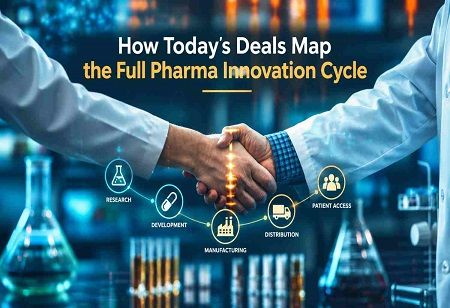
Today’s deals map the full pharma innovation cycle with unusual precision and force.
Three separate announcements illuminate distinct stages of the industry’s value chain. Novo Nordisk and Orbis Medicines confront a long-standing scientific barrier in oral delivery of biologics.
Dr Reddy’s Laboratories and Takeda convert an already-approved dengue vaccine into practical access within India’s healthcare system.
Ultragenyx transforms a rare-disease gene-therapy program into a commercially available product. These stories occupy different points along the innovation-to-access pipeline yet together demonstrate how pharmaceutical progress actually advances.
These headlines therefore reveal the R&D, market access, and regulatory gears of the industry turning at the same moment.
Novo Nordisk and Orbis Medicines signed a drug discovery and licensing agreement worth up to USD 1.4 billion to develop oral therapies for cardiometabolic diseases that doctors traditionally treat with injectables. The deal includes upfront and milestone payments to Orbis plus tiered royalties on future product sales. Novo also makes a strategic investment in the privately held company.
Orbis will deploy its AI-enabled nGen platform to discover macrocycles, ring-shaped molecules that can reach disease targets conventional small-molecule drugs struggle to hit. In preclinical studies, Orbis's synthetic macrocycles achieved up to 18 percent oral bioavailability.
Orbis CEO Morten Graugaard highlighted the chance to unlock a new generation of oral medicines and prove the transformative potential of AI-enabled macrocycle discovery. Novo already launched the world's first oral GLP-1 medicines for type 2 diabetes and weight loss using SNAC technology.
Recent approvals of oral macrocyclic peptides by Johnson & Johnson and Merck further signal that this approach is moving from concept to reality. The willingness to invest heavily in platform technology rather than a single asset shows how companies now treat oral delivery of biologics as a platform bet rather than a one-off gamble.
Also Read: How Can India Pharma Bridge the Gap Between Innovation and Access
Dr Reddy's Laboratories signed an agreement with Takeda Pharmaceutical to promote and distribute the Qdenga dengue vaccine in India. The deal follows India's drug regulator's approval of Qdenga for both children and adults, making it the first dengue vaccine cleared for the country.
Dr Reddy's expects the vaccine to become available in India in the first half of 2027. Qdenga requires two 0.5 ml doses given three months apart and works regardless of prior dengue infection, eliminating the need for pre-vaccination screening.
Dengue ranks among the world's fastest-growing vector-borne diseases. The World Health Organization reported a record 14.4 million cases and 11,201 deaths globally in 2024, including 232,425 cases and 233 deaths in India.
The U.S. Food and Drug Administration approved Ultragenyx Pharmaceutical's gene therapy, branded Fayuvi, as the first approved treatment for Sanfilippo syndrome Type A, a rare and fatal childhood disease.
The condition stems from a deficiency of the enzyme sulfamidase, which causes toxic buildup of heparan sulfate that damages the brain and nervous system. Children gradually lose cognitive, speech, and motor skills.
Fayuvi delivers a functional copy of the SGSH gene via a single intravenous infusion so the body can produce sulfamidase and clear the damaging buildup. In trials, treated children maintained or improved cognitive function compared with untreated patients.
Ultragenyx expects Fayuvi to reach specialized U.S. treatment centers within 30 to 60 days. Shares of the company rose more than 10 percent after the news. Parents of a child treated years earlier described clear differences in quality of life, including the absence of seizures, feeding tubes, or wheelchairs.
These three announcements do not share a common molecule or disease area. They share something more fundamental: each advances a distinct stage of the pharma value chain. Novo and Orbis push the frontier of what science can deliver orally. Dr Reddy's and Takeda convert regulatory approval into market presence. Ultragenyx turns a gene-therapy program into an approved product that families can access.
Together they illustrate where pharma innovation actually happens; deal, access, approval captured in one day's news. The industry does not progress in neat sequence; its gears turn at once. Watching them spin side by side offers a clearer map of how ideas ultimately reach patients.
.jpg)