
India Pharma Outlook Team | Wednesday, 26 August 2026
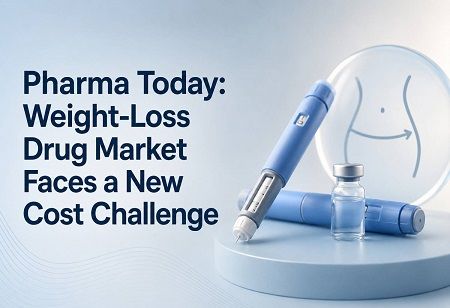
The US weight-loss drug market faces a new affordability challenge as employers reconsider coverage for GLP-1 medicines amid rising healthcare costs.
A Business Group on Health survey shows that about 14 per cent of US employers have already dropped or plan to drop coverage for GLP-1 weight-loss drugs in 2027.
At the same time, only 60 per cent of employers covered these medicines in 2026, down from 72 per cent in 2025.
The shift creates a sharp contrast for pharmaceutical companies. Eli Lilly and Novo Nordisk continue to expand GLP-1 portfolios, develop oral treatments and invest heavily in manufacturing capacity. The market must now balance strong demand with affordability and payer pressure.
The Business Group on Health expects employer healthcare costs to rise 9.2 per cent in 2027, compared with 8.5 per cent in 2026. Pharmacy spending already accounts for about 25 per cent of employer healthcare expenditure, and employers expect pharmacy costs to rise 12 per cent next year. These pressures make high-cost specialty medicines harder to sustain within employer benefit plans.
The list prices show why GLP-1 drugs attract scrutiny. Novo Nordisk's Wegovy carries a listed monthly price of USD 1,349.02, while Eli Lilly's Zepbound lists at USD 499. Employers therefore face a difficult calculation: wider access can support employee health outcomes, but sustained utilization can sharply increase benefit costs.
Ellen Kelsay, president of the Business Group on Health, described the rising costs as an “unfortunate new reality” for employers, making healthcare budgeting and forecasting increasingly difficult. She also called for a more disruptive approach to healthcare benefits, with employers needing to rethink how they can deliver greater value while improving health outcomes.
Also Read: How Can Indian Pharma Strengthen Quality Amid Rising FDA Scrutiny
The coverage pullback does not signal weaker interest in GLP-1 medicines. Two-thirds of surveyed employers reported rising utilization. Novo Nordisk and Eli Lilly continue to respond by expanding product options and manufacturing capacity.
Eli Lilly has committed another USD 4.5 billion to expand its Indiana manufacturing sites. The company plans to produce Foundayo and investigational retatrutide through its expanding manufacturing network. Lilly also says it has expanded capacity for incretin medicines to address unprecedented demand.
Novo Nordisk is following a similar capacity strategy. The company announced a 432 million expansion of its Athlone, Ireland, facility to increase production capacity for current and future GLP-1 treatments, particularly oral products.
The companies' latest moves show that the GLP-1 competition now extends beyond injectable treatments.
The central challenge now involves access versus sustainability. Pharmaceutical companies continue to invest billions because GLP-1 demand remains strong. However, employers and other payers increasingly want predictable costs and measurable health outcomes.
This pressure could accelerate three market shifts: greater demand for lower-cost oral medicines, stronger payer negotiations and increased competition from alternative GLP-1 products. Manufacturing expansion can improve supply, but companies may also need pricing strategies that make long-term treatment easier for employers and patients to sustain.
The next phase of the GLP-1 market will therefore depend on more than weight-loss efficacy. Affordability, manufacturing scale, payer acceptance and patient access will increasingly determine how far the GLP-1 boom can expand.
.jpg)