
India Pharma Outlook Team | Friday, 23 October 2026
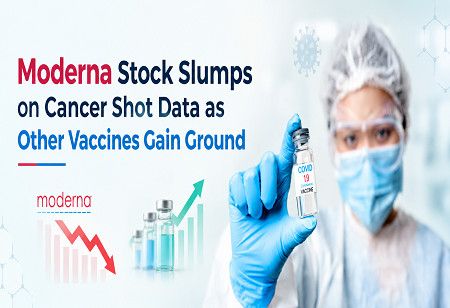
Moderna’s shares plunged more than 25% on Thursday, erasing about USD 24 billion in market value, after the release of cancer shot data for its personalized melanoma vaccine with Merck.
The detailed late-stage results confirmed solid efficacy, yet investors reacted with a sharp sell-off.
At the same time, Pfizer and Valneva’s Lyme disease vaccine candidate posted roughly 70% efficacy in a large Phase 3 trial, and UNICEF and Gavi secured a roughly 40% price cut for the Mosquirix malaria vaccine.
Today’s events highlight how scientific progress, market sentiment and real-world access rarely move in perfect alignment.
The Phase 3 cancer shot data for intismeran (also known as mRNA-4157 or V940), combined with Merck’s Keytruda, showed a 42% reduction in the risk of cancer recurrence or death compared with Keytruda alone in high-risk melanoma patients after surgery.
The combination also cut the risk of distant metastasis or death by 38%. At two years, 82.2% of patients on the vaccine-plus-Keytruda arm remained cancer-free versus 70% on Keytruda alone.
The first late-stage confirmation was that a personalized mRNA vaccine targeting each patient’s unique tumor mutations can improve outcomes when added to a checkpoint inhibitor.
Yet the stock sold off sharply in a classic “sell-the-news” reaction. Shares had surged more than 500% earlier in the year after the companies announced positive interim findings without numbers in August. With elevated expectations priced in, the detailed figures triggered profit-taking. Overall survival data continue to mature, and the full results will be presented at ESMO.
Also Read: Why Vaccine Innovation Must Go Beyond Traditional Platforms
Pfizer and Valneva reported that their investigational six-strain Lyme disease vaccine (PF-07307405, or LB6V) demonstrated more than 70% efficacy (around 73% in the primary analysis) in preventing confirmed Lyme disease after a four-dose series in a large Phase 3 trial involving people aged five and older.
The trial narrowly missed its pre-specified statistical primary endpoint, mainly because fewer cases occurred than expected, which widened the confidence interval. A secondary analysis did meet the statistical threshold.
The companies called the efficacy clinically meaningful and plan to move forward with regulatory submissions. If approved, it would be the first Lyme vaccine available in more than two decades. Lyme disease, transmitted by ticks, affects hundreds of thousands of people annually in the U.S. and Europe.
UNICEF and Gavi announced an agreement that will cut the price of GSK’s Mosquirix (RTS,S/AS01) malaria vaccine by about 40%, bringing it to €5.50 (roughly USD 6.16) per dose. The deal is expected to generate around USD 50 million in savings between 2027 and 2029.
Production is shifting to India’s Bharat Biotech, with GSK continuing to supply the adjuvant; full transfer is targeted for 2028. The lower price is expected to take effect in early 2027, subject to regulatory and manufacturing milestones, including WHO prequalification of the new facility.
Malaria remains a leading killer of young children in high-burden countries, and lower prices expand the reach of Gavi- and UNICEF-supported immunization programs.
These updates span the spectrum of vaccine progress, from highly personalized mRNA cancer therapy, a potential new preventive shot against a common tick-borne illness, and a practical step toward more affordable protection against a major global infectious disease.
While cancer shot data dominated market headlines, quieter advances in access and prevention continued to reshape public health realities. Science is advancing on multiple fronts, yet commercial realities, statistical nuances, and access barriers still shape how the news lands with investors, regulators, and public health systems.
These developments illustrate both the promise and the complexity of today’s vaccine landscape. More data, regulatory decisions, and real-world uptake will ultimately determine their lasting impact.



