
India Pharma Outlook Team | Friday, 30 October 2026
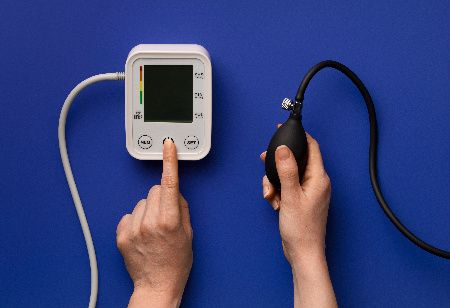
Medical device localization is gaining importance as global healthcare companies reassess where they manufacture and source products, and Japan’s Omron Healthcare has added India to that shift.
The company opened its first Indian factory in Chennai on October 30, targeting annual production of 3 million blood pressure monitors by 2028, with scope to expand capacity further.
The move is intended to diversify production beyond Vietnam and serve both Indian and overseas markets.
Yet the investment raises a larger question: can India build the component ecosystem needed to turn new factories into a deeper domestic manufacturing hub, rather than simply another assembly base?
Omron's expansion comes against the backdrop of India's continued dependence on imported medical equipment and components.
According to the Department of Pharmaceuticals, India imported medical devices worth Rs 1,37,088 crore in FY2024-25, compared with exports of Rs 42,360 crore.
The government's own policy framework acknowledges this challenge. Its Scheme for Strengthening of Medical Device Industry includes support for domestic production of key components, raw materials and accessories to reduce reliance on imported inputs.
This is relevant because establishing a factory does not automatically create a fully localized manufacturing ecosystem. For India, medical device localization therefore needs to extend beyond the production of finished equipment.
Also Read: Why Clinical Evidence Matters More in MedTech Commercialization
Omron's Chennai facility provides an example of how international manufacturers could contribute to this transition.
The company is targeting annual production of 3 million blood pressure monitors by 2028, while the facility has the potential to reach 3.5 million units through three-shift operations.
The company is also considering expanding production to nebulizers, which would broaden the facility's product portfolio.
Omron has traditionally relied on Vietnam for a significant part of its production, and its India investment offers another manufacturing location to serve domestic and international demand.
However, the larger test for medical device localization will be the extent to which local suppliers participate in this manufacturing expansion.
Increasing domestic procurement of electronic components and other critical inputs could help Indian suppliers develop the technical capabilities and quality systems required by global medical-device manufacturers.
This creates opportunities for component manufacturers that can meet the quality and consistency requirements of healthcare equipment production.
India's medical device industry still faces structural challenges, particularly in high-value components, technology development and manufacturing scale. The Department of Pharmaceuticals has identified import dependence as a key concern and introduced measures to encourage domestic manufacturing of critical inputs.
For companies such as Omron, the availability of reliable local suppliers will be important to expanding sourcing within India. Medical devices require consistent product quality, measurement accuracy and compliance with applicable regulatory standards.
Another important consideration is whether domestic manufacturing can become commercially competitive without depending entirely on imported components.
For India, the next phase of medical device localization will be determined not simply by how many factories international companies establish, but by how much of the manufacturing value chain develops within the country.
Omron's expansion offers an important example of this opportunity, while highlighting the work still required to build a more self-reliant medical-device industry.



