India Pharma Outlook Team | Tuesday, 29 September 2026
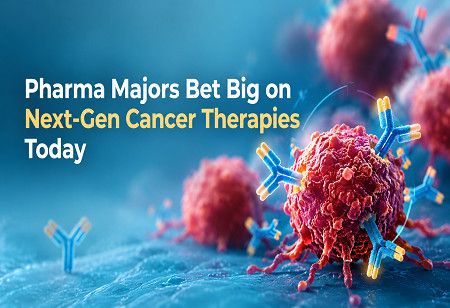
Pharma majors bet big on next-gen cancer therapies today as Merck and AstraZeneca pour billions into experimental assets, many sourced from Chinese biotechs.
These deals refresh pipelines ahead of major patent cliffs and unlock combination strategies that target hard-to-treat tumors.
At the same time, selective regulatory withdrawals remind the industry that accelerated approvals remain difficult in aggressive lung cancers.
The latest moves show companies racing to secure novel mechanisms such as KRAS inhibitors, dual immune-angiogenesis blockers, and antibody-drug conjugates while regulators demand stronger data packages.
Merck closes a global licensing deal with China’s SciBrunch Therapeutics worth up to USD 2.13 billion for SPR2015, an oral drug candidate that targets the KRAS G12D mutation. SciBrunch receives a USD 400 million upfront payment and remains eligible for up to USD 1.73 billion in milestones.
SPR2015 sits in preclinical development and has not yet entered human trials, yet laboratory and animal data already show the molecule reduces tumor growth in KRAS G12D-mutant models of pancreatic, colorectal and lung cancers.
Merck takes a USD 400 million pre-tax charge in its third-quarter 2026 results and positions the asset as part of its broader effort to expand the oncology pipeline before Keytruda loses exclusivity later this decade.
Also Read: How Can India Pharma Bridge the Gap Between Innovation and Access
AstraZeneca invests USD 2 billion in Summit Therapeutics and launches a collaboration centered on ivonescimab, a next-generation bispecific antibody Summit licensed from China’s Akeso. The molecule simultaneously blocks PD-1 and VEGF, helping the immune system locate and attack cancer cells while cutting off tumour blood-vessel growth.
AstraZeneca buys preferred shares at an 18.6 percent premium to Summit’s closing price and commits to clinical trials that combine ivonescimab with its own cancer medicines, including antibody-drug conjugates. Summit shares jump more than 15 percent in extended trading after the announcement. The companies also sign a preliminary agreement to explore further combination studies.
AstraZeneca and HUTCHMED file a U.S. application seeking approval for the ORPATHYS-TAGRISSO combination in advanced lung cancer that has progressed after prior EGFR-targeted therapy. The pairing extends progression-free survival and improves overall survival compared with chemotherapy. ORPATHYS already carries approval in China on the basis of a separate Phase III study, and AstraZeneca commercializes the medicine. The filing expands the companies’ joint development program and targets a clear unmet need in EGFR-mutant disease.
Merck and Daiichi Sankyo voluntarily withdrew their U.S. application for ifinatamab deruxtecan, an experimental antibody-drug conjugate aimed at extensive-stage small-cell lung cancer that worsened after standard chemotherapy.
Discussions with the Food and Drug Administration reveal that mid-stage clinical data do not meet the requirements for accelerated approval. The decision underscores the continued difficulty of securing early regulatory green lights in highly aggressive lung cancers even when companies invest heavily in next-generation modalities.
The recent transactions highlight clear industry priorities:
Pharma majors continue to place large bets on next-generation cancer therapies. Merck’s USD 2.13 billion SciBrunch licence, AstraZeneca’s USD 2 billion Summit investment and the ORPATHYS-TAGRISSO filing demonstrate aggressive pipeline replenishment.
The ifinatamab deruxtecan withdrawal shows that regulatory hurdles still constrain even well-resourced programs. The coming months will reveal how these assets perform in the clinic and whether the capital deployed today translates into durable oncology franchises.
.jpg)