India Pharma Outlook Team | Friday, 18 September 2026
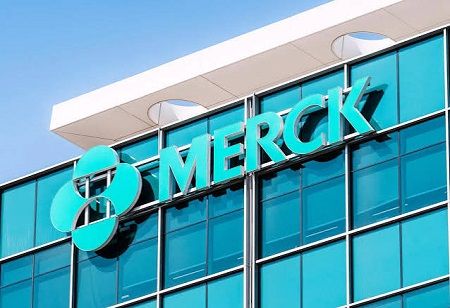
Merck joins a crowded race in India’s biomanufacturing push as global life-science suppliers accelerate local capacity and customer reach.
This move places Merck alongside established players already expanding equipment, consumables, and training infrastructure.
India’s rising biopharma research and manufacturing demand now draws multiple multinationals into direct competition.
The contest centers on who can deliver reliable local supply, faster training and closer customer support. Merck therefore enters a field where Thermo Fisher and Cytiva already claim clear momentum and visible investment.
Thermo Fisher Scientific expects continued double-digit growth from India and aims for a 15 to 20 percent rise in its customer base within five years. Biopharma research and manufacturing drive the bulk of that demand, supported by semiconductor and clean-energy activity.
Asia-Pacific contributes about 18 percent of Thermo Fisher’s global revenue, and India ranks among its fastest-growing markets.
It positions itself as a broad supplier of laboratory equipment, analytical instruments, and genetic analysis tools. Thermo Fisher tracks rising quality standards in Indian laboratories and growing interest in obesity-drug research.
Cytiva opens a 33,000-square-foot manufacturing facility and Experience Centre in Pune that doubles its manufacturing capacity in India. The plant produces bioprocessing equipment that includes tangential-flow, virus-filtration, and inactivation systems. An integrated Experience Centre delivers immersive training on upstream and downstream technologies as well as digital and automation software.
The Pune site complements Cytiva’s existing Bengaluru operations, which already house a Fast Trak center and research activities. Customers therefore gain faster local access to equipment and practical training that shortens development timelines.
Together, these two companies demonstrate how leading suppliers now prioritize both physical capacity and direct customer support inside India. Thermo Fisher focuses on expanding its customer footprint and workforce while Cytiva concentrates on manufacturing scale and hands-on training infrastructure. Their combined activity creates a high bar for reliability, speed, and local engagement.
Also Read: How Can India Pharma Bridge the Gap Between Innovation and Access
Thermo Fisher and Cytiva already demonstrate concrete scale. Thermo Fisher emphasizes customer-base expansion and workforce growth. Cytiva prioritises physical manufacturing capacity and training infrastructure.
Merck now enters the same arena of local production, supply reliability and customer proximity. The race rewards companies that combine equipment, consumables and process know-how under one roof.
Players that deliver both hardware and practical training stand to capture more of India’s growing biopharma pipeline. Thermo Fisher’s growth targets and Cytiva’s doubled capacity set clear benchmarks.
“India is emerging as an increasingly important hub for life science innovation and manufacturing,” said Dhananjay Singh, Managing Director, Life Science business of Merck, India.
Merck must match or exceed these local footprints to move from participant to leader in India’s biomanufacturing ecosystem. India’s biomanufacturing push therefore attracts simultaneous investment from multiple global suppliers.
Each company bets that closer manufacturing, faster training and wider customer coverage will secure long-term share. Merck’s arrival intensifies that contest and underscores how crowded the field has become.
.jpg)