
India Pharma Outlook Team | Wednesday, 07 October 2026
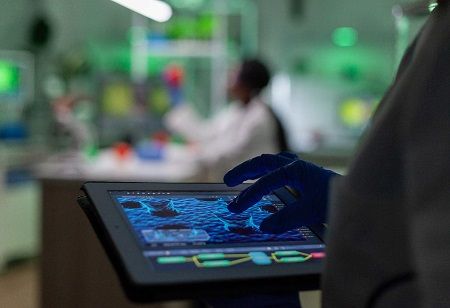
AI clinical trials in India could become an emerging tool for reducing the cost and failure risk of drug development, as global pharmaceutical companies increasingly test virtual approaches before enrolling human participants.
According to credible sources, AI companies including BioinvestGPT and QuantHealth are running virtual drug trials to predict whether medicines are likely to succeed during human trials.
Some simulations can be completed in a month or less, compared with years for conventional development.
For Indian pharma, however, the opportunity is not only about speed. It raises a regulatory question about how such simulations could fit into India’s clinical-trial framework and whether they can eventually reduce costly development failures.
India's current regulatory structure is still built around human clinical research.
The Central Drugs Standard Control Organization (CDSCO) states that an Investigational New Drug application is required before human subjects are exposed to an investigational drug, with clinical-trial applications processed under the New Drugs and Clinical Trials Rules, 2019.
That does not mean virtual trials cannot support drug development. Instead, AI simulations could initially operate as a pre-clinical-development decision layer, helping sponsors determine which candidates, indications, or trial designs deserve further investment.
The regulatory environment is already moving toward faster clinical development. In January 2026, the Health Ministry amended the NDCT Rules to reduce regulatory burden, with the government saying the changes could cut drug-development timelines by at least 90 days.
CDSCO also introduced parallel submission and processing of clinical-trial applications by CDSCO and registered ethics committees in May 2026, another move aimed at improving the trial-approval process.
Also Read: How AI Can Power Target Identification and Disease Mapping
The economic case could be significant. Global biopharma companies spend roughly USD 140 billion annually on human clinical testing, while only about 12 percent of drug candidates ultimately receive approval.
For Indian drug makers, AI-based trial simulations could potentially help identify weak candidates earlier, optimize patient populations and assess alternative trial designs before large sums are committed to Phase 2 or Phase 3 programs.
The technology is already moving beyond experimentation. QuantHealth says it has simulated more than 600 clinical trials across 30 indications and uses AI simulations for areas including protocol optimization, indication selection and enrolment prediction.
India is also developing its own private-sector capabilities around AI-enabled drug development.
In August, Tata Consultancy Services (TCS) introduced ADD AgentHub, an AI platform aimed at drug development, clinical trials and drug safety workflows. TCS says its broader ADD platform has supported more than 700 clinical trials globally.
Meanwhile, Mankind Pharma partnered with Denovo Sciences in July 2026 on an AI-led drug-discovery program designed to prioritize candidates with stronger development potential before they progress further.
These developments suggest Indian pharma is building the computational infrastructure needed to use AI across the drug-development cycle, although virtual simulations cannot yet replace human clinical evidence.
For AI clinical trials in India to move from decision-support tools toward a recognized component of regulatory development, clearer standards would be needed around model validation, data quality, auditability, and the circumstances in which simulated evidence can support regulatory decisions.
For Indian pharma, the near-term opportunity may therefore be less about eliminating human trials and more about failing faster and spending more selectively.
If CDSCO's regulatory reforms continue alongside private-sector investment in AI drug development, virtual trials could eventually become another tool for reducing the cost and risk of bringing medicines from laboratory research to patients.

.jpg)