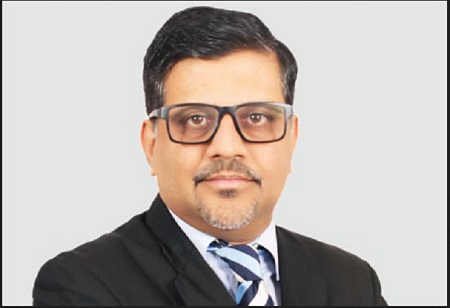
Dhananjay Singh, Managing Director, Merck Life Science

In an exclusive interaction with Thiruamuthan, Assistant Editor at India Pharma Outlook, Dhananjay Singh, Managing Director, Merck Life Science, discusses India's evolving life sciences landscape, the challenges of commercializing research, and the importance of localizing critical manufacturing. He highlights opportunities to strengthen the country's innovation and manufacturing capabilities.
With over 25 years of experience in the life sciences industry, Dhananjay Singh has held leadership positions across sales, research solutions and commercial operations. His expertise spans strategic planning, business development, financial management and team leadership, with a focus on driving business growth and strengthening market presence.
India has made remarkable progress in scientific research and life sciences. How would you describe the country's innovation ecosystem today, and where do you see the biggest opportunities for growth?
India's life sciences innovation ecosystem is at a defining moment. Today, we're seeing a clear shift toward research-led innovation, with growing capabilities in biologics, biosimilars, advanced therapeutics and AI-enabled drug discovery.
What is particularly encouraging is that innovation is becoming far more collaborative. Industry, academia, start-ups and government are working together more closely than ever before, creating an ecosystem that is better equipped to translate scientific research into real-world healthcare solutions. At the same time, continued investments in R&D infrastructure, digital technologies and advanced manufacturing are accelerating this transformation.
Policy has also played an important enabling role. Initiatives such as Make in India, the Production Linked Incentive (PLI) Scheme, the Research Development and Innovation (RDI) Scheme and the BioE3 Policy are helping strengthen domestic innovation, manufacturing capabilities and scientific research.
India's greatest advantage, however, remains its talent. We have one of the world's largest pools of scientists, researchers and engineers, supported by a thriving start-up ecosystem and a strong pharmaceutical manufacturing base. The next phase of growth will depend on how effectively we convert that scientific capability into globally competitive innovation.
I believe the opportunity ahead is not simply for India to manufacture more, but to discover, develop, and commercialize the next generation of healthcare solutions. That is the shift that will define India's leadership in the global life sciences industry.
India's greatest advantage remains its talent. The next phase of growth will depend on converting scientific capability into globally competitive innovation and healthcare solutions.
While research output continues to grow, many promising discoveries struggle to reach commercialization. In your view, what is creating this gap between scientific discovery and market adoption?
I don't believe India has a research problem; I believe it has a translation problem. We produce high-quality science and exceptional talent, but too many promising discoveries struggle to move from the laboratory to the marketplace.
The biggest challenge is that commercialization is often treated as the final step rather than being built into the innovation journey from the beginning. Researchers, manufacturers, regulators, investors, and industry frequently operate in silos, each with different priorities and timelines. As a result, strong science doesn't always translate into scalable products.
There are also gaps in translational infrastructure. Many researchers have limited access to pilot-scale manufacturing, advanced bioprocessing capabilities, and the funding required to validate and scale innovations beyond proof of concept. While regulatory frameworks and innovation policies have evolved significantly, continued improvements in areas such as clinical research, intellectual property, and commercialization support will further strengthen the ecosystem.
The opportunity lies in bringing these stakeholders together much earlier. When commercialization is considered alongside scientific discovery, not after it, we can significantly improve the journey from breakthrough research to real-world impact. That's how India can transform scientific excellence into globally competitive innovation.
Taking an innovation from the lab to the market requires multiple stakeholders to work together. Where do you see the biggest opportunities to strengthen collaboration across industry, academia, and government?
Innovation is about teamwork. No single organization, whether it's academia, industry, government, or a start-up, can take a scientific discovery from the lab to the market on its own. The biggest opportunity lies in building stronger collaboration across this entire ecosystem from the earliest stages of research, rather than waiting until an innovation is ready for commercialization.
One area where India can make significant progress is bridging the gap between proof of concept and commercialization. This requires closer partnerships between researchers, industry, investors and policymakers, along with greater access to translational infrastructure, pilot-scale manufacturing and commercialization funding.
Digital technologies can be a powerful enabler. AI, advanced analytics and real-world data are helping accelerate discovery, improve clinical development, optimize trial design and support more efficient regulatory decision-making. Equally important is creating trusted platforms for data sharing and cross-sector collaboration.
Finally, regulators and healthcare professionals need to be engaged much earlier in the innovation journey. Their insights help ensure that scientific breakthroughs address genuine clinical needs and can move more efficiently through development and approval.
At Merck, we believe meaningful innovation happens when science, technology, and collaboration come together. Strengthening these partnerships will be key to transforming India's research excellence into globally impactful healthcare solutions.
Beyond funding, what are the most important factors that help researchers and innovators successfully translate scientific discoveries into commercial outcomes?
Funding is important, but it is rarely the deciding factor. Other critical factors include the strength of the ecosystem that supports innovation from discovery to commercialization.
First, collaboration is essential. Researchers, industry, clinicians, regulators and entrepreneurs need to work together early in the innovation journey. That collaboration depends on trust and accountability: partners need to share information openly, align on goals, and follow through on commitments. Scientific excellence alone is not enough; successful commercialization also requires expertise in product development, manufacturing, quality, regulatory strategy and market access.
Second, access to world-class translational infrastructure is critical. Researchers need advanced laboratories, pilot-scale manufacturing facilities and digital technologies that allow discoveries to be validated, refined and scaled efficiently.
Finally, talent remains a key enabler. Commercializing science takes multidisciplinary teams that combine scientific expertise with capabilities in bioprocessing, data science, regulatory affairs and business strategy. It also requires an entrepreneurial mindset—one that encourages researchers to look beyond publication and focus on real-world impact. When these elements come together, scientific discoveries have a far greater chance of becoming innovations that improve lives at scale.
When these elements come together, scientific discoveries have a far greater chance of becoming innovations that improve lives at scale.
Merck has expanded its Jigani manufacturing facility with biological buffer manufacturing capabilities. What drove the decision to expand these capabilities in India at this stage?
India’s growing biotechnology ecosystem, strong scientific talent pool, and rising demand for advanced research and biopharmaceutical manufacturing make it an increasingly important market for life sciences. Expanding our Jigani facility to include biological buffer manufacturing reflects our decision to build capabilities closer to the customers and markets we serve, while responding to the evolving needs of the industry.
Biological buffers are critical materials used across applications such as cell culture, DNA research, diagnostics, and drug manufacturing. Adding these capabilities to our existing life sciences operations allows us to offer customers a more integrated portfolio of essential materials, improve supply reliability and respond more efficiently to their requirements. Local manufacturing also helps reduce dependence on imports and strengthens supply chain resilience for customers in India and across the Asia-Pacific region.
The expansion is aligned with our ‘in-region, for-region’ approach of building capabilities within key markets to address regional needs while strengthening our global manufacturing network. It also supports India’s ambition to expand its domestic manufacturing capabilities and play a larger role in the global life sciences ecosystem. For Merck, this investment goes beyond increasing manufacturing capacity; it is about building the infrastructure and capabilities needed to support scientific progress across the value chain, from early-stage research and development to scale-up and commercial production.
How can greater domestic manufacturing of critical chemistry and biology materials help reduce import dependence and improve supply reliability for India’s pharma, biotech and research ecosystem?
Domestic manufacturing of critical chemistry and biology materials is an important step towards building a more resilient life sciences ecosystem in India. Global supply chain disruptions have underscored the risks of depending heavily on imports for specialized materials used in pharmaceutical research, diagnostics and biopharmaceutical manufacturing. Strengthening local production can improve supply predictability, reduce exposure to international logistics disruptions and help customers access essential materials more reliably.
At Merck, our investment of approximately €13 million in our Jigani manufacturing facility in Bengaluru reflects this commitment. The addition of biological buffer manufacturing builds on our existing chemistry capabilities and strengthens our ability to serve customers across research, diagnostics, biotechnology and biopharmaceutical manufacturing. By manufacturing biological buffers and diagnostic raw materials locally under temperature-controlled conditions, we can support more reliable access to critical materials and help customers meet their needs across the journey from early-stage research and development to scale-up and commercial production. This also reinforces our ‘in-region, for-region’ approach of building capabilities closer to the markets we serve.
India’s next step is to develop a stronger domestic manufacturing ecosystem backed by advanced technologies, globally consistent quality standards, skilled talent, and collaboration between industry and government. Initiatives such as Make in India and the BioE3 Policy can help create the conditions for this growth. The objective is not to reduce global collaboration, but to complement it with stronger domestic capabilities and diversified supply chains. This will help India strengthen its role as a reliable manufacturing and innovation hub for the global life sciences industry.
As global life sciences companies look to diversify innovation and manufacturing, what unique opportunity does India have to position itself as a global life sciences and manufacturing hub?
India has a once-in-a-generation opportunity to become a global innovation hub for life sciences. The country's competitive advantage today extends far beyond cost-efficient manufacturing. It combines a deep scientific talent pool, globally recognized pharmaceutical capabilities, a vibrant biotechnology and start-up ecosystem, and strong policy support for research and advanced manufacturing.
India is well positioned to become a strategic partner across the entire value chain, from discovery and development to clinical research, biomanufacturing and commercialization. This opportunity is further strengthened by initiatives such as the BioE3 Policy, BIRAC, DBT programs and the Production Linked Incentive (PLI) Scheme, which are fostering innovation, biotechnology and advanced manufacturing.
The next phase of growth will depend on strengthening the innovation ecosystem through deeper collaboration between academia, industry, healthcare providers, start-ups, investors and policymakers. Continued investments in AI-driven research, digital technologies, advanced biomanufacturing, regulatory science and translational infrastructure will be equally important.
If India can combine its scale with world-class research, stronger industry-academia partnerships and globally benchmarked infrastructure, it will not just participate in global innovation; it will help lead it. That is the opportunity before us: to position India as a destination where breakthrough science is discovered, developed and delivered to the world.
What lessons have recent global supply-chain disruptions offered the life sciences industry, and how important is regional manufacturing capacity in building a more resilient supply chain?
Recent global supply-chain disruptions have reinforced the need for the life sciences industry to build resilience into its supply networks. The key lesson is that resilience requires diversified sourcing, better supply-chain visibility and manufacturing capabilities that can respond to regional needs without compromising quality or consistency.
Regional manufacturing is central to this approach. Building capabilities closer to customers can improve supply reliability, shorten response times, and reduce dependence on imports for critical materials. At Merck, our investment in expanding our Jigani facility in Bengaluru, including the addition of biological buffer manufacturing, reflects our ‘in-region, for-region’ approach. It strengthens our ability to serve customers in India and across the Asia-Pacific region while complementing our global supply network. These materials support a range of applications, from DNA research and cell culture to diagnostics and biopharmaceutical manufacturing.
The priority is to strike the right balance between global scale and regional agility. International collaboration and diversified sourcing remain essential, but stronger regional capabilities can help mitigate disruptions and ensure more consistent access to critical materials. For India, investments in advanced manufacturing, quality infrastructure and specialized scientific talent present an opportunity to strengthen domestic supply security and deepen its role in the global life sciences ecosystem. By integrating regional manufacturing with global networks, the industry can build supply chains that are more adaptable and better equipped to support long-term scientific and manufacturing needs.
Looking ahead, what changes in infrastructure, talent, technology, policy and industry collaboration do you believe will have the greatest impact on strengthening India’s position in the global life sciences value chain over the next decade?
Over the next decade, strengthening India’s position in the global life sciences value chain will depend on how effectively we translate scientific research into commercially viable solutions. This requires us to look beyond discovery and build capabilities across the entire innovation lifecycle, including manufacturing, regulatory readiness, intellectual property protection and market access.
Technology will be a key enabler of this transition. Artificial intelligence and digital tools can improve decision-making across experimental design, clinical development, technology transfer and manufacturing, helping reduce risks and accelerate development timelines. Equally important is investment in world-class research infrastructure, pilot-scale manufacturing and advanced production capabilities that allow promising discoveries to move from proof of concept to commercial scale.
Talent and collaboration will be just as critical. India needs multidisciplinary teams that bring together scientific expertise, engineering, regulatory knowledge and commercial understanding. Closer collaboration between academia, industry, healthcare providers, investors and regulators can strengthen technology transfer and ensure that research is aligned with real-world needs. Policy frameworks that encourage R&D investment, support innovation and provide greater clarity around regulatory pathways will further enable this progress.
Ultimately, the impact of innovation depends not only on whether a discovery works, but also on whether it addresses a meaningful need and can be manufactured reliably, scaled efficiently, and made accessible to those who need it. Embedding this commercial and patient-centric perspective early in the research process will be essential to improving the translation of scientific breakthroughs into real-world healthcare solutions.
By bringing together scientific excellence, advanced manufacturing, digital innovation, and stronger industry collaboration, India has an opportunity to move further up the global life sciences value chain and establish itself as a hub for both innovation and high-value manufacturing.




, CDSCO.jpg "Fostering a Quality Culture in the Pharmaceutical Industry")