
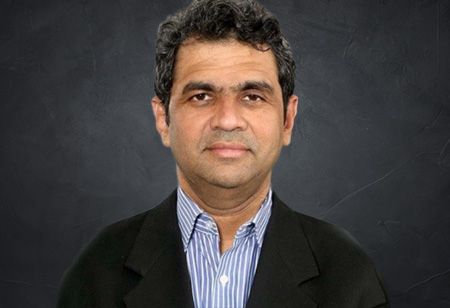
Pushkar Kulkarni, General Manager, Johnson & Johnson Innovative Medicine, India & South Asia

In an exclusive interaction with Thiruamuthan, Assistant Editor at India Pharma Outlook, Pushkar Kulkarni, General Manager, Johnson & Johnson Innovative Medicine, India & South Asia, discusses how technology, AI, genomics and precision medicine are shaping the future of oncology and immunology care in India. He also highlights the need to address affordability, access, clinical research, regulatory efficiency, patient awareness and healthcare infrastructure to make innovative treatments more accessible and improve patient outcomes.
Pushkar Kulkarni is a strategic healthcare executive with over two decades of experience shaping market access, commercial strategy, and business growth. Prior to Johnson & Johnson, he held leadership roles at MSD, Sanofi, Daiichi Sankyo, and Unichem Laboratories, building expertise across oncology, immunology, pricing, and patient access.
Below are the key excerpts from the interaction.
Given Johnson & Johnson’s leadership in Innovative Medicine, how do you see the company advancing its role in improving oncology care through technology integration in India?
Thank you for the opportunity to speak with India Pharma Outlook when we are at such a transformative moment in healthcare. At Johnson & Johnson Innovative Medicine (J&J IM), we are focused on bringing best-in-class oncology and immunology therapies to patients while helping address significant unmet needs across India's healthcare landscape.
To answer your question on how technology is advancing the provision of care in India, we first need to understand what technology is capable of. With advances in modern computing, technology can now be leveraged to improve the detection, diagnosis and management of critical diseases. This has the potential to transform healthcare by enabling earlier intervention, more informed clinical decisions and better patient outcomes. At J&J IM, we believe technology has a critical role to play in enabling earlier diagnosis and more personalized treatment approaches. As India's digital health ecosystem continues to mature, there is a significant opportunity to use AI-enabled solutions and real-world evidence to improve patient care and expand access, particularly in underserved communities.
This presents two important opportunities. First, India has the potential to generate high-quality real-world data that reflects local patient needs while contributing to global evidence generation. Second, the country's evolving healthcare infrastructure can help support a more seamless continuum of care, from screening and diagnosis to treatment and long-term disease management.
Partnerships will be central to unlocking this potential. We work closely with policymakers, clinicians, patient advocacy groups, and healthcare institutions to help accelerate access to innovation. For example, through collaborations such as the LUNGS Alliance, we are supporting efforts to improve lung cancer awareness, early detection, and patient navigation. We also continue to advocate for broader adoption of Next Generation Sequencing (NGS) testing, which can help identify the most appropriate treatment options for patients and advance precision oncology in India.
Ultimately, technology is most powerful when it is combined with scientific innovation and strong partnerships. At Johnson & Johnson, we see ourselves at the intersection of these forces, working with the healthcare ecosystem to help transform cancer care and improve outcomes for patients across India.
With the growing demand for personalized oncology treatments in India, how does Johnson & Johnson Innovative Medicine plan to scale its offerings and enhance the availability of such treatments to a wider patient base?
We at Johnson & Johnson Innovative Medicine believe that the true success of innovation lies in a patient's ability to access it. That is why we are committed to expanding access to precision medicine, particularly in oncology, for patients living with serious diseases such as lung cancer and multiple myeloma.
We have a strong, differentiated portfolio of innovative therapies in these disease areas, and we work to ensure that our access models reflect the affordability realities of the Indian healthcare landscape. This commitment is reflected in the significant increase in the number of patients we are able to serve year after year.
As India's healthcare infrastructure continues to evolve, personalized oncology care must extend beyond metropolitan centers to Tier-2 and Tier-3 cities, where the need is equally significant. We are therefore focused not only on bringing innovative treatments to patients, but also on strengthening the broader ecosystem required to support precision oncology.
We work closely with leading oncology institutions and clinicians to advance scientific understanding of these therapies, with the ambition that precision oncology becomes the standard of care in the not-too-distant future. Initiatives such as expanding molecular tumor boards, strengthening companion diagnostics and increasing access to testing are helping accelerate this shift. Public-private collaboration will also be critical to embedding precision oncology into routine clinical practice and ensuring that more patients receive the right treatment at the right time.
Ultimately, our goal is to ensure that advances in precision medicine translate into meaningful improvements in outcomes for a broader patient population across India.
The true success of innovation lies in a patient’s ability to access it, particularly as we expand precision medicine and improve outcomes across India.
As AI-driven diagnostics are increasingly being adopted in India, how effective is this technology in improving early-stage cancer detection, and where does it need more refinement?
AI has the power to identify hard-to-detect nodules and mutations that might otherwise be missed by the human eye. In a country like India, where late-stage diagnosis remains a significant challenge, AI has the potential to become a powerful tool in our arsenal, helping accelerate earlier diagnosis and, consequently, earlier treatment. However, the technology still requires further refinement. No technology, on its own and without human oversight, can be ethically extended to patient care. AI must therefore be deployed responsibly, with clinicians remaining at the forefront of decision-making in the fight against these diseases.
There is also a need for clear governance frameworks around data privacy, transparency and accountability to build confidence among both healthcare professionals and patients. Equally important is ensuring that AI complements, rather than replaces, clinical judgment.
Ultimately, the greatest impact of AI will come from combining technological innovation with medical expertise. When integrated with strong diagnostic infrastructure and clinical excellence, AI can play a meaningful role in advancing earlier detection and improving cancer outcomes at scale. To enable this, close collaboration between industry, healthcare providers and the public sector will be essential.
With personalized cancer treatments becoming more common in India, what are the key challenges in fully integrating these advanced therapies into routine oncology care?
You're right, medicine is becoming increasingly personalized, and our precision medicine approach is focused on ensuring that patients receive the treatment best suited to their specific disease profile. That said, while personalized cancer care is becoming more important in oncology, several barriers still need to be addressed before it becomes routine practice. One of the biggest challenges is ensuring timely access to biomarker and genomic testing, which is essential for matching the right patient to the right treatment.
There are also differences in healthcare infrastructure and specialist expertise across regions. Personalized therapies often require advanced diagnostics, multidisciplinary care and ongoing monitoring, which are not yet consistently available across all treatment centers.
Affordability and access remain important considerations as patients move from testing and diagnosis to treatment and follow-up care. Addressing these challenges will require stronger collaboration between healthcare providers, policymakers and industry. Ultimately, our goal is to help make precision oncology more accessible so that more patients across India can benefit from the right treatment at the right time.
Despite regulatory advancements, the clinical trial process in India remains slow, what specific regulatory changes are crucial to speed up cancer drug approvals without compromising safety?
India has made meaningful progress in strengthening its clinical research ecosystem. Reforms such as Rule 101 have accelerated access to innovative therapies for patients with unmet needs, but processes can be further streamlined without compromising rigorous safety standards.
Three changes could improve speed. First, make Rule 101 more objective by clearly defining “significant therapeutic advance” and documenting the rationale for waiver decisions, reducing case-by-case variability. Second, streamline Subject Expert Committee reviews through fixed calendars, consolidated one-time queries and binding pre-submission advice, as oncology applications can currently require several review cycles. Third, introduce Regulatory Data Protection so innovator data cannot be relied upon by applicants that did not bear the cost of generating it—a gap that can lower India’s priority in global launch sequencing.
These reforms would also deepen scientific and operational expertise, strengthening India’s role in oncology innovation. With continued improvements in regulatory efficiency and robust pharmacovigilance, India can emerge as a leading global hub for oncology clinical research.
India is making significant strides in genomic research, but challenges persist in applying genetic data to oncology treatments. How can the country bridge this gap to improve patient outcomes?
India’s growing capabilities in genomic research provide a strong foundation for advancing precision oncology. However, translating genetic insights into routine clinical practice will require a more integrated research and healthcare ecosystem.
Expanding genomic databases that reflect India’s diverse population, improving access to biomarker testing, and strengthening collaboration between research institutions and healthcare providers will be critical. Equally important is the continued development of robust cancer registries and real-world data systems, which can provide valuable population-level insights into disease patterns, treatment outcomes and unmet needs.
Together, large-scale genomic and clinical datasets can help generate actionable evidence that is both globally relevant and locally meaningful, ultimately enabling more personalized treatment approaches and improving cancer care at scale across India.
With precision medicine gaining momentum in India’s oncology sector, what innovative solutions can help reduce its high cost and make these therapies more accessible to a larger patient population?
We at Johnson & Johnson Innovative Medicine are committed to ensuring the accessibility and affordability of our therapies for Indian patients, and we have consistently worked to ensure that our products meet these expectations as we serve a growing number of patients across the country.
At the same time, there is a need to strengthen India's manufacturing and research capabilities in precision oncology. We welcome recent Government of India initiatives, such as the BioPharma Shakti scheme, which we believe can help expand local innovation, research capacity and manufacturing capabilities, while accelerating the growth of the country's biopharmaceutical ecosystem. Expanding value-based healthcare models and supporting patient assistance initiatives can also play an important role in improving access to innovative therapies. Encouraging indigenous innovation and localized manufacturing will be equally important in driving long-term affordability and sustainability.
At the same time, improving early detection and ensuring appropriate patient selection through biomarker and genomic testing can help patients receive the right treatment at the right time, while optimizing both clinical outcomes and healthcare resources. Together, these efforts can help make precision oncology more accessible and sustainable for patients across India.
Moving on from oncology to immunology, the disparity in access to treatments across urban and rural areas, what targeted actions are necessary to ensure equitable access?
We are the leading immunology company in India, and the therapies we bring to patients here are among the most innovative available anywhere in the world. Importantly, we have accelerated our launch timelines to ensure that Indian patients can access these treatments with minimal delay alongside many global markets.
This has enabled clinicians to offer advanced treatment options across areas such as dermatology and gastroenterology, helping improve outcomes for patients living with chronic and often debilitating immune-mediated diseases.
At the same time, bringing new standards of care to India requires more than just making innovative therapies available. It is equally important to build confidence and capability among healthcare professionals in prescribing and administering biologic therapies. This is where practice shaping plays a critical role. We work closely with the medical community to advance scientific understanding, share clinical experience and support the adoption of evidence-based treatment approaches, so that more patients can benefit from these innovations at the right time in their treatment journey.
How can awareness initiatives help drive shared decision-making between lung cancer patients and healthcare professionals to improve health outcomes?
Awareness initiatives can empower lung cancer patients with the knowledge they need to actively participate in decisions about their care. When patients better understand their diagnosis, treatment options, and the importance of timely testing, conversations with healthcare professionals become more informed and collaborative.
This shared decision-making approach helps ensure that treatment choices reflect both clinical needs and patient preferences, leading to greater confidence in care decisions and better outcomes.
A good example is our collaboration with Tinkle (Amar Chitra Katha) on the "India Detects to Defeat" campaign. By using relatable comic storytelling, the initiative helped simplify complex information about lung cancer symptoms, the importance of early detection, and seeking timely medical care. The campaign received encouraging feedback for making an often-intimidating topic more accessible and engaging for patients, caregivers, and families, helping spark meaningful conversations about lung health.
When patients are better informed, they are better equipped to engage with their healthcare teams, enabling more patient-centered care and improved health outcomes.
Looking ahead, how do you foresee the future of oncology and immunology in India, particularly in terms of treatment access and innovation?
Two factors are essential to improving access to innovation in India across both immunology and oncology. The first is building greater scientific conviction among clinicians to adopt these therapies into routine clinical practice. For this to happen, diagnostic and treatment infrastructure will need to be expanded across the country.
Recent decisions by several state governments to enable decentralized chemotherapy centers at the district level are a step in the right direction and set the foundation for more decentralized cancer care. These efforts can help bring treatment closer to patients and reduce access barriers, particularly for those living outside major cities.
Additionally, increasing affordability, coupled with broader insurance coverage, will play a significant role in ensuring that more patients can start innovative therapies earlier and stay on them longer. Initiatives by the Government of India and various state governments to expand coverage through schemes such as Ayushman Bharat are encouraging developments in this regard.
In the years ahead, greater public provision of best-in-class therapies, alongside continued investments in healthcare infrastructure and access, will help bring patients closer to the treatments they need and deserve.

.jpg)



, CDSCO.jpg "Fostering a Quality Culture in the Pharmaceutical Industry")